
General News
NSCDC: Reflection on Audi’s performance


By Adikwu Samuel Ebo
In all rational and workable institutions where indelible marks and precedence are considered as top priorities, every result oriented leader and manager on assumption of duty should carry out extensive research, vetting, stock taking, auditing and comprehensive appraisal of human and material resources in the organization in order to reposition them for efficient and effective service delivery.
Also, it is not an unusual statement or arguable proposition to assess that proficient results are not easily obtainable by haphazard approach to core objectives, rather it should take mental investment with well focused, mapped out strategies, formation of virile team and ardent adherence to succinct principles and procedures.
Though, we are in a contemporary society, where the shallow minded hail men with hollow words for lofty and meretricious gains, sound minds however considered issue based facts and glaring achievement as the sure way to venerate laurels.
It is on this prominent realm that we brought to cynosure the notable achievements, modus operandi and forensic paraphernalia adopted by the Commandant General (CG) of the Nigeria Security and Civil Defense Corps (NSCDC), Abubakar Ahmed Audi ( PhD) who assumed duty on 1st March 2021 after a thorough, rigorous and transparent selection process initiated by the Ministry of Interior and the Board to ensure the most suitable among the top ranking officers in the Service was appointed to replace the outgoing CG.
Audi, a well trained, cultured and nurtured Laminga-born achiever, a member of the Senior Executive Course 38 of the National Institute for Policy and Strategic Studies (NIPSS), member, Institute of Fraud Examiners and member of Society for Peace Studies and Practices chosen to pilot the affairs of NSCDC is in tandem with the principle of putting a round peg in a round hole.
Audi, an intellectually resourceful Doctor in public policy whose name sends distress calls and thorns in the flesh of vandals and devourers of our National Cake is well prepared and equipped to reposition the institutions to enviable heights.
Over the years, before assumption of duty of the winsome leader, Audi, the Nigeria Security and Civil Defense Corps (NSCDC) which is a paramilitary institution saddled with the responsibility of providing succour against threat and any form of attack or disaster against the Nation and her citizenry have not attained the expected heights in their performance due to seemingly debilitating factors.
Being a paramilitary institution, the personnel are supposed to undergo continuous capacity building training and development to meet up with the high rate of insecurity and other unwholesome activities in the country but the opportunity for such was slim.
Meanwhile, they are being sent to carry out complicated and herculean task like going after destroyers of public institutions, oil pipeline vandals, illegal miners, kidnappers, rapist, herders/farmers conflict, brigandage and other heinous crimes that makes the society precarious and unhabitable.
The institution did not have enough working tools, good office space and operation vehicles to carry out such critical assignments.
The staff were not well motivated and promoted when due and there were heavy backlog of their salaries and allowances.
Consequently, the personnel kept murmuring, yelling, honking like goose and throwing tantrums in the process of discharging their lawful duties.
The cardinal and prominent areas that was conspicuously missing was female inclusiveness in arms training and handling.
These and many more despairs were notable inherited challenges and blurred vision crippling the effective performance of the institution.
The results oriented Audi who has learnt the ropes over time is adequately informed and prepared to leave an unprecedented legacy in the showroom of achievers where generations even yet unborn will peruse and emulate.
The consummate intellectual, upon resumption has carried out personnel auditing to capture the exact number of the corps in preparation for their welfare and to avoid ghost workers.
The strategic thinker, reorganized the management team, the DCGS, cadre, ACGS, State Commandant, Zonal Commandant and other departments to enhance discipline and cross interaction.
Several Corps who are being tested, trusted and proven above board with track records to handle critical assignments are deployed accordingly to key areas that their services were desired.
To achieve fervent interaction, brainstorming, cross-fertilise ideas and information dissemination to keep the organization abreast with the happenings in tandem with global practices, the master planner Audi, introduced quarterly and yearly Commandant Generals’ conference for men and officers of the Corps.
He also established Commandant Generals Intelligent Squad (CIS) to combat the activities of vandals.
To boost intellectual training and capacity building, the fountain of knowledge, Audi established Civil Defense staff Command college in Jos, Plateau State to offer vast training in all spheres of the institutions.
The fourth Commandant General of the Corps, Dr Ahmed initiated and provided a conducive platform for Special Female Squad (SFS) to train the female folks on arms handling.
In consonance, Audi initiated and established NSCDC Arms squad training school at Mararaba Udege in Nasarawa State for free training and handling of arms and safety in combating skills.
Audi also initiated a special force for tactical and technical assignments that is so virile and superb to the point that they could offer training services to Nigeria Airport Security and other private security firms in the country.
The skillful manager of National resources after careful considerations of other sources of income, which is Agriculture and solid minerals, decided to reform Agro-Rangers Squad to protect crop farmers and manage all forms of conflict with the herders and other bandits.
He established Mines Marshall to combat the menace and maniac demeanor of illegal miners activities in the country.
As an educationist who fathom the superiority of education as the bedrock of development of the Nation, he initiated Safe School Squad to checkmate, protect and defend innocent school children against kidnappers, child abuse, molestation and other vices in the schools and environ.
Remarkably, there are over 1,254 arrested vandals and criminals, 704 prosecuting offenders and 142 convicted between 2021-2023.
There are over 218 illegal refineries destroyed under the watch of ‘Mr Result’, Audi.
The compassionate and morale booster Commandant General do not keep deaf ears to the plight of the families who lost their breadwinners as corps during their lawful duties.
Audi provided an unflinching support to countless families that lost their loved ones.
The same gesture goes to the injured, incapacitated and even the pensioners are adequately cared for by Audi’s welfare policy.
Indefeasibly, it’s quite a seamless task to trade on blame games, utter censorious commentary and buck passing in a scenario that presents unfavorable and unpleasant challenges to us.
Though, Audi has done sigficantly well since assumption to duty but no doubt there are still vacant rooms for improvement as he continues to discharge his onerous task for the Nation.
Unarguably, it’s only the Supreme that is Omni perfect and error-free
However, as we pray for improvement in the scheme of things from the renowned CG let us be weary of the campaign of calumny, deluge of jettison, humiliation, vituperation, castigation and ‘operation pull him down syndrome’ and focus more on Audi’s strength and laudable scorecards instead of weaknesses.
We should all be mindful of the fact that fighting crimes to attain rancour free society is a collective responsibilities of all and sundry.
Let us join hands and form a formidable team with Dr Audi, to achieve this noble goals of building egalitarian society where people could go about with their normal businesses without threat, molestation and intimidation from any quarter.
Adikwu Samuel Ebo
Public Affairs Analyst
Abuja.
adikwusamuelebo@gmail.com.
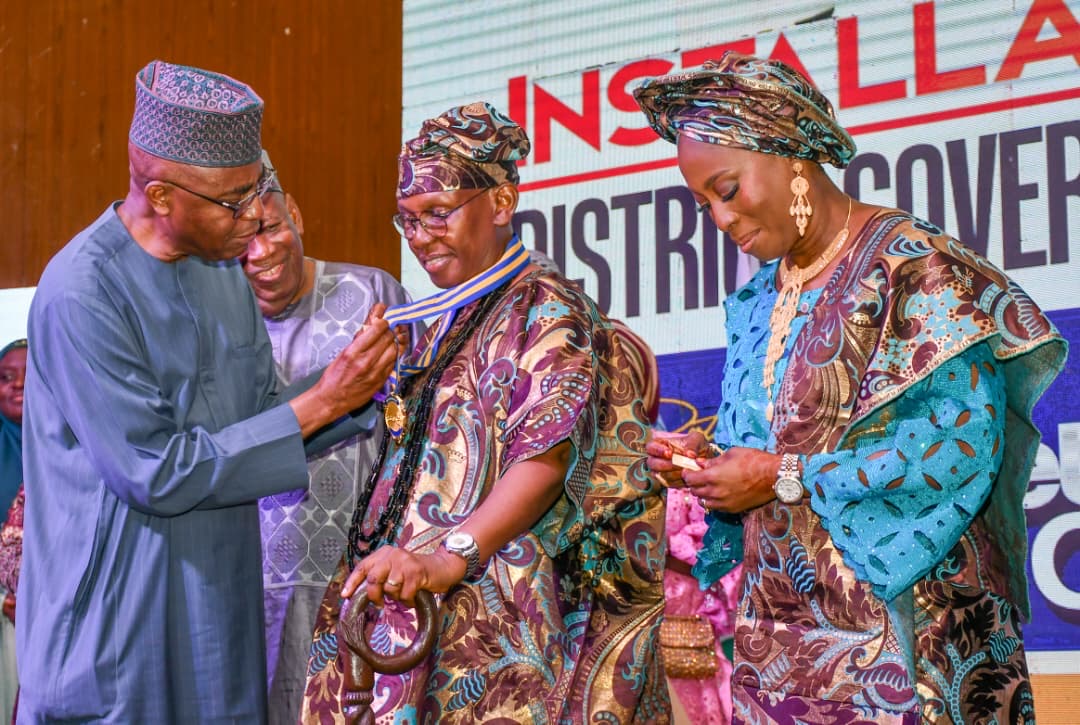
…As Ganduje harps on stronger institutions, values-driven leadership
By Adeko Ukpa, Abuja
Rorary International District 9127 Governor, Rotarian Sikiru Adetona Owonikoko has outlined his priorities for the new Rotary year, with reform, membership growth, technology adoption and member appreciation at the centre of his agenda.
Owonikoko spoke during his investiture as District Governor of Rotary International District 9127 in Abuja on Saturday.
The event brought together government officials, captains of industry, Rotarians from across the country, and friends and family members of the new district governor.
“My first priority is reform in our district. That process has already commenced,” he said.
“We must increase our membership like never before, leverage technology more effectively and celebrate our members because appreciated members become even more committed to service.”
He reaffirmed Rotary’s commitment to its seven areas of focus, including education, peacebuilding, disease prevention, maternal and child health, water and sanitation, economic development and environmental protection.
“There is no compromise regarding these seven areas of focus. We will continue to pursue them in line with Rotary International’s vision,” Owonikoko said.
L-R: Chairman of the Occasion, Dr. Ahmed Raji SAN, District Governor 9127, Engr. Sikiru Adetona Owonikoko and his wife Hajiya Zainab Owonikoko, during the investiture of the Rotary International District Governor for District 9127, Engr. Sikiru Adetona Owonikoko, held at the Transcorp Hilton Hotels in Abuja, yesterday
In his remarks during the ceremony which took place at the Congress Hall of Transcorp Hilton, in Abuja, a former National Chairman of the All Progressives Congress (APC), Dr Abdullahi Ganduje, called for stronger institutions, effective leadership and adherence to core values as essential ingredients for sustainable development and lasting impact in Nigeria.
Ganduje praised Rotary as a model of institutional stability built on service, discipline and humanitarian values.
Drawing from his experience in public administration, Ganduje said the challenge facing many developing countries was not the absence of policies but weak implementation structures.
“Successful implementation is only possible when you have strong institutions. We have good policies, but implementation is often faulty,” he said.
“For a sustainable institution, you need strong leadership, rules and regulations, compliance with those rules, and adherence to the core values of the institution.”
He described Rotary as a strong institution whose enduring relevance is rooted in its humanitarian mission.
“The core value of Rotary is humanitarian service,” Ganduje added.
Reflecting on his time as governor of Kano State, Ganduje recalled the resistance encountered during the polio eradication campaign and said decisive measures were necessary to protect public health.
“Parents hid their children under beds, behind their houses and even in the bushes to avoid immunisation. We had to adopt unconventional measures because prevention is better than cure,” he said.
“Eventually, people became convinced, and Kano ceased to be the epicentre of polio.”
Ganduje noted that Rotary’s role was becoming even more critical at a time when Nigeria was grappling with security and economic challenges that required stronger humanitarian interventions.
Chairman of the occasion and Senior Advocate of Nigeria, Ahmed Raji, said Owonikoko’s commitment to humanitarian service reflected the values he inherited from his late father, whom he described as one of the kindest people he had ever known.
“Sikiru is like a kid brother, and humanitarian blood flows in him. I benefited a lot from his father while growing up, and his memory will forever linger with me,” Raji said.
“It is therefore no surprise that he has dedicated himself to humanitarian affairs across the world.”
Raji also reflected on the origins of Rotary International, noting that the organisation, founded in 1905 by Paul Harris and his friends, derived its name from the practice of rotating meetings among members’ homes.
Impressed by the work of Rotarians, the legal luminary jokingly declared his intention to join the organisation.
“I think my coming here today is to enrol my membership. Not with the hope of becoming governor, but to be a floor member,” he said.
In her valedictory address, outgoing District Governor Dr Nky Joy Okoro said clubs across District 9127 executed more than 1,000 service projects during her tenure while increasing membership and contributions to The Rotary Foundation beyond initial expectations.
“You were the driving force of service at the club level. You led with courage, dignity, passion and resilience. Through your exceptional leadership, over 1,000 projects were successfully executed,” she said.
“District 9127 is structurally stronger today because of you.”
Okoro said the district expanded its humanitarian reach through interventions in maternal and child health, education, youth development and polio eradication.
“We touched the lives of mothers and children, empowered vibrant young leaders, strengthened local clubs, supported education, stood defiantly against polio, expanded our collective reach and built lifelong friendships,” she said.
“Leadership changes, but service remains. Titles change, but friendship remains. Rotary years come to an end, but the impact of service continues forever.”
In a keynote address on the theme, “Creating Lasting Impact,” Senior Special Assistant to the President on Delivery and Coordination, Dr Aishatu Kabir, urged Rotarians to focus on strategic service, youth empowerment and community development.
Kabir said lasting impact should be measured by lives transformed rather than ceremonies, banners or the launch of new initiatives.
“The real question is: what has changed? Lasting impact is not noise; it is legacy. It is what remains after the cameras leave,” she said.
“It is the child who stays in school, the community that gets clean water, the young person who chooses hope, and the citizen who begins to believe again because leadership became honest and human.”
She described Rotary as an organisation that converts privilege into service, networks into solutions and compassion into action, adding that service initiatives must produce measurable results.
“In Nigeria, we are very good at launching things. We launch committees, programmes and frameworks. Sometimes, by the time we finish launching, the problem has grown older and stronger. Service must go beyond launching; it must deliver,” she said.
Kabir also called for greater investment in young people.
“No country can create lasting impact while leaving its youth behind. Rotary must continue to mentor, train and empower young people as partners in service,” she said.
“Leadership is not always by microphone; it is by presence.”
She paid an emotional tribute to Owonikoko, describing him as a mentor and father figure whose kindness had shaped her personal and professional journey.
“The most powerful impact is not always made public. Sometimes it is made in a labour room, an examination hall, a hospital corridor, or in quiet moments when someone simply says, ‘I am here,’” she said.
“He is a leader who arrives before he is invited, a mentor who sees potential before the world sees success, a builder of people, a giver of hope and a bridge to generations.”
END
General News
Tinubu hails Rotary’s role in defeating polio, seeks deeper partnership on healthcare, education
By Adeko Ukpa, Abuja
President Bola Ahmed Tinubu has commended the Rotary International for its pivotal role in the eradication of wild polio in Nigeria and Africa, describing the organisation’s intervention as one of the finest examples of international cooperation in public health.
The President also called for stronger collaboration between the Federal Government and Rotary in critical sectors such as healthcare, education, youth development and community economic empowerment.
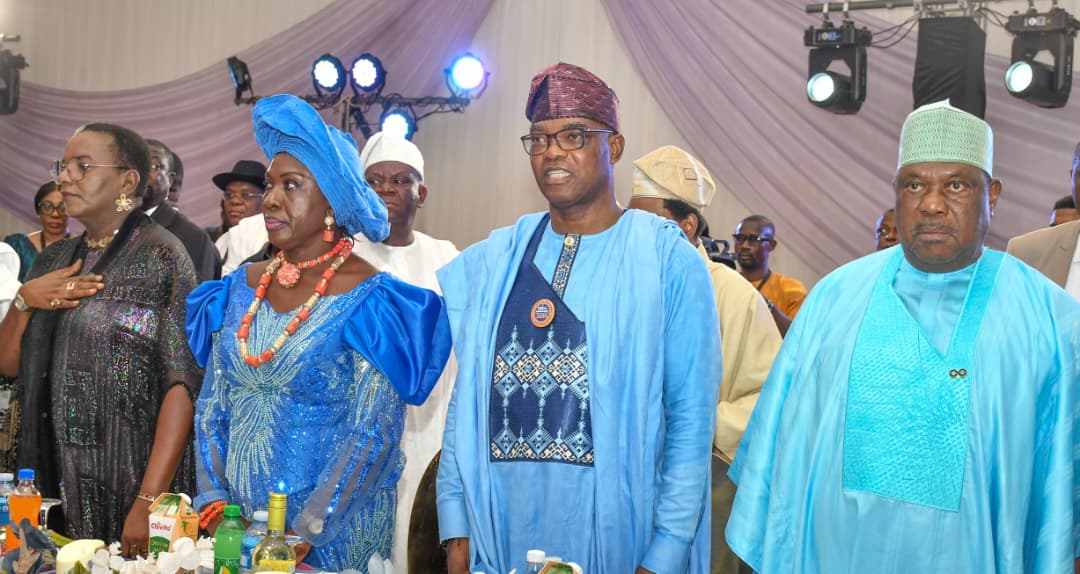
Tinubu spoke on Sunday in Abuja at a presidential inaugural dinner organised in honour of the President of Rotary International, Rotarian Olayinka Hakeem Babalola.
The President, who was represented by the Secretary to the Government of the Federation, Senator George Akume, said Nigeria remained grateful to Rotary for its sacrifices in the battle against polio.
“Rotary’s leadership in the Global Polio Eradication Initiative remains one of the finest examples of international cooperation in public health. Nigeria understands what it means for a nation once burdened by wild polio virus to stand free of it through persistence, partnership, science and sacrifice and we say thank you,” he said.
According to him, Africa and Nigeria in particular remember “the Rotarians who stood firm when the task was difficult and the road was long.
“Millions of African children can live, walk and dream today because people of goodwill refused to surrender,” Tinubu added.
 L-R: Trustee, The Rotary Foundation 2024-2028, Ijeoma Pearl Okoro, Wife of the President, Totary International, Barr. Precy Ibinabo Babalola, President of Rotary International 2026-2027, Yinka Hakeem Babalola, and Representative of the President Bola Ahmed Tinubu/Secretary to the Government of the Federation (SGF), Sen. George Akume, during the presidential inaugural Ball in honour of Olayinka Hakeem held in Abuja, yesterday.PHOTO: ROTARY INTERNATIONAL
The President said the values promoted by Rotary – service, fellowship, diversity, integrity and leadership – align with the ideals of his administration’s Renewed Hope Agenda.
He said the agenda is focused on building a more just, inclusive and productive nation through investments in education, healthcare, social welfare, youth development and job creation.
“No nation can rise beyond the quality of its human capital and no reform is complete if it does not improve the life of the ordinary citizen,” he said.
Tinubu stressed that government alone could not achieve national transformation, noting that volunteer organisations and civil society groups had crucial roles to play.
“I therefore use this occasion to invite Rotary in Nigeria, and the global Rotary family under President Babalola’s leadership, to deepen partnership with the Federal Government in key human development sectors,” he said.
The President specifically sought collaboration in primary healthcare, maternal and child health, basic education, literacy, youth skills and enterprise development.
“If we align Rotary’s culture of community service with the Federal Government’s policy direction under Renewed Hope, we can create results that are measurable, local and lasting. We can deliver hope not as a slogan, but as a lived reality,” he added.
Congratulating Babalola on becoming only the second African to lead Rotary International in its 121-year history, Tinubu said his emergence was “a proud moment for Nigeria and for our continent.”
“This is not merely a personal distinction. It is a national statement that shows that Nigeria continues to produce men and women of competence and character, whose leadership commands global respect,” he said.
The President also commended Rotary International for its contributions to peace, health, education and community development, saying the organisation had demonstrated that “the greatest force for change is driven by service, sacrifice and impactful results.”
The President, Rotary International, Olayinka Hakeem Babalola, said apart from the EndPolioNow, the organization has floated new programmes of “Together for Healthy Families
and Healthy Communities Challenge” to address maternal, malaria and diarrhea problems in the country.
Babalola said: ‘Rotary’s greatest achievements are not measured by the meetings we hold or the plans we make, but by the lives we transform and the hope we create.
“Nowhere is that impact more evident than here in Nigeria. For decades, Nigerian Rotarians have stood shoulder to shoulder with communities, governments, and global partners in one of humanity’s greatest public health campaigns- the fight against polio.
“Through persistence, sacrifice, advocacy, and countless hours of volunteer service, Rotary has helped bring Nigeria and the African continent to the threshold of a polio-free future.
” Yet, until polio is eradicated everywhere, our vigilance must continue, because every child, everywhere, deserves the chance to live free from this devastating disease.
“At the same time, Rotary is addressing another urgent challenge through Together for Healthy Families in Nigeria, one of The Rotary Foundation’s Programs of Scale. This initiative is helping to reduce maternal and newborn mortality in Abuja, Nasarawa, Gombe and Ekiti states by strengthening health systems, training healthcare workers, and empowering families and communities to make informed health decisions. “And the outcomes have been nothing short of impessive. Through this programme, Rotary is demonstrating that healthy mothers and healthy children are the foundation of strong and prosperous communities.
“And we are taking another bold step through the Healthy Communities Challenge, an initiative designed to tackle some of the most significant threats to community health, including malaria, diarrhoeal diseases, and pneumonia with pilots in Kebbi and Akwa Ibom states.
“By focusing on prevention, education, and community engagement, Rotary is helping to build healthier and more resilient communities across Nigeria.
“These three initiatives tell a powerful story. They show Rotary at its best- solving problems, building partnerships, and creating sustainable change. They remind us that our work does not end with a single project or a single year. We are in the business of building a better future.”
In his remarks, former President Olusegun Obasanjo also hailed Babalola’s emergence, describing it as a historic moment for Africa.
“Africa is watching. Nigeria is watching. History is watching. And we are proud,” Obasanjo said.
The former President recalled that the late Rotarian Jonathan Majiyagbe became the first African President of Rotary International in 2003 and urged Babalola to widen the path for more Africans to attain the organisation’s highest office.
“Do not just follow the path. Widen it, so that the third African and the fourth will come faster than 22 years,” he said.
Obasanjo further urged Africans to rally behind Babalola’s presidency, saying it represented not only an African moment but also an opportunity for the continent to demonstrate excellence and leadership on the global stage.
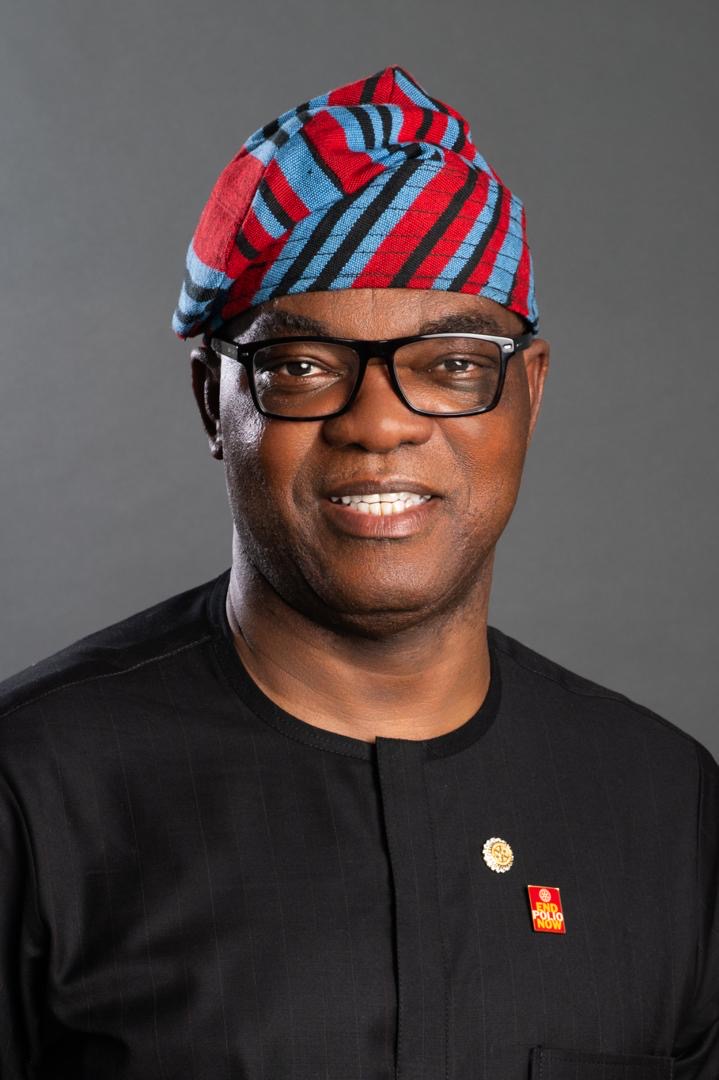
…Second African to lead the global membership organization will focus on peacebuilding, lasting peace
From Adeko Ukpa
A Nigerian, Olayinka Hakeem Babalola, will on Wednesday take office as the President of the Rotary International.
He is the second African to lead the global membership organization.
He is a member of the Rotary Club of Trans Amadi in Nigeria.
A statement by Rotary International said during his one-year term, Babalola will focus on strengthening Rotary’s contribution to peacebuilding and supporting sustainable, community-led solutions that address local and global challenges and improve lives.
Babalola said: “Rotary gives people the opportunity not only to make a difference in their communities, but also to grow through meaningful relationships, collaboration, and a deeper appreciation of different perspectives.
“At a time when many societies face division and uncertainty, I believe Rotary has an important role to play in building understanding, advancing peace, and creating opportunities for communities to thrive.
“As president, I look forward to highlighting and strengthening that impact around the world.”
Babalola brings to the role decades of experience advancing community development, peacebuilding, and public health initiatives across Africa. He has been actively involved with Rotary’s Peace Center at Makerere University in Uganda – the organization’s first on the continent.
As head of Rotary’s 45,000 clubs worldwide, Babalola will lead Rotary’s top priority of ending polio. Together with its Global Polio Eradication Initiative partners, Rotary has reduced polio cases by 99.9 percent and contributed more than US$3 billion and countless volunteer hours to protect over 3 billion children from this paralyzing disease.
He has also been deeply engaged in Rotary’s polio eradication efforts, serving on the End Polio Now Countdown to History Campaign Committee and advising the Nigeria National PolioPlus Committee.
Rotary members throughout the world develop and implement sustainable, community-driven projects that fight disease, promote peace, provide clean water, support education, save mothers and children, grow local economies and protect the environment. More than US$5.5 billion has been awarded through The Rotary Foundation – Rotary’s charitable arm that helps clubs work together to perform meaningful, impactful service – to support these initiatives over the last 100 years.
-
 Opinion2 years ago
Anioma State: A Necessary Proposal Rooted in Strategic Advantage
-
 Opinion4 months ago
Ibileye’s Quiet Revolution at Federal University Lokoja
-
 Business & Economy2 years ago
NASENI, Qietur partner to build 3000 Housing Units for Staff
-
 Law2 years ago
Human Right and Law Enforcement in Nigeria: A Critical Analysis
-
 Business11 months ago
Lithium boom has reshaped Nasarawa’s economy, says Prof Haruna
-
 Education1 year ago
TVET will change Nigeria for good, says NABTEB Registrar
-
Education1 year ago
NABTEB Registrar advises automotive, locomotive Engineers to do more to diversify Nigerian economy
-
 Opinion1 year ago
Engr. Kawu: A Heroic Homecoming for a Man of the People