
Opinion
Engr. Kawu: A Heroic Homecoming for a Man of the People

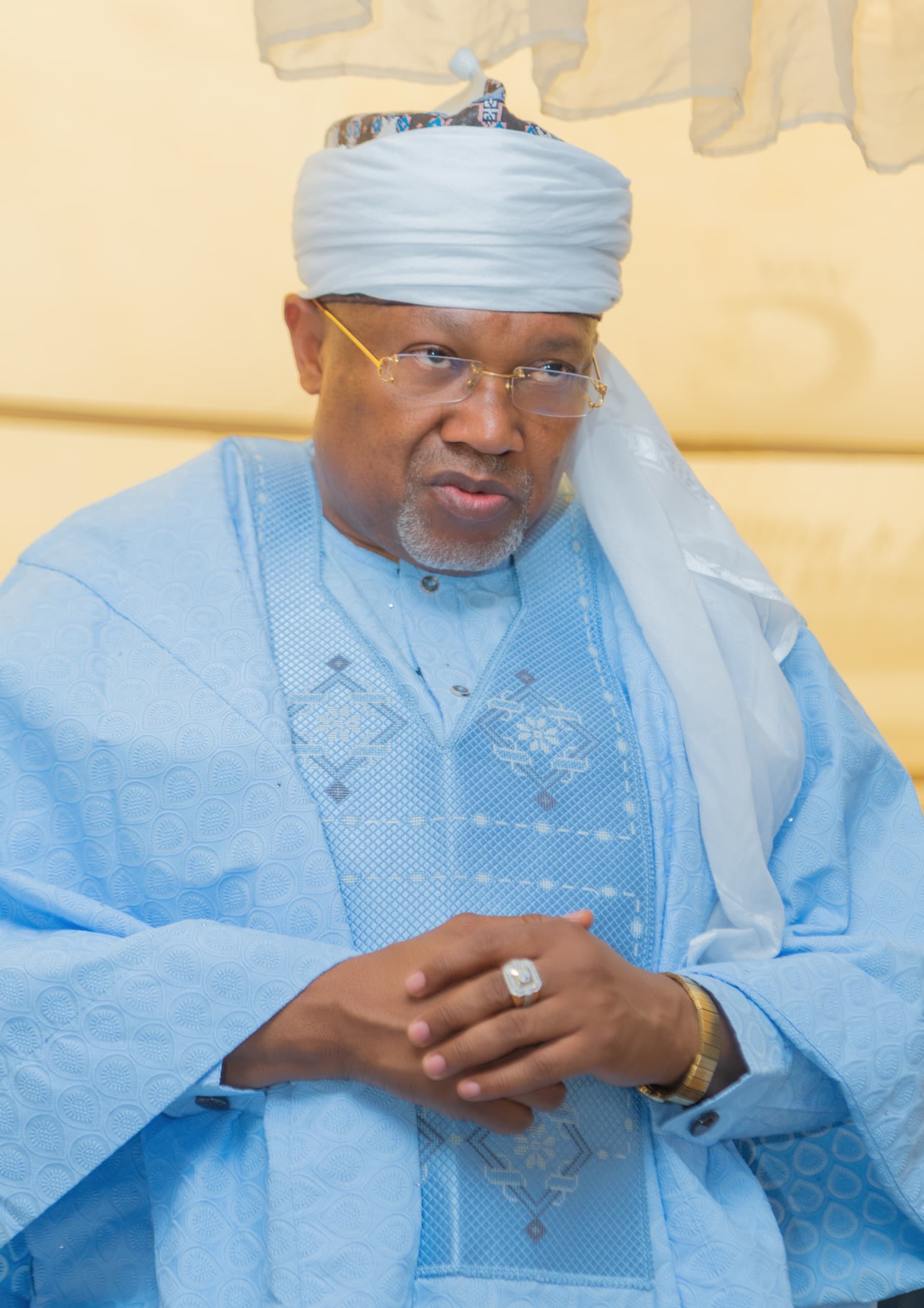
By Adegboyega Ajadi
Ilorin was thrown into rare jubilation last week. Not because of a political rally, nor because a sitting governor commissioned a project, but because a man of destiny returned home after a meritorious career in the public service. The outpouring of love for Engr. Suleiman Bolakale Kawu Agaka was spontaneous, overwhelming, and instructive. It was a message from the people to the political class: we know who has stood with us, and we know those who only remember us when elections draw near.
From Abuja to Ilorin, the narrative was the same. Stakeholders across party lines, community leaders, Islamic scholars, friends, associates, and ordinary people celebrated a man whose works have silently reshaped lives and whose character has earned him uncommon respect. In both cities, the events were not sponsored jamborees. They were not financed with state resources. They were genuine tributes by those who have seen, touched, and felt the impact of Engr. Kawu.
At the Abuja event organised by the Ilorin community, two voices stood out in their testimonies, his boss and his subordinate.
Abba Abubakar Aliyu, his former Managing Director at the Rural Electrification Agency, confessed he had yet to come to terms with the reality of Kawu’s retirement. With emotion in his voice, he declared: “No problem within the Agency that Engr. Kale was unable to resolve. He performed every assignment with utmost dedication and commitment, even spending his own resources to achieve targets. This is unprecedented in the history of the Agency.” That is not the usual flattery of a superior; it was the acknowledgment of a colleague who had seen him go above and beyond for the institution.
On her part, Ojua Omodara, who worked directly under him, gave a subordinate’s perspective: “Engr. Kawu is a goal-getter. He gives assignments and follows through until results are achieved.” Between these two voices, superior and subordinate, lies a portrait of leadership: diligent, selfless, and result-driven.
If Abuja offered professional testimony, Ilorin presented a moral verdict. From the airport to the heart of the city, unprecedented crowds lined the streets. People came in unimagined numbers, not lured by patronage, but drawn by affection. They came with their hearts, with their voices, and with their prayers.
The Chief Imam of Ilorin led other Islamic scholars in offering supplications for his continued success, affirming what the people already knew, that his record is not only professional but spiritual, not only official but human. The prayers were thanksgiving for a man who had already touched lives in ways politics rarely does.
Here lies the prosecution: one after another, communities testified in ways more compelling than any campaign manifesto could promise. Villages spoke of how they were lit up, not by political promises, but by transformers facilitated through Kawu’s intervention. Students recalled scholarships that kept them in school when hopelessness beckoned. Families gave witness to medical support received at critical times when their loved ones would otherwise have been abandoned to fate. Villages pointed to mosques standing tall in their midst, built through his generosity. Imams bore testimony that for the past 15 to 20 years, they had been receiving salaries from him, a quiet, consistent support that kept religious institutions alive.
This was not philanthropy performed with television cameras rolling. This was not the noise of politics. These were silent deeds of service, done without the inkling of seeking political office. And yet, those who benefited never forgot. The Ilorin outpouring was their verdict: this is the kind of leadership we trust, this is the kind of leadership we deserve.
Nigeria is in search of leaders who embody the values Engr. Kawu has lived: integrity, service without expectation, empathy, and selflessness. His story demonstrates that true leadership is not the pursuit of power for its own sake but the capacity to impact lives, often quietly and sacrificially.
Those who thronged Ilorin did not come to repay political favours. They came because they recognised a man whose entire life had been service. In a society drowning in political cynicism, where people believe politicians only remember them when elections approach, Engr. Kawu’s story is a refreshing contrast. He is the reminder that leadership is not about how loudly one campaigns but about how deeply one serves.
This is why his homecoming transcends a mere celebration of retirement. It was, in truth, a referendum on the kind of leadership Nigerians yearn for. In Kwara, it was a clarion call to the political class: the people are watching, the people are keeping records, and when the time comes, the people will speak again.
Without saying it outright, the people of Kwara made a declaration last week: Engr. Suleiman Bolakale Kawu Agaka represents the kind of leadership the state deserves. His track record at the Rural Electrification Agency shows competence, accountability, and sacrifice. His silent philanthropy across Kwara demonstrates empathy, compassion, and vision. His ability to attract people across party lines, as seen in Abuja, reflects the inclusiveness and bridge-building needed in today’s polarised polity.
The heroic welcome he received was not purchased. It was earned. It was not staged. It was organic. It was the people’s way of saying: we know you, we trust you, and we are ready to follow you if you choose to lead us further.
The lesson is simple but profound: in a country where trust in leadership has collapsed, there still exists a model of leadership that works. Kawu’s life proves that service begets loyalty, sacrifice earns trust, and consistency commands respect.
Ilorin’s historic outpouring was not just a welcome home; it was the unveiling of a man of destiny. The people did not just celebrate his past; they proclaimed their hope for the future. They see in him not only a technocrat who served diligently but a leader who can carry Kwara forward with empathy and vision.
In the end, the moral tribute becomes a political lesson: leaders are not made by titles or positions, but by the lives they touch. And in Engr. Kawu, the people have found both their hero and, perhaps, their future governor.
…Adegboyega, a public affairs analyst, writes from Gaa Akanbi in Ilorin

By Mary Laniyan
Once in a while, the universe gives us extraordinary human beings in different facets of life. They are not ordinary, and they do not fit in. They are outliers. They stand apart and do what only they can do. The one thing they have in common with the rest of us is that the paradoxical nature of humanity makes them imperfect as well.
In this article, I finally decided to write about a man whom I have admired and drawn inspiration from for decades now. Most great men are eulogized after their demise. How about we do more of it while they are still in our midst. How do I know this man? The name Dangote is a household name in Nigeria, and a lot more now beyond the shores of Nigeria, given his unending audacity to do what most only dream about. From Cement to Spaghetti, almost every household consumes products from the Dangote Group, who continually expands the boundaries of what is considered possible.
Aliko Dangote is not merely a businessman; he is a phenomenon of vision, persistence, and uncommon courage. In a continent where many entrepreneurs focus on trading imported goods, he dared to think differently. He chose to build, manufacture and invest billions where others saw only risk. The story of Aliko Dangote is not just about wealth; it is about scale. It is about the audacity to conceive projects that many nations themselves struggle to undertake. From cement plants that transformed the construction industry across Africa to the massive refinery project that has captured global attention, his journey has been a relentless pursuit of industrialization. An industrialized nation equals engaged minds and better security.
Yet, there is a burden that comes with such greatness, the burden of posterity. Great men often become symbols, and symbols carry expectations far heavier than flesh and blood can bear. The public sees the achievements, the headlines, the balance sheets, and the towering structures. What they rarely see are the sleepless nights, the setbacks, the criticisms, the betrayals, and the immense responsibility of carrying the hopes of millions.
For decades, Dangote has become, in many ways, a representation of African possibility. To young entrepreneurs, he is proof that global relevance can be built from African soil. To policymakers, he represents the importance of productive enterprise over consumption. To ordinary citizens, he embodies the belief that one individual can alter the economic trajectory of a nation. We often celebrate exceptional men, while forgetting that they remain human. We place them on pedestals and expect perfection. We forget that visionaries, despite their extraordinary accomplishments, still carry the limitations, vulnerabilities, and imperfections common to all mankind.
The recent conflict involving Iran and the United States brought the world face-to-face with a reality many people seldom think about. In fact, few, including myself knew about The Strait of Hormuz. It is a narrow stretch of water between the Persian Gulf and the Gulf of Oman. It is one of the most important economic arteries on earth. Nearly a fifth of the world’s oil trade normally passes through that corridor. When tensions escalated and shipping through the Strait became severely disrupted, oil prices surged across global markets, sending shockwaves through economies around the world.
Like millions of Nigerians, I watched the news with concern. Every report spoke of rising crude prices, supply disruptions, inflationary pressures, and the possibility of even higher fuel costs. Analysts warned that prolonged disruptions could push oil prices to levels not seen in years. Amidst the uncertainty, I found myself repeatedly saying, “Thank God for the Dangote Refinery,” not because Nigeria was completely insulated from the crisis. We were not. Higher global crude prices still affect transportation costs, food prices, electricity generation, and the general cost of living, but for the first time in a very long time, Nigeria was not standing entirely naked before a global energy storm.
There was a time when a disruption of this magnitude would have left us scrambling for imported fuel, battling shortages, queuing endlessly at filling stations, and watching pump prices spiral beyond the reach of ordinary citizens. We were an oil-producing nation that ironically depended heavily on foreign refineries to meet our domestic fuel needs. Today, the Dangote Refinery has begun to change that narrative. The journey is far from over, but for the first time, Nigeria can glimpse its own El Dorado, a future where its natural resources are not merely extracted, but transformed into prosperity at home.
As the Hormuz crisis unfolded, the existence of a world-scale refinery on Nigerian soil became more than a business achievement; it became a strategic national asset. It represented resilience, preparedness and the difference between vulnerability and capacity. Reports suggested that domestic refining capacity, anchored largely by the Dangote Refinery, was supplying the majority of Nigeria’s fuel requirements during the crisis. This is why great men often see what others cannot, while many saw an impossibly ambitious project, Dangote saw a future Nigeria that would need greater energy security. While critics counted the costs, he counted the consequences of inaction. While others focused on today’s profits, he invested in tomorrow’s stability.
Listening to the news during those difficult weeks, I was reminded that the true value of visionary projects is often revealed during moments of crisis. We celebrate factories when they are commissioned, but we appreciate them most when they shield us from storms. The beneficiaries of great vision are often generations who may never fully understand the sacrifices required to make that vision a reality. And so, each time I heard another report about disruptions in the Strait of Hormuz, I quietly offered a prayer of gratitude, not only for Nigeria’s resilience, but for the man whose audacity helped make that resilience possible and less painful.
After all, we can’t begrudge a man who has been an entrepreneur since his youth, if he chooses to spend his twilight years on a yacht, sailing the world, he has certainly earned that right. Yet, rather than retreat into comfort, he continues to build, invest, and dream. More importantly, he appears intentional about continuity through succession, understanding that true greatness is not merely measured by what one creates, but by what endures long after one is gone.
With the passing of the IPP bill (Independent Power Producer), I am sure we already know what to expect. This is why I pray for him, care to join me!
Prayer for his health, because the weight he carries is enormous. Prayer for his wisdom, because the decisions he makes affect industries, communities, and livelihoods across Africa. Prayer for his strength, because pioneering paths are often lonely. Prayer for his legacy, that it may inspire generations long after the applause has faded. History teaches us that societies often appreciate their builders only after they are gone. Statues are erected when the voices they honour can no longer speak. Tributes flow when the recipients can no longer hear them. Perhaps we should learn to celebrate greatness while it is still amongst us.
Whether one agrees with all his business decisions or not, few can deny that Aliko Dangote has altered the economic landscape of Nigeria and Africa in ways that will be studied for generations.
His life reminds us that extraordinary ambition, when matched with discipline and persistence, can reshape nations. This burden is heavy, It is the price paid by those who dare to dream beyond themselves, and as Dangote continues to write his chapter in the story of Africa’s development, perhaps the most fitting response is not envy, criticism, or blind praise, but gratitude, reflection, and prayer.
As we celebrate men like Dangote, we must also turn the mirror toward ourselves. In our various spheres of influence, whether in business, public service, education, family, or community, what decisions are we making today that will outlive us and benefit generations yet unborn? Posterity is not the burden of great men alone. It should be a responsibility shared by all, who have the privilege of shaping lives, institutions, and ideology. One burden that cuts across, is security, “see something, say something”. A safe society is the foundation upon which all progress rests.
As I wrap up this article, it is instructive to remember the ones that came before Aliko Dangote, men and women who built the foundations of the Nigerian idea itself. Azikiwe inspired a generation to believe in self-determination. Awolowo envisioned a society transformed through education. Ahmadu Bello shaped the political consciousness of the North. Funmilayo Ransome-Kuti and Margaret Ekpo challenged the limitations placed on women. Achebe told Africa’s story to the world. They carried the burden of their era. Let us each carry our portion of the burden of our era with focus, purpose and intentionality, knowing that the future is built on the choices we make today.
Mary Laniyan
Systems Performance Coach
“My burden lies in humanizing workplaces, one system at a time”
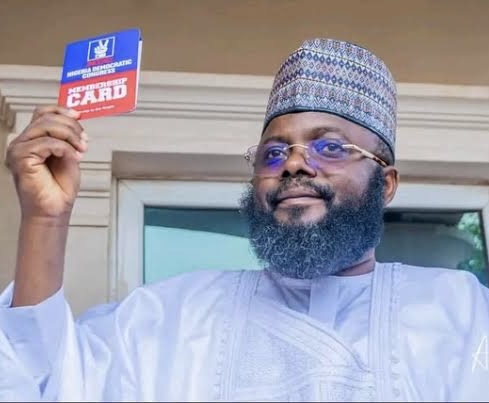
By Dr. Shamsuddeen Ahmad Aliyu (Haido)
Agriculture remains the economic backbone of Sokoto State. According to recent data from the National Bureau of Statistics (NBS), the sector contributes roughly 42% of our state’s Gross Domestic Product (GDP), with over 70% of our population actively engaged in farming. Yet, despite this massive demographic involvement, our agricultural potential remains largely uncommercialized. We remain primary producers of raw materials, while the immense wealth generated from processing and industrial optimization happens outside our borders.
To shift this paradigm, we must look closely at our existing, underutilized industrial assets. The most prominent symbol of this untapped potential sits right in our backyard: The 250,000 Metric Tonne (MT) per annum Dangote Rice Mill in Kware.
The Feedstock Dilemma: Why the Mill Sits Idle
When the Dangote Group constructed its ultra-modern rice processing facility on a 27-hectare site in Runji Village, Kware Local Government Area, it was a data-driven investment. Designed to process 32 metric tonnes of paddy per hour, the mill possesses the capacity to process a quarter of a million metric tonnes of rice annually, making it one of the largest industrial food assets in West Africa.
Yet, despite its completed infrastructure, the mill has faced challenges operating at full commercial capacity. The reason is not a lack of market demand for rice, but a structural fragmentation in the upstream supply chain.
Industrial processing plants are capital-intensive and risk-averse; they require a continuous, predictable, and uniform pipeline of clean paddy. The current localized production model—characterized by fragmented smallholders, lack of access to certified seeds (like Faro 44/52), high post-harvest losses, and the absence of a structured corporate aggregator—means the mill faces a structural feedstock deficit.
Resolving this deficit requires moving away from traditional, ad-hoc administrative interventions and implementing a sophisticated, business-to-government (B2G) structural framework.
The Macroeconomic Impact: Keeping Wealth Inside Sokoto
Activating a major asset like the Kware mill changes the economic landscape of the entire state. At current market rates, a metric tonne of high-quality industrial rice paddy sits at roughly ₦350,000 to ₦400,000. Delivering an initial baseline of 100,000 MT of paddy per year to the mill represents a direct capital injection of ₦35 Billion to ₦40 Billion moving into our state’s agricultural ecosystem annually.
Because this model prioritizes direct institutional off-take from local farming clusters, this capital skips exploitative middlemen and flows straight into our rural economies. This injection accelerates the velocity of cash in our local markets, stimulating the retail, construction, and service sectors, and organically expanding the state’s Internally Generated Revenue (IGR) base without increasing the tax burden on citizens.
Furthermore, industrial processing introduces a high-value secondary economy. The Kware mill generates thousands of tonnes of rice husks and rice bran as by-products. Rice husks serve as a valuable biomass fuel source for energy and manufacturing plants, while rice bran provides the primary raw materials needed to establish a commercial livestock and poultry feed-mill industry within the state.
What Full Operation Means for the Citizens of Sokoto
At the microeconomic level, turning on the machinery at Kware creates immediate, sustainable livelihoods:
Lifting 20,000+ Farming Households: To generate 100,000 MT of paddy systematically, we must organize and support at least 20,000 hectares of farmland. Under a structured, high-yield input framework, a local farmer cultivating two hectares can achieve a yield of 4 to 5 tonnes per hectare. This translates to an estimated ₦3.5 Million in gross seasonal revenue per household, structurally elevating thousands of rural families into commercial sustainability.
The Logistics and Service Boom: Transporting 100 million kilograms of grain from field to factory requires an extensive logistical network. This translates into roughly 10,000 heavy-duty truck trips per year along our internal transport corridors. The ripple effect means immediate, year-round business for local transport unions, haulage companies, mechanics, fuel stations, and youth-led loading crews.
The Blueprint for Immediate Takeoff
To get the Dangote Rice Mill up and running, we must position our agricultural sector as an active, de-risked commercial partner. Look at recent sub-national agricultural playbooks in Nigeria, where major corporate off-take frameworks succeeded because the state acted as a credible institutional guarantor via a structured corporate vehicle.
To achieve this in Sokoto, a precise four-part strategy must be deployed:
The Strategic Framework for Agricultural Takeoff
Establishment of a State-Backed Agribusiness Vehicle
Step 1
The state must incorporate Sokoto Foods Limited (SFL) as a public limited liability company under a Public-Private Partnership (PPP) framework. By holding a minority 25% equity stake and transferring controlling 51% operational ownership to a reputable private agribusiness managing partner, we eliminate civil-service bureaucracy. SFL will serve as the single corporate buffer to execute a long-term Paddy Supply Agreement directly with the Dangote Group.
Biometric Cooperative Mapping and Input Credit Loops
Step 2
SFL will biometric-map and cluster thousands of smallholder rice farmers into highly disciplined cooperatives. Instead of distributing open-ended subsidies, SFL will operate a closed-loop input provision system—supplying premium certified seeds, calibrated fertilizers, and mechanized ploughing services directly to farmers, with costs recovered strictly via paddy write-offs at the scale house during harvest.
Infrastructure Maximization and Dry-Season Irrigation
Step 3
Sokoto’s distinct edge lies in dry-season cultivation, which yields higher-grade paddy with lower moisture content. We must focus state capital on de-silting and expanding secondary canals at the Goronyo, Shagari, and Kware irrigation networks, paired with the mass deployment of solar-powered tubewells to farming clusters along our riverbanks.
Fiscal Incentives and Industrial Zone Declaration
Step 4
To completely lower the operational overhead of the facility, the 27-hectare Kware mill corridor should be designated as the Sokoto Agric-Industrial Revitalization Zone (SAREZ), granting a 5-year holiday on state-levied commercial taxes, accompanied by a dedicated, uninterrupted power evacuation corridor from the nearest electrical substation.
Conclusion
Economic self-reliance is not achieved through seasonal government handouts; it is achieved by building the institutional scaffolding that allows our people to generate wealth through their own productivity. By transforming our state from a passive observer into a sophisticated commercial facilitator, we can turn a quiet industrial giant into the heartbeat of Nigeria’s rice production. The infrastructure is ready, our land is fertile, and our farmers are determined. With the right business acumen and structured policies, Sokoto is fully capable of driving an industrial takeoff that will rewrite our economic history.
….Dr. Shamsuddeen Ahmad Aliyu (Haido) is the
NDC Gubernatorial candidate for Sokoto State
By Adinoyi Ukpa
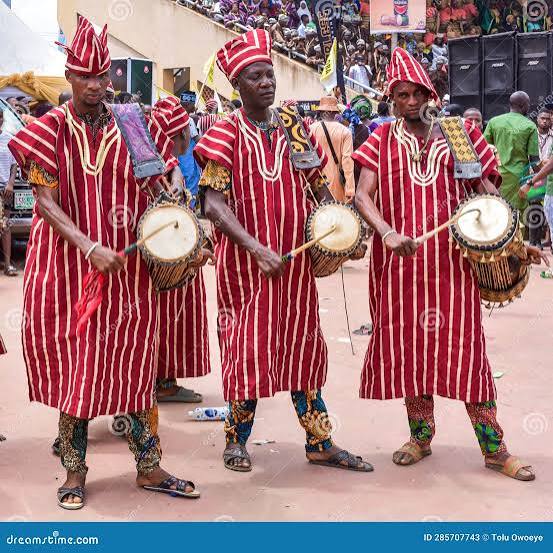
As the horses trotted majestically through the streets of Ijebu-Ode and social media erupted in admiration of flowing agbadas, expensive beads, celebrity appearances and the splendour of the 2026 Ojude Oba Festival, a different Nigeria was unfolding far from the cameras.
In the forests of Oyo State, schoolchildren and teachers abducted by bandits remained in captivity, their families trapped in anguish, uncertainty and fear. While millions of Nigerians debated fashion statements and celebrated cultural pageantry, parents waited anxiously for news of children who had simply gone to school and never returned home.
The contrast was not merely ironic. It was an indictment.
It revealed a nation that appears increasingly comfortable celebrating itself while its children languish in the hands of criminals.
This is not an argument against Ojude Oba. Far from it.
The festival is one of Nigeria’s finest cultural exports. It represents history, identity, community and pride. It is a testament to the enduring strength of Yoruba culture and deserves its place among Africa’s great cultural celebrations.
But culture cannot become an escape from conscience.
What should trouble every Nigerian is not that Ojude Oba was celebrated. What should trouble us is that the kidnapping of schoolchildren no longer possesses the power to interrupt our celebrations.
We have become accustomed to horror. A nation that once recoiled in shock at the abduction of a handful of schoolchildren now treats such incidents as routine news items. We express outrage for a few days, issue statements, offer prayers, blame security agencies, and then move on to the next political controversy, celebrity event or cultural festival.
The children remain behind.
The parents continue to suffer. The kidnappers continue their business.
The country carries on as if nothing has happened.
The Oyo abduction should have triggered a national emergency. Reports from Oriire Local Government Area indicated that armed men attacked schools and communities, abducting pupils, teachers and residents. One teacher reportedly lost his life in captivity. Families have endured days and weeks of agony while awaiting the safe return of their loved ones.
Yet the incident never generated the level of sustained national outrage that similar kidnappings attracted in the past.
Perhaps that is because Nigeria has become desensitised. Perhaps we have seen too many kidnappings. Perhaps we have become too accustomed to headlines about bandits, terrorists and ransom demands. Or perhaps we simply no longer value human life as much as we claim.
The tragedy in Oyo inevitably invites comparisons with earlier school abductions that shook the nation.
In June 2021, armed bandits invaded Federal Government College, Birnin Yauri, in Kebbi State, within the Zuru Emirate. The attack sent shockwaves across Nigeria. Students and teachers were seized and marched into the forests.
The response was immediate and relentless.
The Federal Government mobilised security agencies. Intelligence operations were intensified. Meetings were held at the highest levels of government. Traditional rulers became involved. The issue dominated national discourse for months. Every release of students generated national headlines. Every development was closely monitored.
The process was long and frustrating, but one thing was unmistakable: the country refused to look away.
The victims remained at the centre of national attention until they regained their freedom.
The same pattern was evident in Niger State.
Whether in Kagara, Tegina, Pandogari, Papiri or other communities ravaged by bandit attacks, successive mass abductions provoked urgent responses from both state and federal authorities. Governors convened emergency meetings. Security deployments were increased. Community leaders were engaged. The media maintained pressure. Public attention remained focused on the fate of the victims.
No one could accuse the government of indifference, even where outcomes were delayed.
The nation understood that schoolchildren in captivity represented a direct challenge to the authority of the Nigerian state.
That understanding appears to be fading. Today, the kidnapping of students struggles to compete with entertainment, politics and social media trends. This is dangerous.
Banditry thrives not only because of weak security structures but also because of public fatigue. Criminals understand that outrage has become temporary. They understand that Nigerians have developed a short attention span. They understand that after a few days, another story will dominate the headlines.
This normalisation of insecurity is one of the greatest threats facing the country.
A society that becomes accustomed to kidnapping is a society that has begun surrendering its moral foundations.
The consequences extend beyond the immediate suffering of victims. Parents begin to fear sending children to school. Teachers become reluctant to accept postings to rural communities. Educational outcomes decline. Economic activities suffer. Communities become isolated. Trust in government erodes. Most importantly, citizens begin to lose faith in the state’s ability to perform its most fundamental responsibility: protecting lives.
There is another uncomfortable dimension to this conversation.
Nigeria’s political elite often appears more visible during celebrations than during tragedies.
Photographs from Ojude Oba featured politicians, government officials and influential figures eager to associate themselves with a prestigious cultural event. There is nothing wrong with attending such occasions. Public officials are citizens too. The problem arises when citizens perceive greater enthusiasm for festivals than for confronting national emergencies. Leadership is as much about symbolism as it is about policy.
At moments of national trauma, leaders must demonstrate urgency, empathy and focus. They must ensure that victims know they have not been forgotten. They must convince citizens that government machinery is fully engaged. Anything less creates the impression that public relations has become more important than public safety.
The lesson from Birnin Yauri, Kagara, Tegina and numerous other school abductions is clear: sustained public attention matters.
Governments respond more aggressively when citizens refuse to look away. Security agencies perform better when subjected to scrutiny.
Political leaders become more accountable when public pressure remains constant.
That is why Nigerians must resist the temptation to normalise the Oyo tragedy.
The kidnapped children and teachers deserve more than fleeting sympathy. They deserve national attention.
They deserve sustained advocacy. They deserve a government that treats their captivity as a matter of utmost urgency. And their families deserve to know that the country has not abandoned them.
Ojude Oba will come again next year. The horses will return. The colourful attire will return. The music, festivities and celebrations will return.
But for the parents waiting for news from Oyo State, every passing day feels like a lifetime.
Long after the photographs from Ijebu-Ode disappear from social media timelines, those families will still remember the nights spent praying for the safe return of their children.
That is why the real question confronting Nigeria is not whether Ojude Oba should be celebrated. It should.
The real question is why a nation facing an epidemic of school kidnappings appears increasingly capable of celebrating everything except the urgency of rescuing its children.
Until we answer that question honestly, every grand festival will carry an uncomfortable shadow. Because somewhere beyond the music, beyond the glamour, beyond the pageantry and prestige, frightened children are still waiting to come home.
And no nation should be comfortable dancing while that remains true.
***Ukpa a public affairs analyst writes from Okene, Kogi State.
-
 Opinion2 years ago
Anioma State: A Necessary Proposal Rooted in Strategic Advantage
-
 Opinion4 months ago
Ibileye’s Quiet Revolution at Federal University Lokoja
-
 Business & Economy2 years ago
NASENI, Qietur partner to build 3000 Housing Units for Staff
-
 Law2 years ago
Human Right and Law Enforcement in Nigeria: A Critical Analysis
-
 Business11 months ago
Lithium boom has reshaped Nasarawa’s economy, says Prof Haruna
-
 Education1 year ago
TVET will change Nigeria for good, says NABTEB Registrar
-
Education1 year ago
NABTEB Registrar advises automotive, locomotive Engineers to do more to diversify Nigerian economy
-
 Opinion2 years ago
Defamation Is Not Democracy: Office Of Senator Ned Nwoko Will Not Stand For Character Assassination