
General News
Building Social Blocks of Peace As Stop-Gaps For Domestic Terrorism


By Benneth Joshua Kingsley
There are two types of terrorism – International and Domestic terrorism. The American Federal Bureau of Investigation (FBI) sees International Terrorism as violent, criminal acts committed by individuals and/or groups who are inspired by, or associated with designated foreign terrorist organizations or nations (State-sponsored).
It also sees Domestic Terrorism as violent, criminal acts committed by individuals and/or groups to further ideological goals stemming from domestic influences, such as those of a political, religious, social, racial, or environmental nature.
Whilst both definitions have similarities, e.g as violent, criminal acts committed by individuals and/or groups, their points of divergence lies where international terrorism is State sponsored or associated with foreign terrorist organizations, as against domestic terrorism which is home bred.
This literature shall build its intervention on the definitions advanced by the FBI, and shall focus on the causative agents of domestic terrorism – home bred violent, criminal acts committed by individuals and/or groups to further ideological goals stemming from domestic influences, such as those of a political, religious, social, racial, or environmental nature.
It is hoped that this intervention would further the conversation on closing the gaps leading to domestic terrorism. It is necessary to point out that at the root of domestic terrorism are social factors that speak directly to individual members of the society. In order words, terrorism in both embryonic and active phases are conceptualized and carried out with the individual as the Critical Execution Vehicle (CEV).
There are risk factors which point to the potential for radicalization of individuals, thereby opening the window of opportunity for extremist personality/ies to impart on them. While some of these risk factors are static, meaning that they cannot change over time (e.g., having a criminal history), others can change and, thus, suggest possible avenues for prevention and intervention efforts.
The United States Department of Justice through a 2018 Journal published by its National Institute of Justice identified some relative risk factors as relevant in individuals’ particular cases. According to the US DOJ, efforts that focus on addressing terrorist beliefs, treating mental health issues, improving individuals’ employment or educational prospects, and/or helping them to develop and sustain positive relationships with non-extremist and non-delinquent peers may contribute to preventing or intervening in cases of domestic terrorism.
Whilst it is true that social realities in OECD countries differ in many ways than many obtainables in third world countries, especially in Nigeria, the journal’s intervention which pointed out factors such having a criminal history, having mental health issues (or having received a diagnosis of schizophrenia or delusional disorder), being unemployed, being single, being a loner (or socially isolated), and having military experience (in peculiar situations like those suffered by some Nigerian ex-service men, being unjustly discharged military or paramilitary services, or being owed their entitlements for long period of time) as possible triggers to individual’s joining terrorist adventures or acting as ‘Lone Sharks’, cannot be wished away.
Personal and political grievances, having an enabler who assists in planning an attack or provides the inspiration for it, having at least a bachelor’s degree, living alone, and being male were also identified as potential risk factors among self actors. These, like police brutality said to have triggered Boko Haram in the Northeast of Nigeria, the EndSars protest and its subsequent reported massacre in Lagos, and the Unknown Gunmen debacle, are social lacuna that results in grievances leading to domestic terrorism.
Unemployment also crystallizes in Lone Shark domestic terrorism, especially among youths with tertiary education training. It explains the spike in crime rate – kidnapping, armed robbery, ritual killings for fetish money making practices, increasing incidence of rape, political violence, among others, as witnessed in Nigeria.
What this means is that any productive intervention aimed at reconstructing terrorism narrative in Nigeria, and perhaps in Sub Saharan African countries has to look in the direction of focusing energy on treating mental health issues, improving individuals’ employment prospects, and/or helping them to develop and sustain positive relationships. Adesoji Adelaja and Justin George in their contribution to the discussion on domestic terrorism titled: “Perspectives on Terrorism” Volume 14, Issue 5, pointed out the dire youth unemployment situation in less-developed countries, noting that it has a correlation to insurgency.
They said that the dire youth unemployment situation in less-developed countries (LDCs) is particularly troubling; especially in Sub-Saharan Africa (SSA), where the continent faces the highest level (70 per cent) of youth working poverty rate globally. On average, of the 10 to 12 million youth entering the workforce, only 3.1 million jobs are created annually, leaving the vast majority unemployed; for example, in Nigeria and Ghana, respectively 43 and 48 per cent of youth aged 15–24 are unemployed or underemployed.
Both scholars acknowledged that youth unemployment may also fuel youth out-migration from Africa, dependencies and stresses on adults, unrealized growth opportunities, youth restiveness and greater potential for radicalization and conflict.
Flowing from this, many of the countries which are prone to political violence, especially terrorism, feature higher employment rates among the youth population than their adult population; for example, the Middle East and North Africa (MENA) region, which hosted around 40 per cent of the total incidence of terrorist attacks in the 2011–2015 period, experienced a youth unemployment rate of 30 per cent in 2019, double the global average.
Beehner (2007) contends that youth unemployment creates a large pool of disaffected youth who are more susceptible to recruitment into rebel or terrorist groups, as found in Northeast Nigeria. Stober (2015) submitted that the high rate of unemployment in Nigeria has created an army for the deadly Boko Haram, kidnapping, political thuggery and ethnic conflicts in the nation. Idrees, Shabbir, Roman, & Atif, (2015) in their contribution to the subject matter noted that unemployed youths due to their frustration and socio-economic difficulties and afflictions provide fertile ground for their recruitment into terrorism and others, especially Boko Haram in Nigeria.
The implication of this statement is that unemployment, with its nature, afflicts its victims psychologically to the extent that they are weighed down by pressures due to lack of necessities of life as their situation does not promote or provide welfare in any way. This therefore makes it easy for the unemployed youths to be radicalized. Adelaja, Labo, & Penar (2018) underscored that radicalization appeals to these unemployed youths who may consider such as the best option to their distress and frustrated situation.
Scholars like Suleiman and his associate identified armed robbery, political thuggery, kidnapping, Boko Haram, and other criminal acts among youths as the result of youth unemployment. Some of the youths who are unemployed due to frustration have turned themselves to suicide bombers, vandals, bandits, terrorists, kidnappers, militants, armed robbers, and lots more.
Besides unemployment, other social factors which open the window to terrorism include bad governance, lack of quality education or training, lack or inadequate basic infrastructures, corruption and corrupt practices of government officials, perceived victimization, ethnic superiority, religious superiority, domination and exploitation, materialism and the display of it with impunity, etc.
Taking the items one after another, bad governance doesn’t just undermine development; it also drives violence. In Nigeria, for example, experts say that the government helped to create terrorism through its lack of an inclusive growth strategy.
In essence, ineffective public institutions undermine the provision of public services such as health care, education and law enforcement. When public officials do not act as bureaucrats delivering services as they are expected to do, people look for alternative ways to obtain these services. And this increases disenchantment in the system.
Accordingly, Nigeria like many Sub-Saharan African countries is an epicenter of disenchantment caused by poor governance, with the state unable to spread the provision of public services to citizens. In most urban areas in the country, and in every rural area, citizens provide public utilities like water, electricity, security and others for themselves.
This in juxtaposition with glaring economic inequalities, oppression from the state and the privileged few, and gross abuse of human rights, coupled with the marginalization of minority populations provide the trigger for some to join violent or terrorist groups.
So, poor or bad governance tends to frustrate the institutionalization of both peace and security on the one hand, and on the other, creates a stunted, rentier, disarticulated, and grossly underdeveloped society where modern day terrorism thrives.
Considering that the use of military power has not been able to quell terrorism, some experts believe that education in cohort with other social factors is another major weapon that can be used in reducing to the barest minimum, the incidence where people are attracted to radicalization or terrorism.
A 2017 intervention by UNESCO reveals that educational strategies to support prevention efforts varies a great deal according to context – e.g. conflict situation, demographics, citizenship model, private/public education, with the common denominator of prevention efforts being to address the drivers of violent extremism and build learners’ resilience to hateful narratives and propaganda that legitimize the use of violence.
The fifth review of the United Nations Global Counter-Terrorism Strategy 1 (30 June – 1 July 2016) provided the reemphasized, among other objectives, the importance of prevention efforts and welcomed the UN Secretary-General’s Plan of Action to Prevent Violent Extremism (released in December 2015).
On this occasion the UN General Assembly recommended that countries consider the implementation of its relevant recommendations, as applicable to national contexts, with the support of the United Nations. In the Plan, the UN Secretary-General calls for a comprehensive approach to address the underlying conditions that drive individuals to join violent extremist groups.
Among its action priorities is the necessity to support “Education, skills development and employment facilitation” as a means to foster respect for human diversity and prepare young people to enter the workplace. The recommendation also addresses the need to invest in programmes that promote global citizenship and provide comprehensive primary through tertiary education, including technical and vocational education.
This underlines the importance which the global community at the UN level attaches to education as a social stop-gap to radicalization and terrorism.
Without a doubt, domestic terrorism is linked to any or all of the stated social factors. And it is the belief of this work that the phenomenon is intricately connected with the balance or imbalance of social structures.
This work also agrees with other scholars that to reduce the tendencies of the target population (the youths) from being attracted to it, the inequality gap in societies must be closed through proactive and strategic public-oriented policies that provide for the citizenry.
Therefore, the point being made here is that efforts at mitigating the emergence of the social factors that provokes violent extremism, and vanguards, are social blocks of peace which creates stop-gaps for domestic terrorism.










…As Ganduje harps on stronger institutions, values-driven leadership
By Adeko Ukpa, Abuja
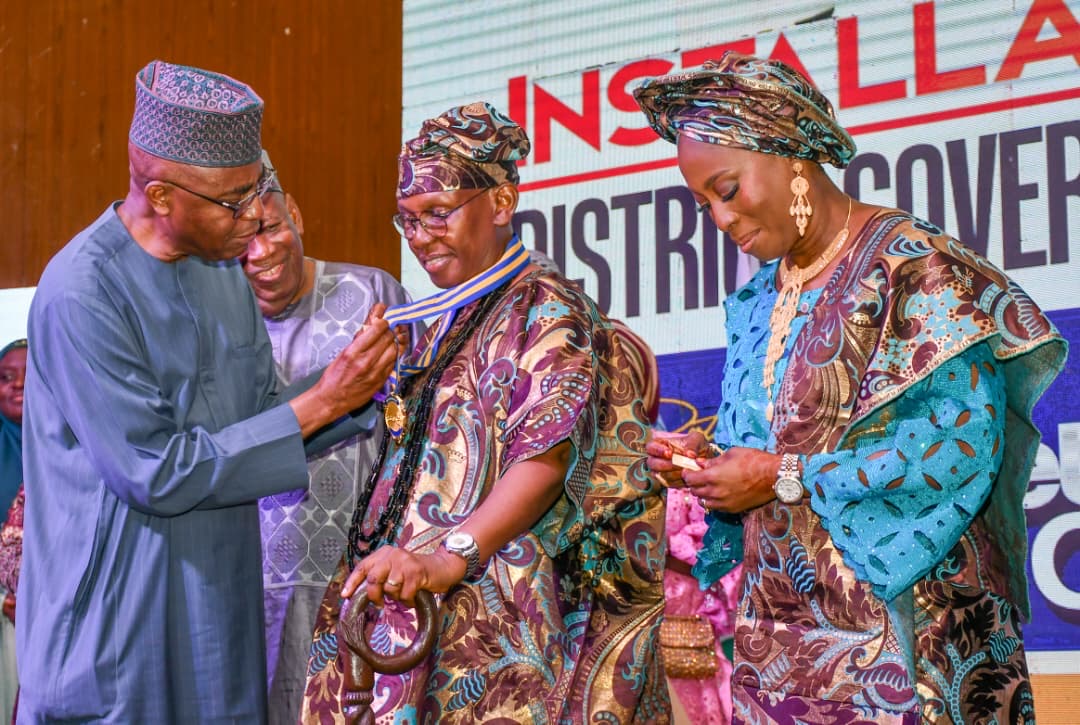
Rorary International District 9127 Governor, Rotarian Sikiru Adetona Owonikoko has outlined his priorities for the new Rotary year, with reform, membership growth, technology adoption and member appreciation at the centre of his agenda.
Owonikoko spoke during his investiture as District Governor of Rotary International District 9127 in Abuja on Saturday.
The event brought together government officials, captains of industry, Rotarians from across the country, and friends and family members of the new district governor.
“My first priority is reform in our district. That process has already commenced,” he said.
“We must increase our membership like never before, leverage technology more effectively and celebrate our members because appreciated members become even more committed to service.”
He reaffirmed Rotary’s commitment to its seven areas of focus, including education, peacebuilding, disease prevention, maternal and child health, water and sanitation, economic development and environmental protection.
“There is no compromise regarding these seven areas of focus. We will continue to pursue them in line with Rotary International’s vision,” Owonikoko said.
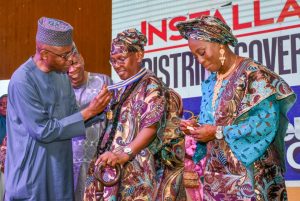
L-R: Chairman of the Occasion, Dr. Ahmed Raji SAN, District Governor 9127, Engr. Sikiru Adetona Owonikoko and his wife Hajiya Zainab Owonikoko, during the investiture of the Rotary International District Governor for District 9127, Engr. Sikiru Adetona Owonikoko, held at the Transcorp Hilton Hotels in Abuja, yesterday
In his remarks during the ceremony which took place at the Congress Hall of Transcorp Hilton, in Abuja, a former National Chairman of the All Progressives Congress (APC), Dr Abdullahi Ganduje, called for stronger institutions, effective leadership and adherence to core values as essential ingredients for sustainable development and lasting impact in Nigeria.
Ganduje praised Rotary as a model of institutional stability built on service, discipline and humanitarian values.
Drawing from his experience in public administration, Ganduje said the challenge facing many developing countries was not the absence of policies but weak implementation structures.
“Successful implementation is only possible when you have strong institutions. We have good policies, but implementation is often faulty,” he said.
“For a sustainable institution, you need strong leadership, rules and regulations, compliance with those rules, and adherence to the core values of the institution.”
He described Rotary as a strong institution whose enduring relevance is rooted in its humanitarian mission.
“The core value of Rotary is humanitarian service,” Ganduje added.
Reflecting on his time as governor of Kano State, Ganduje recalled the resistance encountered during the polio eradication campaign and said decisive measures were necessary to protect public health.
“Parents hid their children under beds, behind their houses and even in the bushes to avoid immunisation. We had to adopt unconventional measures because prevention is better than cure,” he said.
“Eventually, people became convinced, and Kano ceased to be the epicentre of polio.”
Ganduje noted that Rotary’s role was becoming even more critical at a time when Nigeria was grappling with security and economic challenges that required stronger humanitarian interventions.
Chairman of the occasion and Senior Advocate of Nigeria, Ahmed Raji, said Owonikoko’s commitment to humanitarian service reflected the values he inherited from his late father, whom he described as one of the kindest people he had ever known.
“Sikiru is like a kid brother, and humanitarian blood flows in him. I benefited a lot from his father while growing up, and his memory will forever linger with me,” Raji said.
“It is therefore no surprise that he has dedicated himself to humanitarian affairs across the world.”
Raji also reflected on the origins of Rotary International, noting that the organisation, founded in 1905 by Paul Harris and his friends, derived its name from the practice of rotating meetings among members’ homes.
Impressed by the work of Rotarians, the legal luminary jokingly declared his intention to join the organisation.
“I think my coming here today is to enrol my membership. Not with the hope of becoming governor, but to be a floor member,” he said.
In her valedictory address, outgoing District Governor Dr Nky Joy Okoro said clubs across District 9127 executed more than 1,000 service projects during her tenure while increasing membership and contributions to The Rotary Foundation beyond initial expectations.
“You were the driving force of service at the club level. You led with courage, dignity, passion and resilience. Through your exceptional leadership, over 1,000 projects were successfully executed,” she said.
“District 9127 is structurally stronger today because of you.”
Okoro said the district expanded its humanitarian reach through interventions in maternal and child health, education, youth development and polio eradication.
“We touched the lives of mothers and children, empowered vibrant young leaders, strengthened local clubs, supported education, stood defiantly against polio, expanded our collective reach and built lifelong friendships,” she said.
“Leadership changes, but service remains. Titles change, but friendship remains. Rotary years come to an end, but the impact of service continues forever.”
In a keynote address on the theme, “Creating Lasting Impact,” Senior Special Assistant to the President on Delivery and Coordination, Dr Aishatu Kabir, urged Rotarians to focus on strategic service, youth empowerment and community development.
Kabir said lasting impact should be measured by lives transformed rather than ceremonies, banners or the launch of new initiatives.
“The real question is: what has changed? Lasting impact is not noise; it is legacy. It is what remains after the cameras leave,” she said.
“It is the child who stays in school, the community that gets clean water, the young person who chooses hope, and the citizen who begins to believe again because leadership became honest and human.”
She described Rotary as an organisation that converts privilege into service, networks into solutions and compassion into action, adding that service initiatives must produce measurable results.
“In Nigeria, we are very good at launching things. We launch committees, programmes and frameworks. Sometimes, by the time we finish launching, the problem has grown older and stronger. Service must go beyond launching; it must deliver,” she said.
Kabir also called for greater investment in young people.
“No country can create lasting impact while leaving its youth behind. Rotary must continue to mentor, train and empower young people as partners in service,” she said.
“Leadership is not always by microphone; it is by presence.”
She paid an emotional tribute to Owonikoko, describing him as a mentor and father figure whose kindness had shaped her personal and professional journey.
“The most powerful impact is not always made public. Sometimes it is made in a labour room, an examination hall, a hospital corridor, or in quiet moments when someone simply says, ‘I am here,’” she said.
“He is a leader who arrives before he is invited, a mentor who sees potential before the world sees success, a builder of people, a giver of hope and a bridge to generations.”
END
General News
Tinubu hails Rotary’s role in defeating polio, seeks deeper partnership on healthcare, education
By Adeko Ukpa, Abuja
President Bola Ahmed Tinubu has commended the Rotary International for its pivotal role in the eradication of wild polio in Nigeria and Africa, describing the organisation’s intervention as one of the finest examples of international cooperation in public health.
The President also called for stronger collaboration between the Federal Government and Rotary in critical sectors such as healthcare, education, youth development and community economic empowerment.
Tinubu spoke on Sunday in Abuja at a presidential inaugural dinner organised in honour of the President of Rotary International, Rotarian Olayinka Hakeem Babalola.
The President, who was represented by the Secretary to the Government of the Federation, Senator George Akume, said Nigeria remained grateful to Rotary for its sacrifices in the battle against polio.
“Rotary’s leadership in the Global Polio Eradication Initiative remains one of the finest examples of international cooperation in public health. Nigeria understands what it means for a nation once burdened by wild polio virus to stand free of it through persistence, partnership, science and sacrifice and we say thank you,” he said.
According to him, Africa and Nigeria in particular remember “the Rotarians who stood firm when the task was difficult and the road was long.
“Millions of African children can live, walk and dream today because people of goodwill refused to surrender,” Tinubu added.
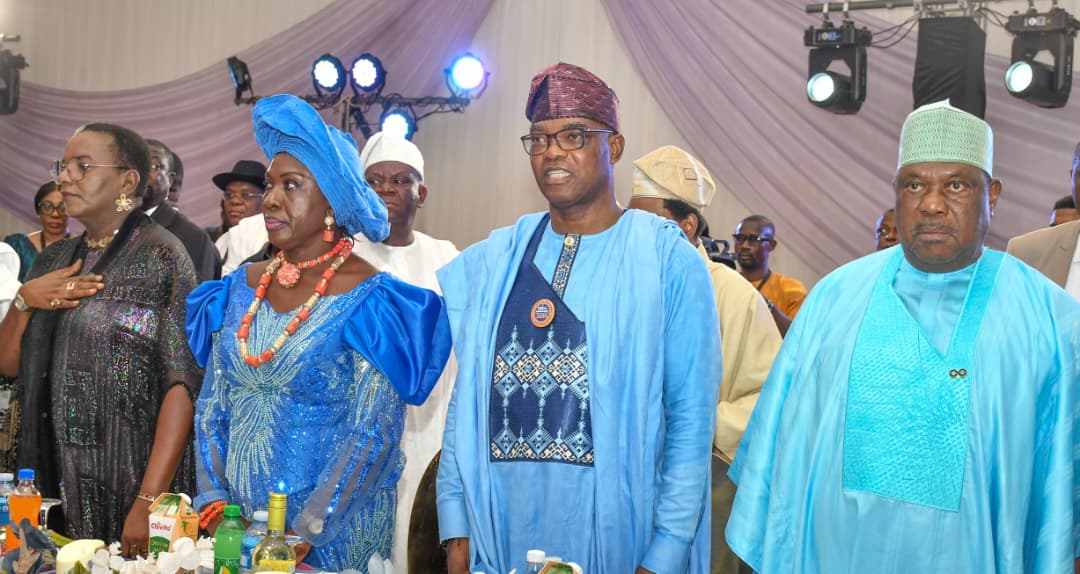
 L-R: Trustee, The Rotary Foundation 2024-2028, Ijeoma Pearl Okoro, Wife of the President, Totary International, Barr. Precy Ibinabo Babalola, President of Rotary International 2026-2027, Yinka Hakeem Babalola, and Representative of the President Bola Ahmed Tinubu/Secretary to the Government of the Federation (SGF), Sen. George Akume, during the presidential inaugural Ball in honour of Olayinka Hakeem held in Abuja, yesterday.PHOTO: ROTARY INTERNATIONAL
The President said the values promoted by Rotary – service, fellowship, diversity, integrity and leadership – align with the ideals of his administration’s Renewed Hope Agenda.
He said the agenda is focused on building a more just, inclusive and productive nation through investments in education, healthcare, social welfare, youth development and job creation.
“No nation can rise beyond the quality of its human capital and no reform is complete if it does not improve the life of the ordinary citizen,” he said.
Tinubu stressed that government alone could not achieve national transformation, noting that volunteer organisations and civil society groups had crucial roles to play.
“I therefore use this occasion to invite Rotary in Nigeria, and the global Rotary family under President Babalola’s leadership, to deepen partnership with the Federal Government in key human development sectors,” he said.
The President specifically sought collaboration in primary healthcare, maternal and child health, basic education, literacy, youth skills and enterprise development.
“If we align Rotary’s culture of community service with the Federal Government’s policy direction under Renewed Hope, we can create results that are measurable, local and lasting. We can deliver hope not as a slogan, but as a lived reality,” he added.
Congratulating Babalola on becoming only the second African to lead Rotary International in its 121-year history, Tinubu said his emergence was “a proud moment for Nigeria and for our continent.”
“This is not merely a personal distinction. It is a national statement that shows that Nigeria continues to produce men and women of competence and character, whose leadership commands global respect,” he said.
The President also commended Rotary International for its contributions to peace, health, education and community development, saying the organisation had demonstrated that “the greatest force for change is driven by service, sacrifice and impactful results.”
The President, Rotary International, Olayinka Hakeem Babalola, said apart from the EndPolioNow, the organization has floated new programmes of “Together for Healthy Families
and Healthy Communities Challenge” to address maternal, malaria and diarrhea problems in the country.
Babalola said: ‘Rotary’s greatest achievements are not measured by the meetings we hold or the plans we make, but by the lives we transform and the hope we create.
“Nowhere is that impact more evident than here in Nigeria. For decades, Nigerian Rotarians have stood shoulder to shoulder with communities, governments, and global partners in one of humanity’s greatest public health campaigns- the fight against polio.
“Through persistence, sacrifice, advocacy, and countless hours of volunteer service, Rotary has helped bring Nigeria and the African continent to the threshold of a polio-free future.
” Yet, until polio is eradicated everywhere, our vigilance must continue, because every child, everywhere, deserves the chance to live free from this devastating disease.
“At the same time, Rotary is addressing another urgent challenge through Together for Healthy Families in Nigeria, one of The Rotary Foundation’s Programs of Scale. This initiative is helping to reduce maternal and newborn mortality in Abuja, Nasarawa, Gombe and Ekiti states by strengthening health systems, training healthcare workers, and empowering families and communities to make informed health decisions. “And the outcomes have been nothing short of impessive. Through this programme, Rotary is demonstrating that healthy mothers and healthy children are the foundation of strong and prosperous communities.
“And we are taking another bold step through the Healthy Communities Challenge, an initiative designed to tackle some of the most significant threats to community health, including malaria, diarrhoeal diseases, and pneumonia with pilots in Kebbi and Akwa Ibom states.
“By focusing on prevention, education, and community engagement, Rotary is helping to build healthier and more resilient communities across Nigeria.
“These three initiatives tell a powerful story. They show Rotary at its best- solving problems, building partnerships, and creating sustainable change. They remind us that our work does not end with a single project or a single year. We are in the business of building a better future.”
In his remarks, former President Olusegun Obasanjo also hailed Babalola’s emergence, describing it as a historic moment for Africa.
“Africa is watching. Nigeria is watching. History is watching. And we are proud,” Obasanjo said.
The former President recalled that the late Rotarian Jonathan Majiyagbe became the first African President of Rotary International in 2003 and urged Babalola to widen the path for more Africans to attain the organisation’s highest office.
“Do not just follow the path. Widen it, so that the third African and the fourth will come faster than 22 years,” he said.
Obasanjo further urged Africans to rally behind Babalola’s presidency, saying it represented not only an African moment but also an opportunity for the continent to demonstrate excellence and leadership on the global stage.
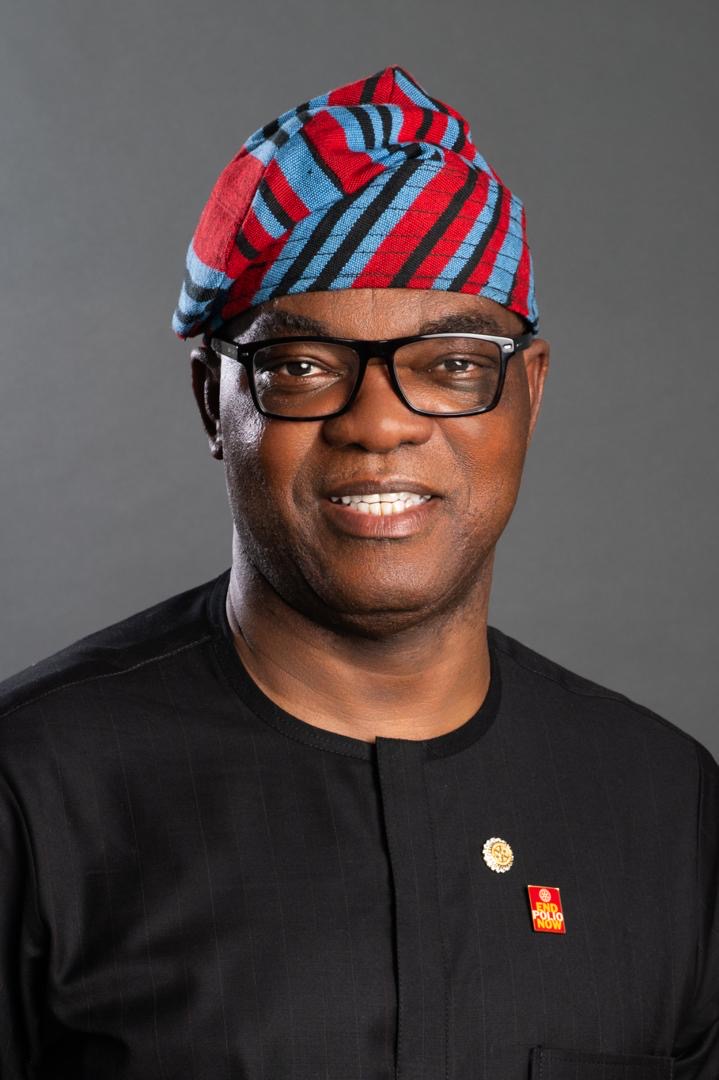
…Second African to lead the global membership organization will focus on peacebuilding, lasting peace
From Adeko Ukpa
A Nigerian, Olayinka Hakeem Babalola, will on Wednesday take office as the President of the Rotary International.
He is the second African to lead the global membership organization.
He is a member of the Rotary Club of Trans Amadi in Nigeria.
A statement by Rotary International said during his one-year term, Babalola will focus on strengthening Rotary’s contribution to peacebuilding and supporting sustainable, community-led solutions that address local and global challenges and improve lives.
Babalola said: “Rotary gives people the opportunity not only to make a difference in their communities, but also to grow through meaningful relationships, collaboration, and a deeper appreciation of different perspectives.
“At a time when many societies face division and uncertainty, I believe Rotary has an important role to play in building understanding, advancing peace, and creating opportunities for communities to thrive.
“As president, I look forward to highlighting and strengthening that impact around the world.”
Babalola brings to the role decades of experience advancing community development, peacebuilding, and public health initiatives across Africa. He has been actively involved with Rotary’s Peace Center at Makerere University in Uganda – the organization’s first on the continent.
As head of Rotary’s 45,000 clubs worldwide, Babalola will lead Rotary’s top priority of ending polio. Together with its Global Polio Eradication Initiative partners, Rotary has reduced polio cases by 99.9 percent and contributed more than US$3 billion and countless volunteer hours to protect over 3 billion children from this paralyzing disease.
He has also been deeply engaged in Rotary’s polio eradication efforts, serving on the End Polio Now Countdown to History Campaign Committee and advising the Nigeria National PolioPlus Committee.
Rotary members throughout the world develop and implement sustainable, community-driven projects that fight disease, promote peace, provide clean water, support education, save mothers and children, grow local economies and protect the environment. More than US$5.5 billion has been awarded through The Rotary Foundation – Rotary’s charitable arm that helps clubs work together to perform meaningful, impactful service – to support these initiatives over the last 100 years.
-
 Opinion2 years ago
Anioma State: A Necessary Proposal Rooted in Strategic Advantage
-
 Opinion4 months ago
Ibileye’s Quiet Revolution at Federal University Lokoja
-

 Business & Economy2 years ago
NASENI, Qietur partner to build 3000 Housing Units for Staff
-
 Law2 years ago
Human Right and Law Enforcement in Nigeria: A Critical Analysis
-

 Business11 months ago
Lithium boom has reshaped Nasarawa’s economy, says Prof Haruna
-

 Education1 year ago
TVET will change Nigeria for good, says NABTEB Registrar
-
Education1 year ago
NABTEB Registrar advises automotive, locomotive Engineers to do more to diversify Nigerian economy
-
 Opinion1 year ago
Engr. Kawu: A Heroic Homecoming for a Man of the People