
News
How Tinubu Contributed to My Success in NASENI – Prof. Haruna

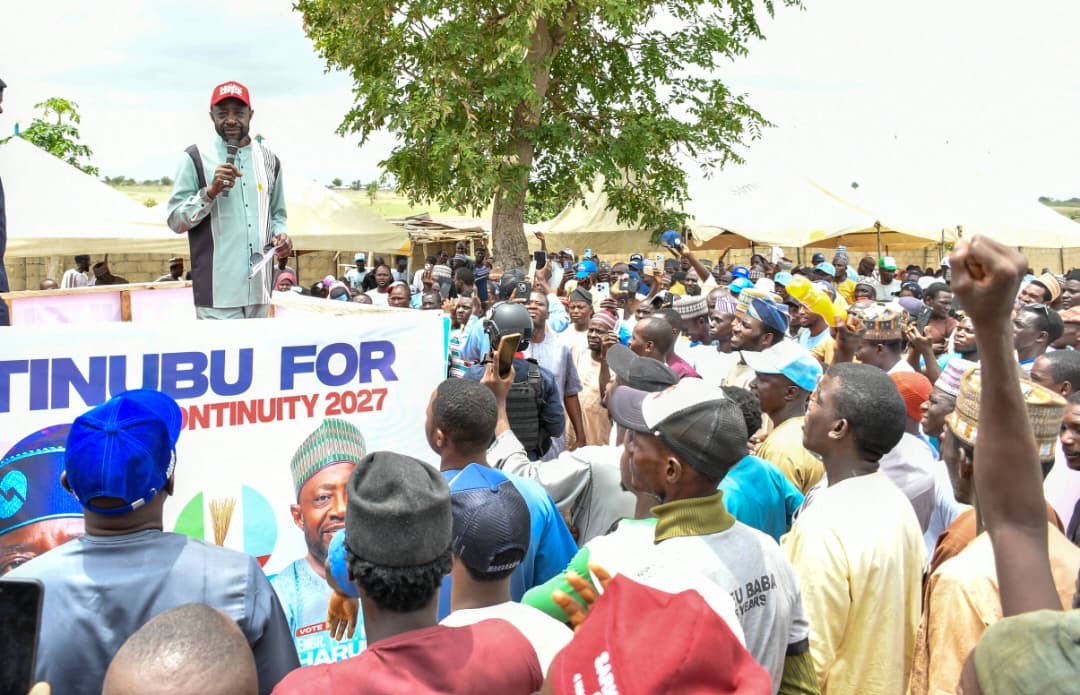
From Adeko Ukpa
A former Executive Vice Chairman of the National Agency for Science and Engineering Infrastructure (NASENI), Professor Mohammed Sani Haruna, has credited President Bola Ahmed Tinubu with playing a pivotal role in resolving long-standing institutional challenges that contributed to his success at the agency.
The former NASENI boss spoke during a consultative meeting in Keffi with stakeholders and support groups drawn from the three senatorial zones, where he sought their direction on whether to proceed with his ambition or withdraw.
Former Executive Vice Chairman/Chief Executive of the National Agency for Science and Engineering Infrastructure (NASENI),Prof. Mohammed Sani Haruna, addressing his supporters, during the stakeholders meeting with representatives of statewide support groups and associations, held at his Gubernatorial Campaign Office Keffi, yesterday.
Speaking on his tenure, Haruna said the achievements recorded at NASENI would be incomplete without acknowledging Tinubu’s intervention, even before he became President.
“This success story is incomplete if you don’t mention the contribution of President Bola Ahmed Tinubu when he was yet to be the President,” Haruna said.
He explained that for over three decades after the establishment of NASENI, the agency struggled to realise its statutory funding, prompting efforts to develop a framework for the assessment and collection of the NASENI Industrial Levy.
According to him, the process encountered major setbacks when a new leadership at the Federal Inland Revenue Service (FIRS) opposed the initiative.
“We ran into hitches for 34 years after the establishment of NASENI. Its statutory funding was not realised, and we developed a template for the commencement of the assessment and collection of the NASENI Industrial Levy. One of his trusted associates was appointed as the new chairman of FIRS, Babatunde Fowler, who came in and objected to it. He even refused to grant us an audience or allow any continuation,” Haruna said.
Haruna noted that he subsequently sought the intervention of Tinubu at his Lagos residence, facilitated by his associate, Tunde Rahman, alongside an Arewa youth leader, Alhaji Mohammed Yakubu.
“I then went to meet President Bola Ahmed Tinubu — at a time when he was not even a contestant — at his residence in Lagos. Tunde Rahman, my good friend, who is still an aide to President Tinubu, took me to him. I was accompanied by a leader of Arewa Youth, Alhaji Mohammed Yakubu. They are all alive,” he recounted.
He added that following discussions at Tinubu’s annual birthday colloquium, the issue was eventually resolved.
“After attending and contributing to the annual colloquium to mark his birthday, a meeting was held and President Bola Ahmed Tinubu listened to us, and eventually, the industrial levy issue was resolved. So, if you are celebrating our contribution, you should also remember the contribution of President Bola Ahmed Tinubu,” Haruna said.
Speaking further, Haruna declared that he will not step down for Senator Ahmed Aliyu Wadada in the Nasarawa State All Progressives Congress (APC) governorship race, despite the reported endorsement of Wadada by Governor Abdullahi Sule.
He told the gathering that his decision would be guided by their collective position.
“If you are resolved that we shall accept the verdict and withdraw from this struggle, I will vote ‘aye.’ If the decision of this meeting is that we shall go to the primaries, that is not my problem. That is the essence of this meeting,” he said.
After deliberations, stakeholders across the three zones unanimously urged him to remain in the race and test his popularity at the party’s primaries.
Accepting the outcome, Haruna said he would abide by their decision and move ahead with his campaign.
“When the government announced its decision, the aspirants in this forum agreed that we will consult our supporters and critical stakeholders and then take a unanimous decision. That is the reason why you did not hear from me. Your verdict has determined our next line of action, and I hereby accept to contest the primaries. We will be having our rally on Wednesday,” he said.
He defended his right to contest, citing his contributions to the formation and growth of the APC.
“I provided financial support to the Congress for Progressive Change and the establishment of the party. Some chairmen and officials are alive to attest to how we supported the establishment of party offices across local governments. I started my APC from the national. If this forum succeeds, even if I am not the governor, I should celebrate it because it is my initiative,” he said.
Haruna also addressed the issue of succession, noting that earlier expectations regarding a preferred candidate had not been met.
“We gave a blanket cheque that the governor could select anyone among those that would have our support based on certain expectations, but the situation has changed,” he said.
He maintained that his actions were not in defiance of party authority but rooted in democratic principles.
“We are not disobedient to constitutional authority. We are in the party and we are working for its success. If the primaries are free, fair and transparent, we will accept whatever Allah has decided as the verdict,” he said.
Stakeholders who spoke at the meeting cited zoning equity, Haruna’s track record, and his grassroots appeal as reasons for backing his candidacy.
From Nasarawa North, Suleyman Amgbashi emphasised the need for micro-zoning within Nasarawa West, noting that some local governments, such as Karu, had yet to produce a governor.
From the Southern zone, Barrister Ibrahim Adega said the absence of consensus made a primary contest inevitable.
“The governor has a preferred candidate, but that does not automatically make the candidate the choice of everyone. Since there is no consensus, there must be a contest. We told him clearly to go to the primary. We are ready for the contest,” he said.
Other speakers, including former APC chairman in Keffi Local Government, Mohammed Bello, and Rev. Dr. Pastor Benjamin Baka, described Haruna as a leading aspirant with verifiable achievements in public service and a strong support base across the state.
They expressed confidence that his leadership experience, particularly his record at NASENI, positions him as a formidable contender in the upcoming APC governorship primaries in Nasarawa State.

….Former Foreign Affairs Minister calls for stronger continental integration, warns against discrimination among Africans
By Adeko Ukpa
Former Minister of Foreign Affairs, Yusuf Maitama Tuggar, has condemned the growing hostility against fellow Africans in parts of the continent, particularly South Africa.
He warned that xenophobia undermines the ideals of Pan-Africanism and threatens Africa’s collective future.
Tuggar said Africa could not genuinely pursue continental unity, economic integration and shared prosperity while citizens of one African country were subjected to discrimination, intimidation and violence in another.
He spoke at the 2026 end-of-year event of The Bridge Club, where he served as chairman of the occasion.
The event featured renowned Kenyan scholar and Pan-African advocate, Professor P.L.O. Lumumba, as keynote speaker.
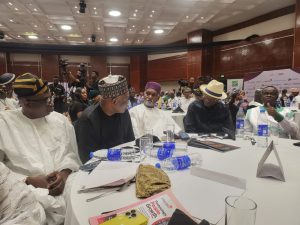
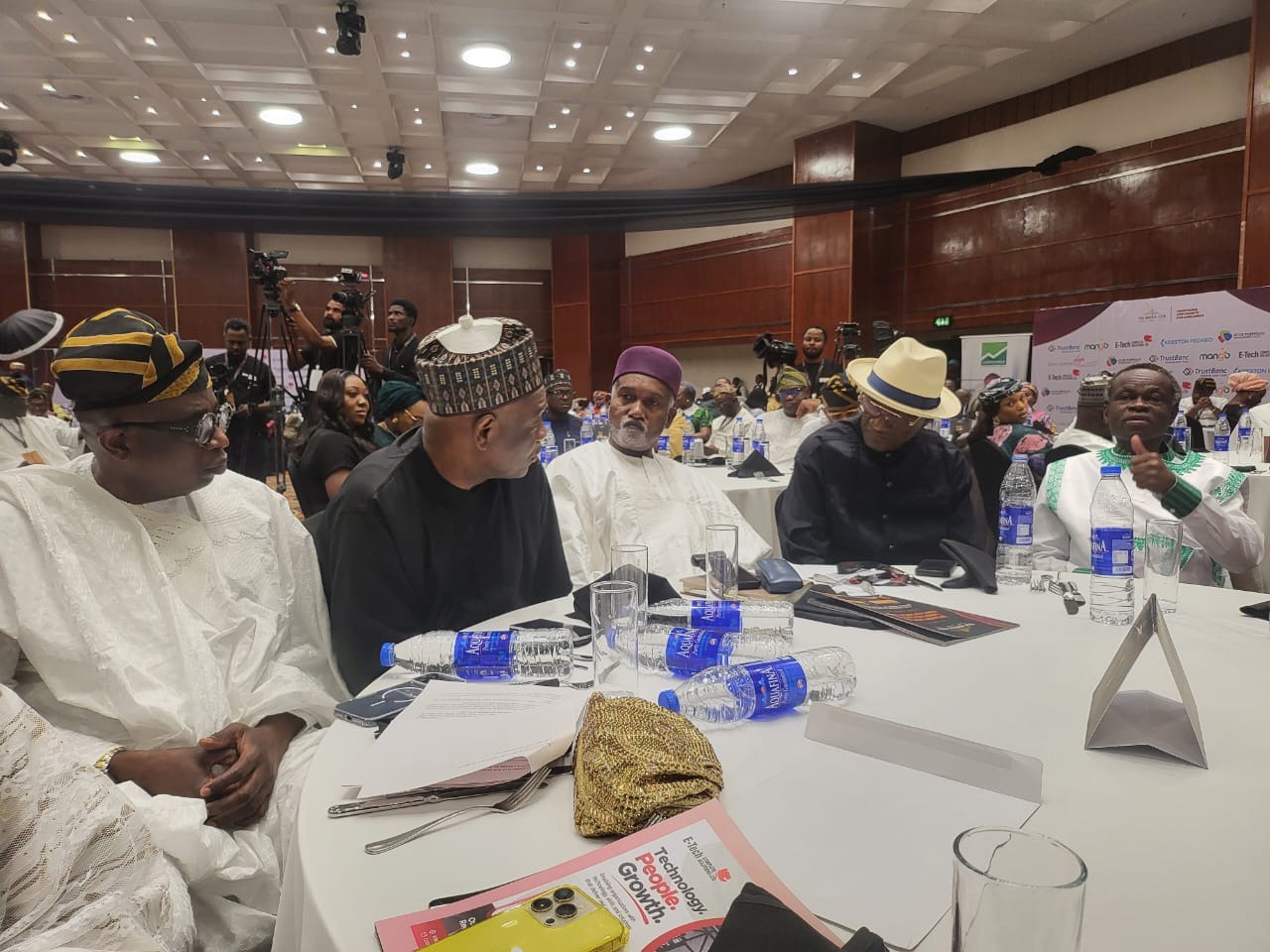
L-R: The President of The Bridge Club Lagos, Mr. Abdulhakeem Mustapha (SAN); the Executive Secretary, TETFUND, Arc. Sonny Echono; the Chairman of the occasion and a former Minister of Foreign Affairs, Amb. Yusuf Maitama Tuggar; a special guest, Mr Brodericks Arigbodi; and the Keynote Speaker, Prof. P.L.O. Lumumba at the end-of-the-year symposium of the club on Xenophobia and Pan-Africanism on Thursday at the Continental Hotel, Lagos.
The former minister, who reflected on Nigeria’s historical involvement in the struggle against apartheid in Southern Africa, said the country had made enormous sacrifices to secure the liberation of African countries from racist minority rule.
He recalled how Nigeria provided scholarships and other assistance to victims of apartheid, including South African students who survived the 1976 Soweto massacre.
According to him, Nigeria’s solidarity extended to Namibia, Angola and other African countries struggling against colonialism and racial oppression.
He said Nigerians of his generation grew up believing in African liberation and unity, making the current hostility against Nigerians and other black Africans in South Africa particularly difficult to understand.
Tuggar said: “These are but a very few of the reasons why Nigerians cannot fathom why they and other black Africans are being targeted in South Africa.
“Call it Afrophobia, which may be a better description than xenophobia, as non-black Africans appear to be exempted, or the more euphemistic framing of anti-migration protests, it is wrong and must be condemned.”
He described the development as particularly unfortunate at a time when African countries should be strengthening cooperation to improve their economic and political standing in the international community.
Tuggar, however, argued that understanding the historical and structural factors behind the hostility was necessary to addressing the problem, stressing that historical context should not be mistaken for justification.
He traced some of the roots of institutionalised segregation in Africa to colonial policies and the apartheid system, arguing that their psychological and social consequences continued to influence relationships within African societies.
The former minister said the continent needed intellectual rigour, historical understanding and stronger institutions to confront prejudice and other attitudes that undermine African solidarity.
He also identified economic integration and industrial development as critical elements of genuine Pan-Africanism.
According to him, Africa cannot achieve meaningful development by remaining a supplier of raw materials to the rest of the world while importing finished products.
He cited the vision of Nigerian development economist Adebayo Adedeji and other African intellectuals who advocated manufacturing, regional integration and the development of an African Economic Community.
Tuggar said the African Continental Free Trade Area (AfCFTA) offered an important opportunity to advance that vision by strengthening trade, industrialisation and the movement of goods and services across national borders.
He identified three important connections between economic integration and Pan-Africanism, including the need for free movement of labour as a foundation of an effective continental free trade system.
He said: “The path to Pan-Africanism is through the continental free trade area.
“As the father of capitalism, Adam Smith, once opined, the free circulation of labour is the foundation of any free trade system.”
Tuggar also expressed concern about the possible influence of external interests in fuelling anti-migrant sentiments, calling for greater scrutiny of organised anti-immigration campaigns and their sources of funding.
He warned that the relationship between Nigeria and South Africa remained too important to the continent’s future to be undermined by hostility and mutual suspicion.
He recalled South Africa’s support for Nigeria’s international engagements, including its efforts towards joining the Group of 20 (G20).
Earlier, President of The Bridge Club, Abdulhakeem Mustapha (SAN), said the theme of the event, Xenophobia Contradicts Pan-Africanism, reflected the urgent need for Africans to reconcile their commitment to continental unity with their treatment of fellow Africans.
Mustapha said Pan-Africanism must go beyond political declarations, diplomatic conferences and economic agreements to become evident in people’s attitudes and conduct.
He asked: “How can we genuinely aspire to a united Africa when an African is made to feel unwelcome, unsafe or unwanted in another African country simply because of nationality, ethnicity or origin?”
He added that Africa’s prosperity, security and dignity were interconnected and could not be achieved sustainably at the expense of another African country.
Mustapha urged members of the club and other stakeholders to promote tolerance, mutual respect and understanding across national and cultural boundaries.
The event brought together professionals, business leaders, diplomats and other distinguished guests to discuss the future of African unity and the responsibilities of citizens in building a more inclusive continent.
News
Lumumba, Tuggar, Dabiri-Erewa to Discuss Xenophobia and Pan-Africanism at The Bridge Club of Lagos Event
By Adeko Ukpa
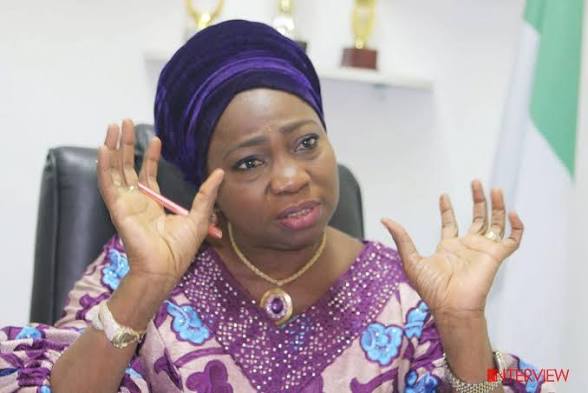
Renowned anti-corruption advocate Prof. P. L. O. Lumumba; former Minister of Foreign Affairs, Amb. Yusuf Maitama Tuggar; and Chairman of the Nigerians in Diaspora Commission (NiDCOM), Hon. Abike Dabiri-Erewa, will headline discussions on “Xenophobia Contradicts Pan-Africanism” at the Grand End-of-Year Event of The Bridge Club of Lagos.
The event will take place on 12 November 2026 at the Lagos Continental Hotel, Lagos.
Other participants include Prof. David Aworawo, Head of the Department of History and International Studies at the University of Lagos; Amb. Godwin Adakole Adama, former Consul-General of Nigeria in South Africa; and Prof. Bobby J. Moroe, Consul-General of South Africa in Nigeria. Respected columnist and broadcaster Dr. Reuben Abati will moderate the discussion.
Founded in Lagos in 2017 by a group of friends from diverse professional backgrounds, The Bridge Club of Lagos provides a platform for thoughtful dialogue on issues of national and international significance.
Through its annual gathering, the Club examines the implications of domestic and foreign policies for Nigeria and contributes to discussions on national development, international relations and foreign direct investment.
Speaking on this year’s programme, the President of The Bridge Club of Lagos, Mr. A. U. Mustapha, SAN, said the growing incidence of xenophobia demands urgent attention.
“It is time to bring xenophobia to the forefront of public discourse before it further erodes African unity,” he said.
“Our Club seeks to bring together diverse perspectives and identify practical solutions to the growing hostility among Africans. We stood together in the struggle against colonialism. Having secured our hard-earned independence, we must confront the divisions that now threaten our shared progress.
“We have invited distinguished experts to examine the causes of xenophobia and recommend measures to make Africa a continent where all Africans can live, work and contribute without fear of hostility or discrimination.
“Our discussions will explore the economic, social and political factors driving these tensions. The resulting recommendations will be communicated to relevant governments and institutions to encourage meaningful action.
“Africa must rise together. We must reject bloodshed, maiming, looting, discrimination and hatred, and renew our commitment to the ideals of Pan-Africanism.”
By Adeko Ukpa
Rotary International District 9127 has called for increased financial contributions towards its humanitarian projects, particularly interventions targeting critical healthcare needs, hearing disabilities and mobility challenges among vulnerable Nigerians.
The call was made at the 2026 Rotary Foundation Dinner of the district, where the District Governor, Engr. Sikiru Owonikoko, and Chairman of the Organising Committee, Engr. Michael Oluwagbemi, urged individuals and corporate organisations to strengthen their support for humanitarian service.
The District Governor, Owonikoko, described generosity as an important instrument for promoting peace, development and social inclusion.
He said giving provided hope for the less privileged, strengthened relationships within communities and helped bridge socio-economic divisions.
“Giving gives hope to the less privileged; it creates bonds in a society; it bridges socio-economic gaps; it fosters unity; and it makes the world safer and better for all of us.
“Giving therefore is a passport to peace and development. More importantly, it is, without a shred of doubt, a divine obligation,” he said.
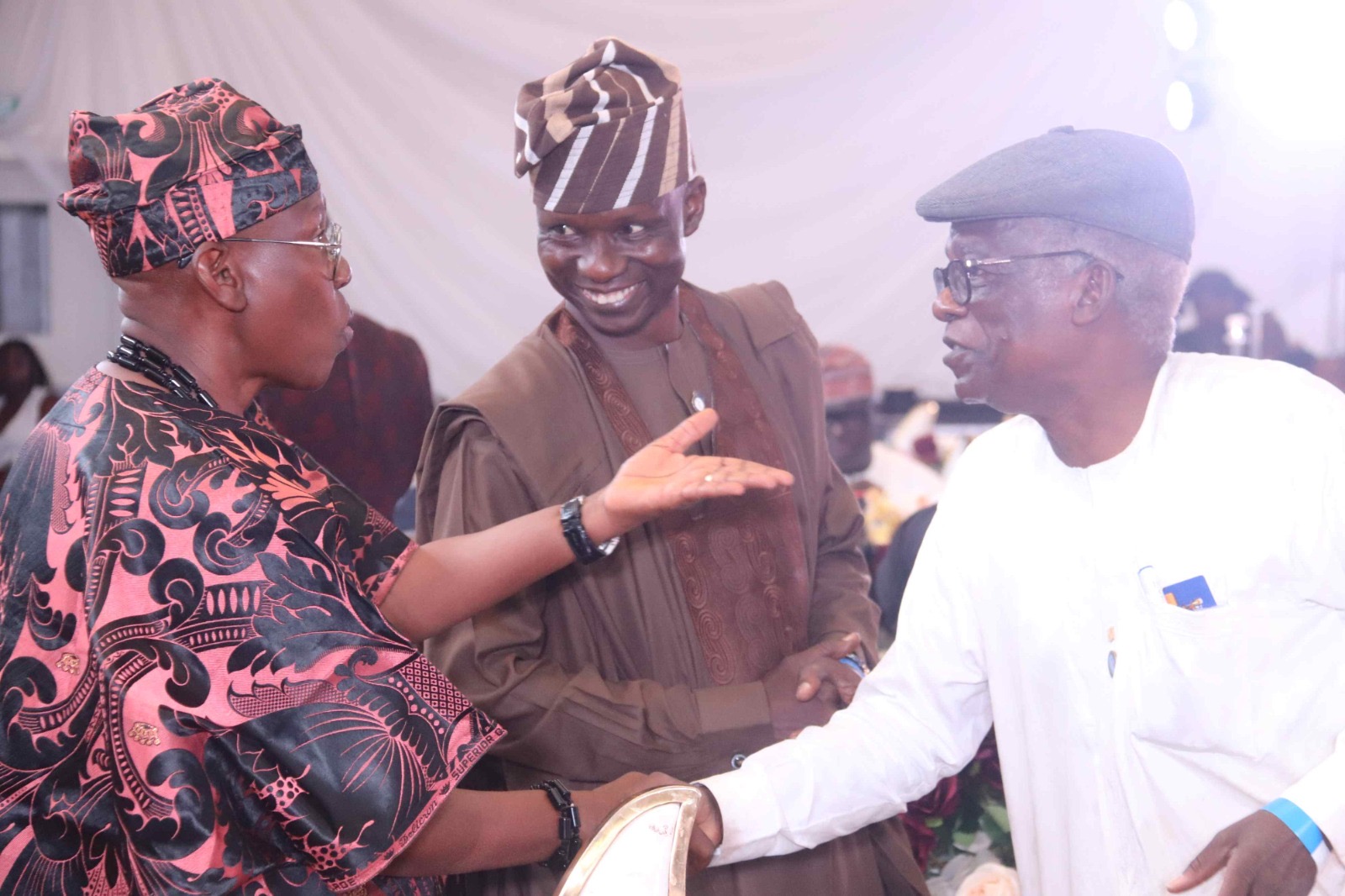
The District Governor for Rotary International District 9127, Engr. Sikiru Adetona Owonikoko chatting with the Assistant District Executive Secretary, Rtn. Bidemi Abidemi and one of best donors to The Rotary Foundation(TRF) in Nigeria, Dr. Bala Inuwa during the TRF dinner of the
district in Abuja on Saturday.
Owonikoko urged Nigerians to see philanthropy as a shared responsibility, noting that collective contributions could produce lasting changes in the lives of individuals and communities.
He said the Rotary Foundation had continued to demonstrate how ordinary people, working together, could achieve extraordinary results through humanitarian service.
“Every contribution tells a story. Every act of generosity creates an opportunity. And every life we touch reminds us why we serve,” he added.
The organising committee chairman, Oluwagbemi, said donations to the Rotary Foundation were helping to address critical needs in society, particularly among people who required specialised medical attention and assistance to improve their quality of life.
He identified intensive care support at the National Hospital, hearing aid interventions and prosthetic assistance through Cedarcrest Hospital as some of the projects demonstrating the impact of the Foundation’s contributions.
He said the initiatives were designed to provide practical assistance to people whose circumstances might otherwise limit their access to essential healthcare and medical support.
“Behind this evening’s celebration are people whose lives our generosity can change: a patient needing critical care, someone seeking the gift of hearing, or a polio survivor working towards greater mobility and independence,” he said.
He explained that the projects reflected the importance of translating philanthropy into measurable interventions that directly addressed human needs.
“Our contributions become treatment, equipment and opportunity. They reach people we never meet, but whose lives we have the privilege to improve,” he added.
Oluwagbemi appealed to both longstanding donors and first-time contributors to make personal commitments to the Foundation, assuring them that its team would provide guidance on the donation process and ensure that contributions were properly recorded.
He also acknowledged the support of the District Governor, Foundation leadership, sponsors, partners and members of the organising committee in making the dinner possible.
The event, which featured fellowship, recognition and a documentary on the benefits of the Rotary Foundation, was organised to celebrate the Foundation’s achievements and mobilise additional resources for its humanitarian activities.
Oluwagbemi expressed hope that the generosity demonstrated at the dinner would extend beyond the gathering to reach people in need.
“May the light in this room reach beyond these walls and bring hope to someone waiting for help,” he said.
-
 Opinion2 years ago
Anioma State: A Necessary Proposal Rooted in Strategic Advantage
-
 Opinion6 months ago
Ibileye’s Quiet Revolution at Federal University Lokoja
-
 Business & Economy2 years ago
NASENI, Qietur partner to build 3000 Housing Units for Staff
-
 Business1 year ago
Lithium boom has reshaped Nasarawa’s economy, says Prof Haruna
-
 Law2 years ago
Human Right and Law Enforcement in Nigeria: A Critical Analysis
-
 Education1 year ago
TVET will change Nigeria for good, says NABTEB Registrar
-
Education1 year ago
NABTEB Registrar advises automotive, locomotive Engineers to do more to diversify Nigerian economy
-
 Opinion1 year ago
Engr. Kawu: A Heroic Homecoming for a Man of the People