
Arts & Life
The Dream Death Could Not Kill: Remembering Dr. Olukemi Adamolekun at 80 – Itunu Ajayi

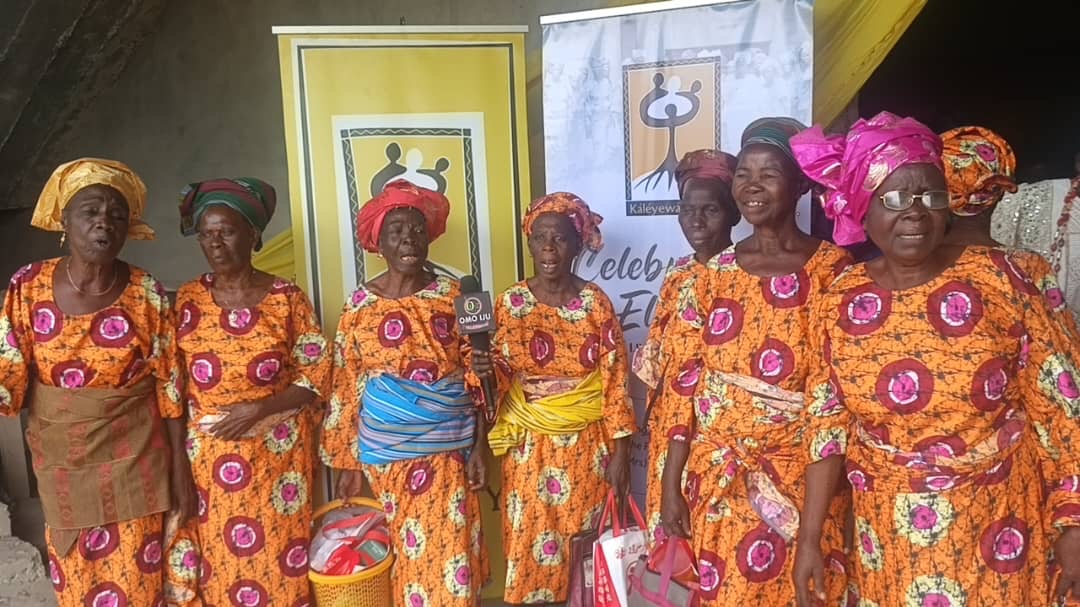
Twenty-four years after Dr. Olukemi Adamolekun was brutally killed, the vision she conceived for the care of elderly Nigerians continues to touch hundreds of lives through Kaleyewa House.
Some people leave behind memories; others leave behind a mission. Dr. Olukemi Adamolekun left both.
While living in the United States with her husband, Ladipo Adamolekun, in the period leading up to his retirement from the World Bank, Olukemi began thinking about what she could do for elderly people in her hometown, Iju, Ondo State.
She had seen the group-home system in the United States and began considering how such a model could be adapted to Nigeria. Her vision was to establish a place where elderly people could receive food, medical care and, for those who needed it, accommodation.
It was a simple idea, but a profound one: to create a system in which elderly people would not be forgotten or left to fend for themselves.
The vision attracted the attention of the Ondo State Government under the administration of the late Governor Adebayo Adefarati. The government welcomed the proposal and Dr. Akerele Adu, who was then a commissioner in the administration, was directed to facilitate the allocation of land for the proposed group home.
Land was subsequently allocated along Igbatoro Road.
But Olukemi would never live to see the dream become the institution she had imagined.
She registered the initiative as a non-profit organization with the Corporate Affairs Commission in 2001. On May 4, 2002, barely a year later, while in Nigeria pursuing the Kaleyewa project, she was shot at the Efunsetan Roundabout in the heart of Ibadan, Oyo State.
She was approaching her 56th birthday.
The circumstances surrounding her death remain painful for her family. She was chauffeur-driven at the time. According to the account of the family, the hoodlums locked the young driver in the trunk of the vehicle and later abandoned him at the Seme border. Twenty-four years later, the family says there has been no arrest and no recovery of the vehicle.
It was a devastating end to the life of a woman who had returned to Nigeria with the intention of improving the lives of elderly people.
Her death could easily have marked the end of Kaleyewa House.
It did not.
At the first anniversary of her death in 2003, her husband, children and others involved in the project resolved to continue the work she had started. A board was constituted for Kaleyewa House, and the family has remained committed to the project ever since.
The original vision, however, suffered a major setback. The land allocated by the Adefarati administration was subsequently revoked under the administration of former Governor Olusegun Mimiko.
The revocation meant that the group home Olukemi had envisaged could not proceed as originally planned. In response, her children decided to rebuild the house of her late mother as a future home for Kaleyewa House.
For now, Kaleyewa continues its work from a smaller base than the founder had envisioned.
But the size of the building has not diminished the size of the impact.
Kaleyewa House currently has more than 400 elderly people under its care. Food, medical tests and treatment are provided to beneficiaries on a bi-monthly basis. Its reach extends beyond those who are physically able to attend activities organized by the organization. Elderly people who are bedridden and unable to attend are also attended to.
For some beneficiaries, Kaleyewa House also pays rent, providing assistance to people whose circumstances make accommodation a challenge.
In many ways, Kaleyewa has become a lifeline to elderly people in Iju and it’s immediate neighboring community Itaogbolu.
At the recent celebration of what would have been Dr. Adamolekun’s 80th birthday, the impact of her vision was visible.
In Iju, elderly beneficiaries gathered in their Aso-Ebi to celebrate the woman whose dream had brought them together. They were treated to food, entertainment and gifts to take home. Beyond the material benefits, however, there was something else on display: companionship.
For many of the elderly people present, being surrounded by people of their own generation appeared to bring genuine joy. The occasion offered them an opportunity to eat together, laugh together and simply enjoy one another’s company.
It was, in its own way, a celebration of a life that had been cut short but a vision that had survived.
A childhood friend of Olukemi who referred to her as a ‘Rose behind the walls’ at her demise, Mrs. Omotewa Aderibigbe said her friend tried in vain to make her fall in love with Mathematics, a subject she never understood how anyone could be comfortable with.
Her words”
Kemi was my childhood friend. We attended the same Pry School, and the same Secondary School (Fiwasaye Girls’ Grammar School, Akure). Growing up together in the village, was fun, but under very strict discipline. Being together was our cherished bond. We used to go to the stream in the bush to wash our clothes in preparation for school resumption. We would then enter the stream, and bathed with our dresses on. It was all giggles. I used to pity her when she was sent home for school fees along with some of us, because, I saw her traumatized in the midst of affluence”.
Aderibigbe who retired as a Deputy Director from the Ministry of External Affairs who herself turned 80 in April said Olukemi never allowed any setback to dampen her resolve to excel in life.
“She was good in Mathematics and I was good in English. I hated Mathematics with a passion. She would try to help me with Mathematics and I would refuse. She would tell me Mathematics was as simple as English: (the same words our School Principal used, to persuade me to take the subject seriously.) She wanted the best for everybody, and this was what addressed her passion for a better life for the Oldies, which birthed KALEYEWA. Memories of Kemi are everlasting. That is why she lives on”.
A retired principal who also is a pioneer volunteer of the Home Chief Adedipe Adegboye said the survey of elders in the two communities were done at the onset of the program, he said apart from food items, elders also get free distribution of clothes, shoes, bags and torchlights. He reiterated the commitment of the organization in giving health counselling to beneficiaries whenever food distributions are done.
His words. “ The initial plan of the founder was to be giving money to beneficiaries but due to my experience in the community on what the needs of the people are, I advised her to concentrate on food, health care and accommodation. We distribute food items that include rice, beans, salt and Maggi which the elders had said they want changed to locust beans. This distribution is done six times in a year”.
Adegboye called on well spirited Nigerians to partner with the organization in other to expand its scope. The two communities were just pioneers the founder intended to start with.
In the same vein at the event, Chief Bunmi Alade, FCA, a retired Permanent Secretary in Ondo State and the Balogun Ijo of St. Matthew’s Anglican Church, Iju, said what particularly impressed him about the founder was the absence of political motivation behind her mission.
He described Olukemi as a woman who, despite being relatively young and not having to be a billionaire, had already developed the desire to give back to her community.
“I appreciate the founder for her vision and desires to put smiles into the faces of the less privileged, most especially the aged,” he said.
He noted that Olukemi’s decision to dedicate herself to improving the lives of people around her demonstrated a heart of compassion and selflessness.
Alade also commended Olukemi’s husband and children for sustaining the project after her death, saying their commitment demonstrated that she had successfully created within her family a passion for giving back to humanity.
Alade’s observation touches on perhaps the most remarkable part of the Kaleyewa story.
American actor and filmmaker Tyler Perry once captured the essence of such service in a simple statement: “It’s all about trying to help somebody cross.”
That philosophy resonates with the work Dr. Adamolekun began. She was trying to help elderly people cross the difficult terrain of hunger, loneliness, inadequate medical care and neglect. She did not wait until she had unlimited resources before acting. She saw a need and decided to do something about it.
Olukemi did not live long enough to build the institution she imagined, but she had planted the idea deeply enough for those she left behind to carry it forward.
Her husband, children, friends and supporters became custodians of a dream that belonged originally to one woman.
Twenty-four years after her death, her family continues to do exactly that.
The proposed permanent group home remains an unfinished part of her original dream, but Kaleyewa House has already demonstrated what can happen when compassion is converted into action.
Kaleyewa’s work also raises a larger question about the place of elderly people in Nigerian society. As families become increasingly stretched by economic and social pressures, who will care for those who are old, vulnerable and unable to care for themselves?
For the beneficiaries of Kaleyewa House, that question has, at least for now, an answer.
There is an organization that remembers them.
There are people who bring them food.
There are people who arrange medical care.
There are people who pay rent when they cannot afford it.
And there are people who have refused to allow the dream of a woman who died more than two decades ago to disappear with her.
A scholarship program to deepen the dimension of her legacy was also announced by the family. This takes effect this September for students who wish to pursue any of the five disciplines in which she obtained university degrees, at any public first-generation university in Nigeria.
Dr. Olukemi Adamolekun did not live to celebrate her 80th birthday.
But her 80th birthday was celebrated.
And perhaps the greatest tribute to her is not that her family remembered the date of her birth, but that on the occasion of that milestone, hundreds of elderly people gathered in her hometown Iju because of something she started.
Her life ended in 2002.
Her dream did not.
The woman died.
The mission did not.
***Itunu Ajayi is the junior sister of Olukemi.
She writes from the US.
By Adeko Ukpa
The Rotary Club of Abuja Legacy has declared its intention to make purposeful and measurable impact in community development, launching its activities with a maternal and child health outreach in Abuja.
Although yet to make its formal public debut, the club said it had already defined its mission and priorities, choosing to begin with an intervention aimed at improving maternal healthcare.
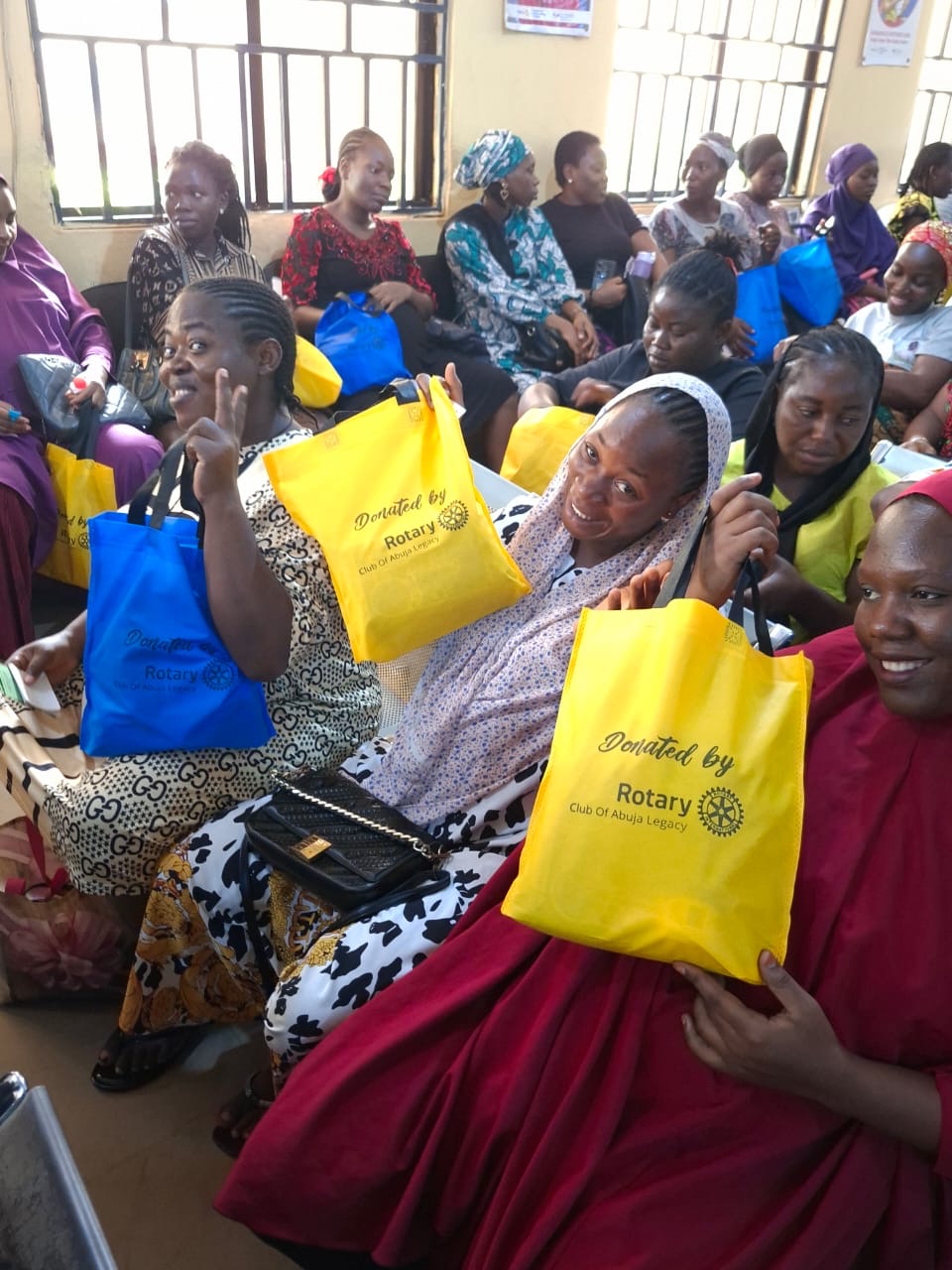
The initiative, conducted at Gwarimpa General Hospital, Lifecamp, reached over 100 expectant mothers with free birthing kits and health education sessions focused on postpartum depression and emotional wellbeing after childbirth.
According to the club, the programme underscores the need for maternal care to extend beyond delivery by addressing the mental health needs of new mothers.
Charter President, Winifred Mngu Mbashall, said the club was founded on the principle of intentional service rather than symbolic activities.
“We didn’t come to find our voice; we built it before we arrived. If we care about how babies are born, we must care about how mothers heal, and that is the legacy the Rotary Club of Abuja Legacy is here to leave behind,” she said.
Also speaking, Project Chair, Annmarie Ada Adamu, said the club intends to distinguish itself through impactful programmes that combine Rotary’s humanitarian tradition with innovative approaches to community service.
“We are not here to blend in with tradition; we are here to elevate it. This is Rotary, redefined through intentional impact,” she said.
Beneficiaries during the outreach.
The Rotary Club of Abuja Legacy said the maternal and child health project is the first of several planned interventions as it seeks to establish itself as a leading platform for sustainable humanitarian service and community development.
From Adeko Ukpa, Abuja
A new chapter in child development advocacy began in Abuja on Thursday, with the official launch of the “My Child’s Psyche Initiative (MCPI),” a foundation committed to transforming the emotional and psychological wellbeing of Nigerian children.
The Initiative aims to promote emotional intelligence, psychological resilience, and holistic growth for the nation’s young generation.
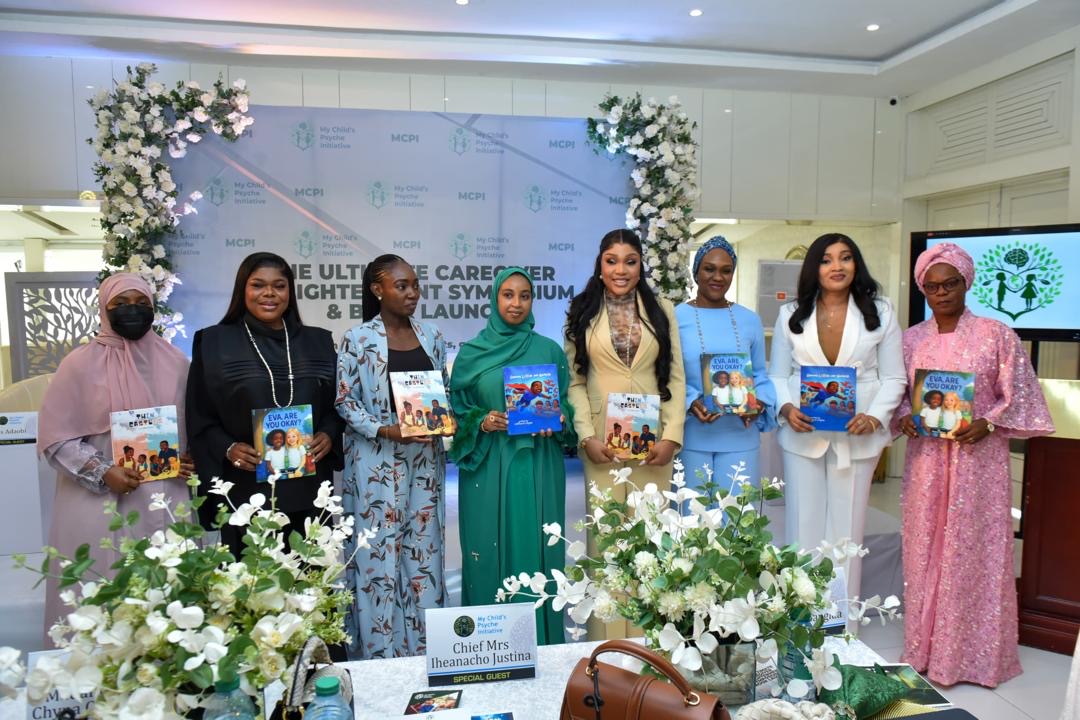
The launch featured the maiden Ultimate Caregiver Enlightenment Symposium & Book Presentation, themed “United in Care: Guiding Hearts, Growing Minds.”
The event drew parents, teachers, and caregivers determined to raise emotionally balanced and resilient children in today’s increasingly complex world.
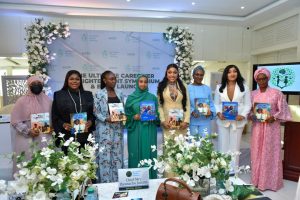
L-R Hajiya Khadijah Mohammed Isa, Wife of Former Minister of Communications, Mrs Justina Ihenacho, Child’s Righy Advocate, Mrs Ruqayya Tofa-Basheer, Founder Ummi Africa, Dr. Maryam Tukur-Shagaya, Obstetrician and Gynaecologist, Mrs Eni Ogon, Founder, Broadoaks British School, Hajiya Hadiza Yusuf, SA, Welfare and Community Engagement, North Central Development Commission.
Speaking at the event, Madam Chyna Clifford, child development advocate, children’s book illustrator, and founder of MCPI, said the Initiative was inspired by the need to understand the inner world of children, a world often filled with wonder, dreams, anxieties, and untapped potential. She noted that societal pressures frequently drown out children’s emotions, leaving questions unanswered and feelings overlooked.
According to her, this year’s symposium focused on children on the autism spectrum, providing caregivers and educators with practical strategies to better support their unique developmental and emotional needs.
Madam Clifford stressed that MCPI seeks to bridge the gap between psychology and parenting by equipping caregivers with tools, resources, and knowledge to support children’s emotional and behavioural development both at home and in school.
“Emotional intelligence must be valued as highly as academic achievement if Nigeria is to build a stable, empathetic, and progressive society,” she said.
“If we are serious about raising a generation of emotionally intelligent, morally grounded, and socially responsible leaders, we must first understand the intricacies of a child’s mind. Healing the psyche of the child is healing the future of the nation,” she added.
The launch brought together educators, mental health professionals, and caregivers for a day of learning, reflection, and practical engagement.
Dr. Adaobi Okeke, a guest speaker, delivered a session on “Learning Differences & Neurodiversity (ADHD, Dyslexia & Autism),” highlighting how parents and teachers can better support neurodivergent children both at home and in school.
She also emphasized the need to reduce stress during pregnancy as a critical factor affecting children’s neurodevelopment.
An obstetrician and gynaecologist, Dr. Maryam Tukur-Shagaya, spoke on “Postpartum Struggles and the Emotional Journey of Motherhood,” stressing the importance of supporting the mental wellbeing of new mothers, whose emotional challenges are often overlooked.
The founder of Ummi Women Empowerment Foundation (Ummi Africa), Mrs. Ruqayya Tofa-Basheer, encouraged women to prioritise self-care and work–life balance, offering practical strategies for emotional regulation in high-pressure environments.
An educationist and founder of Broadoaks British School, Mrs. Eni Ogon, highlighted the need for stronger collaboration between schools and parents to ensure children’s mental wellness is nurtured alongside academic development.
The symposium reflected MCPI’s core mission of fostering emotional resilience and holistic development at all stages of childhood.
In closing, the Initiative extended an open invitation to families, educators, and caregivers: “Come, learn, unlearn, and relearn with us – for the sake of the minds we’re nurturing and the future we’re shaping.”
With its official launch, according to the founder, MCPI has positioned itself at the forefront of national conversations on child psychology, emotional wellbeing, and the urgent need to raise a generation that is not only brilliant but also balanced, not only informed but also inspired, and not only successful but genuinely humane.

From Adeko Ukpa, Abuja
A former Minister of Information, Prof. Jerry Gana will on Sunday mark his 80th birthday with a book launch.
A statement by his son, Hon. Dr. Joshua Audu Gana (Member of the House of Representatives from Mokwa, Lavun and Edati Federal Constituency) said Gana was born on November 30, 1945.
The statement said the book will be unveiled at the Africa Hall, Bola Ahmed Tinubu International Conference Centre, Abuja.
The statement said: “Professor Gana’s life and career have been profoundly impactful, spanning decades of dedicated service to our nation as a former Minister of Information, Minister of Solid Minerals, and a key figure in national development and democratic processes. His contributions to academia, politics, and national discourse have left an indelible mark on Nigeria.
“In honour of his legacy and this significant milestone, a series of celebratory events
are being planned. We believe that his life story is one of inspiration and national importance, and it is a narrative that deserves to be shared.”
-

 Opinion2 years ago
Anioma State: A Necessary Proposal Rooted in Strategic Advantage
-

 Opinion5 months ago
Ibileye’s Quiet Revolution at Federal University Lokoja
-

 Business & Economy2 years ago
NASENI, Qietur partner to build 3000 Housing Units for Staff
-

 Law2 years ago
Human Right and Law Enforcement in Nigeria: A Critical Analysis
-

 Business12 months ago
Lithium boom has reshaped Nasarawa’s economy, says Prof Haruna
-

 Education1 year ago
TVET will change Nigeria for good, says NABTEB Registrar
-
Education1 year ago
NABTEB Registrar advises automotive, locomotive Engineers to do more to diversify Nigerian economy
-

 Opinion1 year ago
Engr. Kawu: A Heroic Homecoming for a Man of the People