
Arts & Life
New initiative targets emotional growth, mental wellbeing of children in Nigeria

From Adeko Ukpa, Abuja
A new chapter in child development advocacy began in Abuja on Thursday, with the official launch of the “My Child’s Psyche Initiative (MCPI),” a foundation committed to transforming the emotional and psychological wellbeing of Nigerian children.
The Initiative aims to promote emotional intelligence, psychological resilience, and holistic growth for the nation’s young generation.
The launch featured the maiden Ultimate Caregiver Enlightenment Symposium & Book Presentation, themed “United in Care: Guiding Hearts, Growing Minds.”
The event drew parents, teachers, and caregivers determined to raise emotionally balanced and resilient children in today’s increasingly complex world.
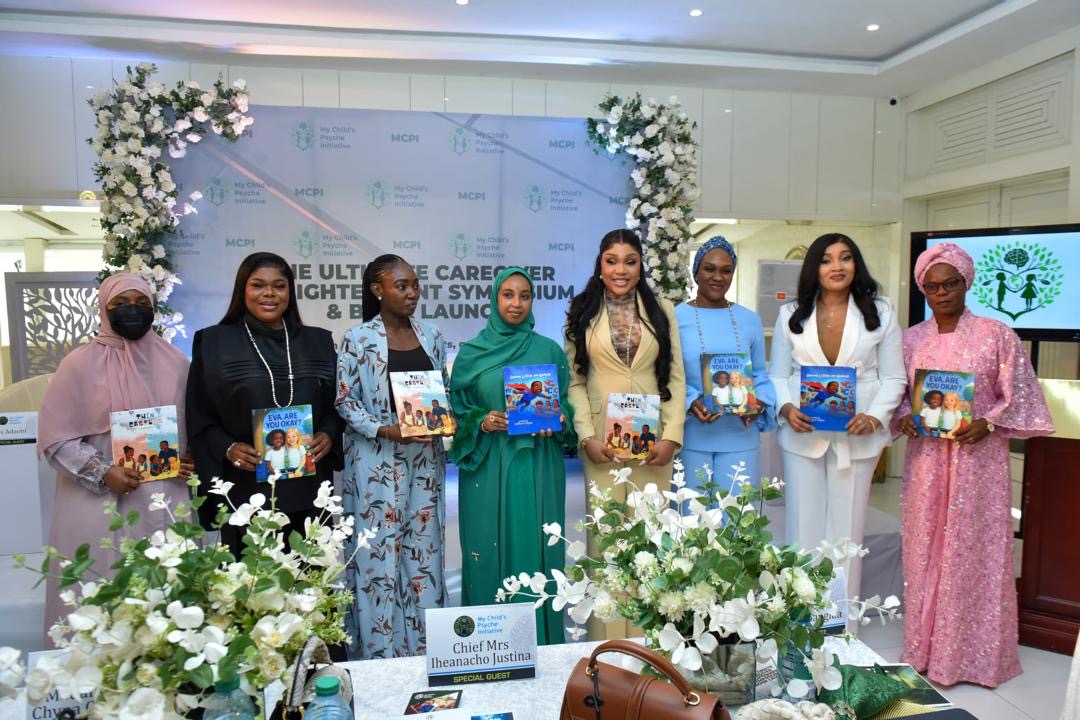
L-R Hajiya Khadijah Mohammed Isa, Wife of Former Minister of Communications, Mrs Justina Ihenacho, Child’s Righy Advocate, Mrs Ruqayya Tofa-Basheer, Founder Ummi Africa, Dr. Maryam Tukur-Shagaya, Obstetrician and Gynaecologist, Mrs Eni Ogon, Founder, Broadoaks British School, Hajiya Hadiza Yusuf, SA, Welfare and Community Engagement, North Central Development Commission.
Speaking at the event, Madam Chyna Clifford, child development advocate, children’s book illustrator, and founder of MCPI, said the Initiative was inspired by the need to understand the inner world of children, a world often filled with wonder, dreams, anxieties, and untapped potential. She noted that societal pressures frequently drown out children’s emotions, leaving questions unanswered and feelings overlooked.
According to her, this year’s symposium focused on children on the autism spectrum, providing caregivers and educators with practical strategies to better support their unique developmental and emotional needs.
Madam Clifford stressed that MCPI seeks to bridge the gap between psychology and parenting by equipping caregivers with tools, resources, and knowledge to support children’s emotional and behavioural development both at home and in school.
“Emotional intelligence must be valued as highly as academic achievement if Nigeria is to build a stable, empathetic, and progressive society,” she said.
“If we are serious about raising a generation of emotionally intelligent, morally grounded, and socially responsible leaders, we must first understand the intricacies of a child’s mind. Healing the psyche of the child is healing the future of the nation,” she added.
The launch brought together educators, mental health professionals, and caregivers for a day of learning, reflection, and practical engagement.
Dr. Adaobi Okeke, a guest speaker, delivered a session on “Learning Differences & Neurodiversity (ADHD, Dyslexia & Autism),” highlighting how parents and teachers can better support neurodivergent children both at home and in school.
She also emphasized the need to reduce stress during pregnancy as a critical factor affecting children’s neurodevelopment.
An obstetrician and gynaecologist, Dr. Maryam Tukur-Shagaya, spoke on “Postpartum Struggles and the Emotional Journey of Motherhood,” stressing the importance of supporting the mental wellbeing of new mothers, whose emotional challenges are often overlooked.
The founder of Ummi Women Empowerment Foundation (Ummi Africa), Mrs. Ruqayya Tofa-Basheer, encouraged women to prioritise self-care and work–life balance, offering practical strategies for emotional regulation in high-pressure environments.
An educationist and founder of Broadoaks British School, Mrs. Eni Ogon, highlighted the need for stronger collaboration between schools and parents to ensure children’s mental wellness is nurtured alongside academic development.
The symposium reflected MCPI’s core mission of fostering emotional resilience and holistic development at all stages of childhood.
In closing, the Initiative extended an open invitation to families, educators, and caregivers: “Come, learn, unlearn, and relearn with us – for the sake of the minds we’re nurturing and the future we’re shaping.”
With its official launch, according to the founder, MCPI has positioned itself at the forefront of national conversations on child psychology, emotional wellbeing, and the urgent need to raise a generation that is not only brilliant but also balanced, not only informed but also inspired, and not only successful but genuinely humane.
By Adeko Ukpa
Rotary International District 9127 has called for increased financial contributions towards its humanitarian projects, particularly interventions targeting critical healthcare needs, hearing disabilities and mobility challenges among vulnerable Nigerians.
The call was made at the 2026 Rotary Foundation Dinner of the district, where the District Governor, Engr. Sikiru Owonikoko, and Chairman of the Organising Committee, Engr. Michael Oluwagbemi, urged individuals and corporate organisations to strengthen their support for humanitarian service.
The District Governor, Owonikoko, described generosity as an important instrument for promoting peace, development and social inclusion.
He said giving provided hope for the less privileged, strengthened relationships within communities and helped bridge socio-economic divisions.
“Giving gives hope to the less privileged; it creates bonds in a society; it bridges socio-economic gaps; it fosters unity; and it makes the world safer and better for all of us.
“Giving therefore is a passport to peace and development. More importantly, it is, without a shred of doubt, a divine obligation,” he said.

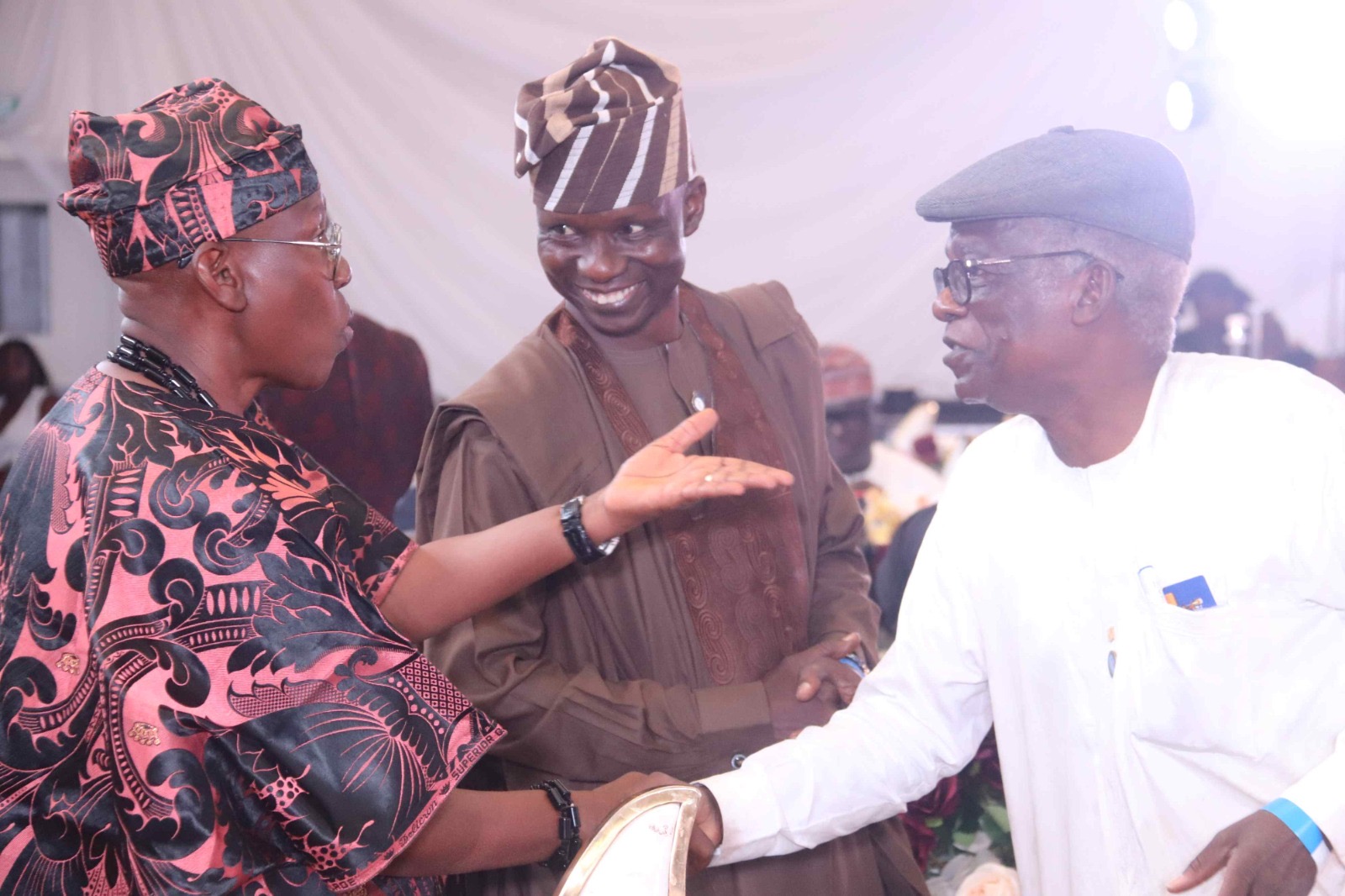
The District Governor for Rotary International District 9127, Engr. Sikiru Adetona Owonikoko chatting with the Assistant District Executive Secretary, Rtn. Bidemi Abidemi and one of best donors to The Rotary Foundation(TRF) in Nigeria, Dr. Bala Inuwa during the TRF dinner of the
district in Abuja on Saturday.
Owonikoko urged Nigerians to see philanthropy as a shared responsibility, noting that collective contributions could produce lasting changes in the lives of individuals and communities.
He said the Rotary Foundation had continued to demonstrate how ordinary people, working together, could achieve extraordinary results through humanitarian service.
“Every contribution tells a story. Every act of generosity creates an opportunity. And every life we touch reminds us why we serve,” he added.
The organising committee chairman, Oluwagbemi, said donations to the Rotary Foundation were helping to address critical needs in society, particularly among people who required specialised medical attention and assistance to improve their quality of life.
He identified intensive care support at the National Hospital, hearing aid interventions and prosthetic assistance through Cedarcrest Hospital as some of the projects demonstrating the impact of the Foundation’s contributions.
He said the initiatives were designed to provide practical assistance to people whose circumstances might otherwise limit their access to essential healthcare and medical support.
“Behind this evening’s celebration are people whose lives our generosity can change: a patient needing critical care, someone seeking the gift of hearing, or a polio survivor working towards greater mobility and independence,” he said.
He explained that the projects reflected the importance of translating philanthropy into measurable interventions that directly addressed human needs.
“Our contributions become treatment, equipment and opportunity. They reach people we never meet, but whose lives we have the privilege to improve,” he added.
Oluwagbemi appealed to both longstanding donors and first-time contributors to make personal commitments to the Foundation, assuring them that its team would provide guidance on the donation process and ensure that contributions were properly recorded.
He also acknowledged the support of the District Governor, Foundation leadership, sponsors, partners and members of the organising committee in making the dinner possible.
The event, which featured fellowship, recognition and a documentary on the benefits of the Rotary Foundation, was organised to celebrate the Foundation’s achievements and mobilise additional resources for its humanitarian activities.
Oluwagbemi expressed hope that the generosity demonstrated at the dinner would extend beyond the gathering to reach people in need.
“May the light in this room reach beyond these walls and bring hope to someone waiting for help,” he said.
…Newborn deaths fall by 45% in supported health facilities
From Adeko Ukpa
Rotary International President, Olayinka Hakeem Babalola, has disclosed that maternal deaths in health facilities supported by the organisation’s maternal healthcare intervention in Nigeria have declined by 77 per cent, while newborn deaths dropped by 45 per cent.
He attributed the improvement to sustained collaboration between Rotary, government health authorities, community health workers and international partners under the organisation’s Together for Healthy Families in Nigeria programme.
Babalola made the disclosure while delivering his keynote address at the All Nigeria Rotary Peace Summit held in Lagos, where he highlighted the organisation’s contributions to healthcare delivery, community development and peacebuilding.
He said the programme, launched in 2022, was designed to improve maternal and child healthcare by strengthening prenatal services and expanding access to essential medical supplies and equipment.
According to him, Rotary members in Nigeria, working with partners in Germany and federal and state health ministries, had supported expectant mothers across three states and the Federal Capital Territory.
He disclosed that community health workers had conducted nearly 60,000 home visits to expectant mothers and their families, while 158 healthcare facilities received contraceptives, medicines and medical equipment.
Babalola said: “We have already seen positive outcomes. Maternal deaths were reduced by 77%, and newborn deaths were reduced by 45% at supported facilities.”
He described the achievements as evidence that improving access to essential social services could contribute significantly to national stability and peace.
According to him, providing families with access to safe maternal healthcare reduces preventable deaths, strengthens community confidence and eases pressure on government health institutions.
“With each child born safely to a healthy mother, we ease the burden carried by the Federal Ministry of Health and Social Welfare. We give families a greater sense of safety and security,” he said.
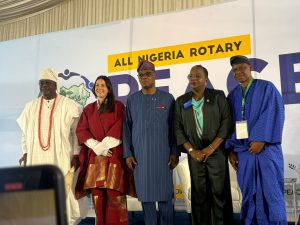
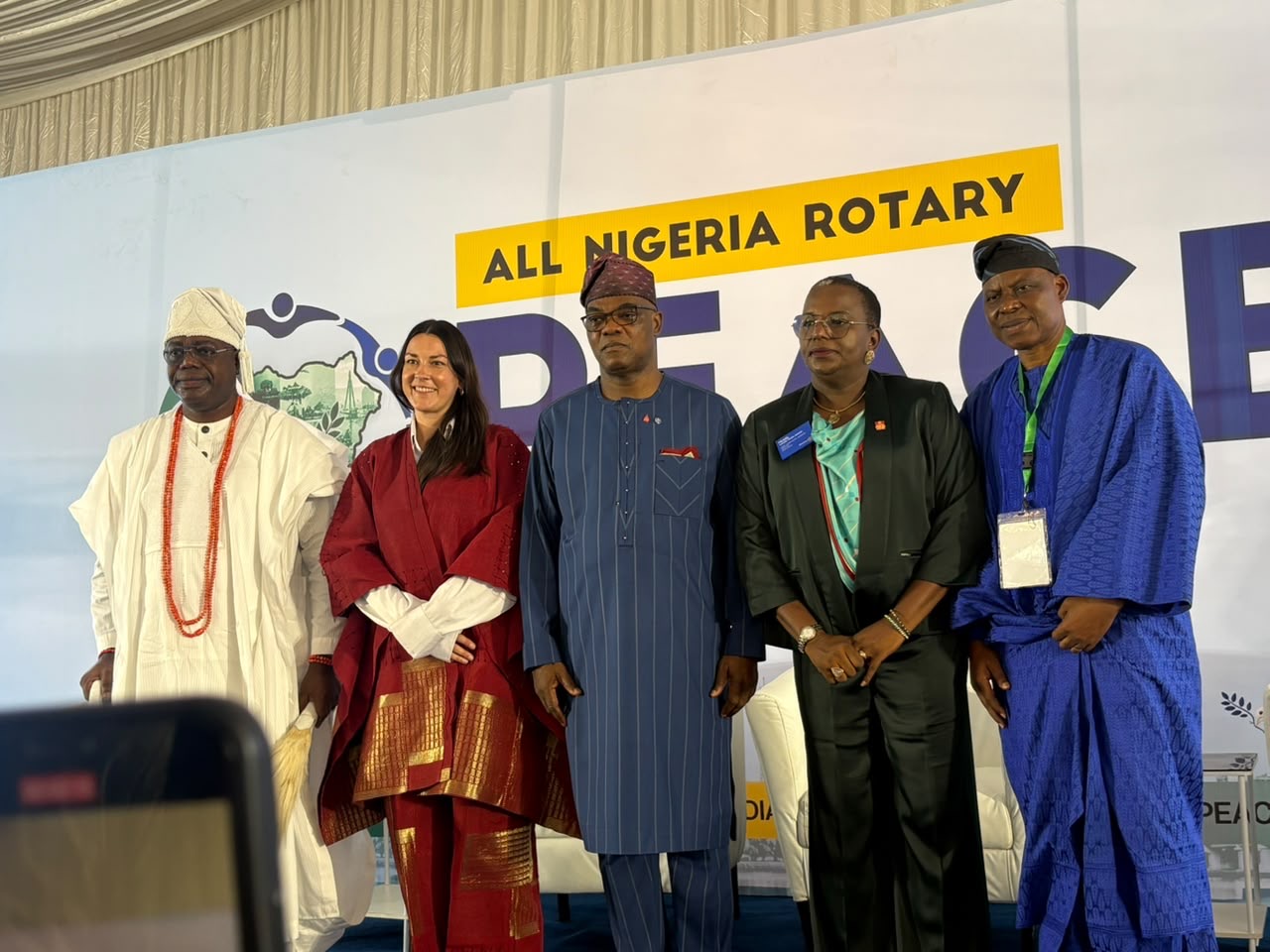
CAPTION: L-R: The Alara of Ilara, Oba Olufolarin Olukayode Ogunsanwo; the Director of Partnerships, Institute for Economics and Peace, Lea Prekerests; RI President Olayinka Babalola; The Rotary Foundation Trustee, Ijeoma Pearl Okoro; and the Chair of central Planning Committee of All Nigeria Peace Summit, Dr. Kazeem Mustapha at the opening of the summit in Lagos on Saturday. PHOTO: ROTARY INTERNATIONAL
The Rotary International President explained that the organisation’s understanding of peace extended beyond the absence of armed conflict to include access to healthcare, education, justice, opportunities and other conditions necessary for human development.
He described such interventions as part of Rotary’s Positive Peace philosophy, which focuses on addressing the underlying conditions that sustain peaceful and stable societies.
Babalola said: “To grow Positive Peace from the ground up, Rotary starts from the very foundation of life, as we have done here.”
He also highlighted Nigeria’s success in eliminating indigenous wild poliovirus transmission, noting that the country had remained free of the deadly virus since 2020.
He said Rotary continued to work with the World Health Organisation and other partners to sustain the achievement and respond to outbreaks of variant poliovirus.
Babalola further disclosed that Rotary had partnered with Makerere University in Uganda to establish a Peace Centre in 2021, following Nigeria’s declaration as wild polio-free.
The centre provides training for Peace Fellows on conflict prevention, peacebuilding and the development of sustainable approaches to resolving disputes across Africa.
He said more than 75 Rotary Peace Fellows had come from Nigeria over the years, with some participating in the summit.
The Rotary chief maintained that the organisation’s commitment to peacebuilding was demonstrated not only through advocacy but also through practical interventions that improve people’s lives.
“I tell you this not to advertise Rotary. I tell you this because I want you to know that Rotary is already a quiet partner in peacebuilding — not only around the world — but here in our shared home,” he said.
He added that Rotary members were committed to bringing people together through service and collective action.
“As members of Rotary, we are not soldiers, ambassadors, or diplomats. We bring people together to find common purpose through service to others. We are here for Nigeria, and we are here to stay,” he said.
Babalola urged government institutions, development partners, community leaders and citizens to strengthen collaboration in addressing challenges affecting ordinary Nigerians.
He stressed that sustainable development required people and institutions willing to change and work towards a common national future.
He said the ultimate objective should be a Nigeria where every citizen, irrespective of background, enjoyed access to justice, opportunity and dignity.
The Rotary International President called on members of the organisation to make peacebuilding a lasting legacy.
He stressed that the benefits of their interventions should extend to generations yet unborn.
In her paper, the Director of Partnerships, Institute for Economics and Peace, Lea Prekerests noted that there are two kinds of peace, adding that peace is more than the absence of violence.
According to Prekerests, while Negative Peace is the absence of violence or the fear of violence, Positive Peace represents the attitudes, institutions and structures that create and sustain peaceful societies but Positive Peace is what makes peace last.
The Inspector General of Police, Olatunji Disu, in his paper, called for collaboration between the Rotary International and the police
to strengthen the partnerships that connect institutions with communities, government with citizens, and security with service.
The IGP, who was represented by AIG Miller Dantawaye, said: “Let us translate that principle into action. Let us work together to build communities where justice is accessible, institutions are trusted, citizens are responsible and every individual can live with dignity, security and hope. That is the foundation of lasting peace.
“Let me therefore take the first bold step of appealing to the RI president that we jointly fix a date for the first official Police/Rotary fellowship that will be jointly presided by the IGP and RI President to kickstart the collaboration.”
By Adeko Ukpa
The Rotary Club of Abuja Legacy has declared its intention to make purposeful and measurable impact in community development, launching its activities with a maternal and child health outreach in Abuja.
Although yet to make its formal public debut, the club said it had already defined its mission and priorities, choosing to begin with an intervention aimed at improving maternal healthcare.
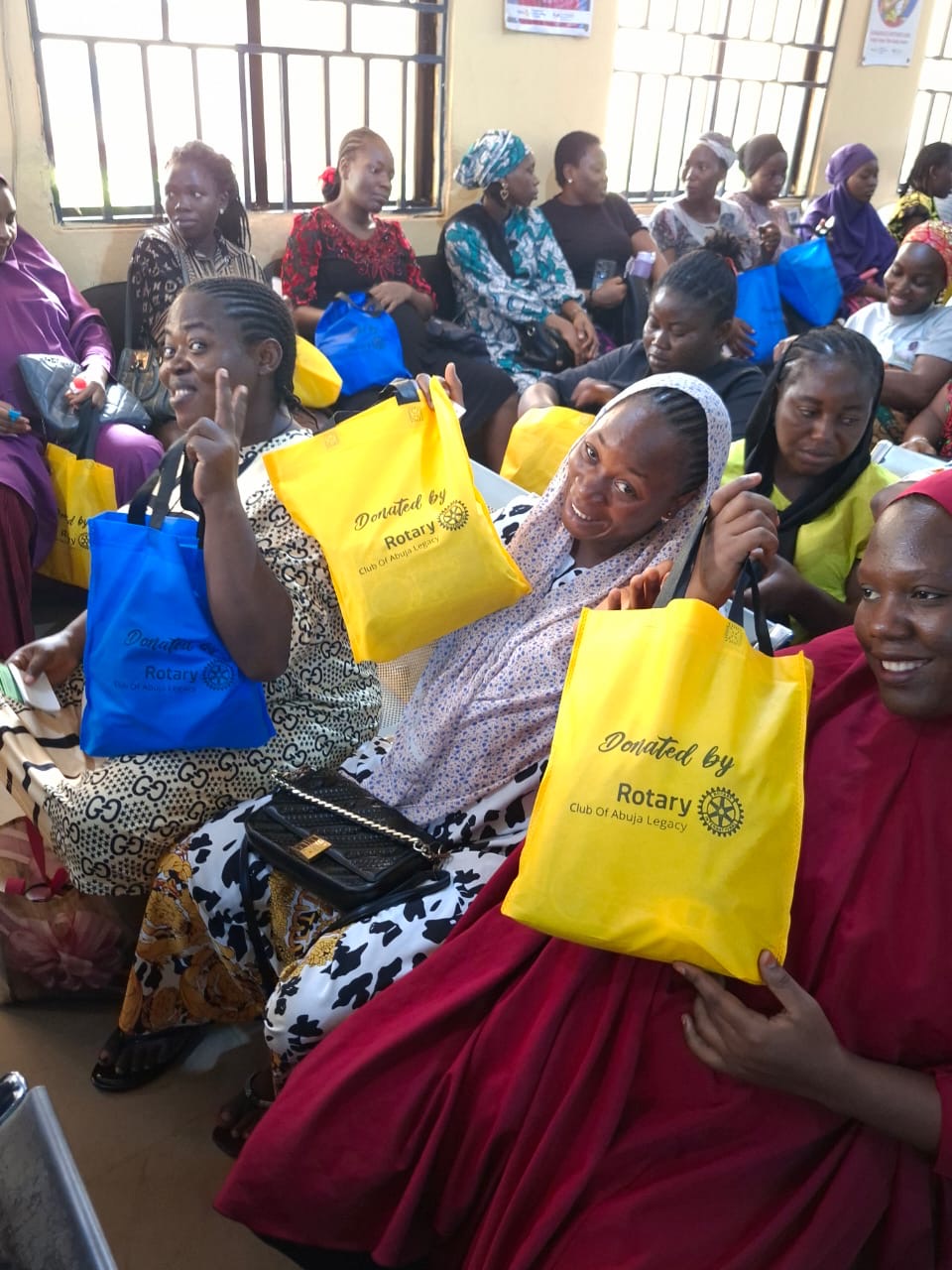
The initiative, conducted at Gwarimpa General Hospital, Lifecamp, reached over 100 expectant mothers with free birthing kits and health education sessions focused on postpartum depression and emotional wellbeing after childbirth.
According to the club, the programme underscores the need for maternal care to extend beyond delivery by addressing the mental health needs of new mothers.
Charter President, Winifred Mngu Mbashall, said the club was founded on the principle of intentional service rather than symbolic activities.
“We didn’t come to find our voice; we built it before we arrived. If we care about how babies are born, we must care about how mothers heal, and that is the legacy the Rotary Club of Abuja Legacy is here to leave behind,” she said.
Also speaking, Project Chair, Annmarie Ada Adamu, said the club intends to distinguish itself through impactful programmes that combine Rotary’s humanitarian tradition with innovative approaches to community service.
“We are not here to blend in with tradition; we are here to elevate it. This is Rotary, redefined through intentional impact,” she said.
Beneficiaries during the outreach.
The Rotary Club of Abuja Legacy said the maternal and child health project is the first of several planned interventions as it seeks to establish itself as a leading platform for sustainable humanitarian service and community development.
-

 Opinion2 years ago
Anioma State: A Necessary Proposal Rooted in Strategic Advantage
-
 Opinion6 months ago
Ibileye’s Quiet Revolution at Federal University Lokoja
-
 Business & Economy2 years ago
NASENI, Qietur partner to build 3000 Housing Units for Staff
-

 Law2 years ago
Human Right and Law Enforcement in Nigeria: A Critical Analysis
-

 Business1 year ago
Lithium boom has reshaped Nasarawa’s economy, says Prof Haruna
-

 Education1 year ago
TVET will change Nigeria for good, says NABTEB Registrar
-
Education1 year ago
NABTEB Registrar advises automotive, locomotive Engineers to do more to diversify Nigerian economy
-
 Opinion1 year ago
Engr. Kawu: A Heroic Homecoming for a Man of the People