
Crime
Lawmakers, EFCC challenges public officials on anti-corruption

From Adeko Ukpa, Abuja
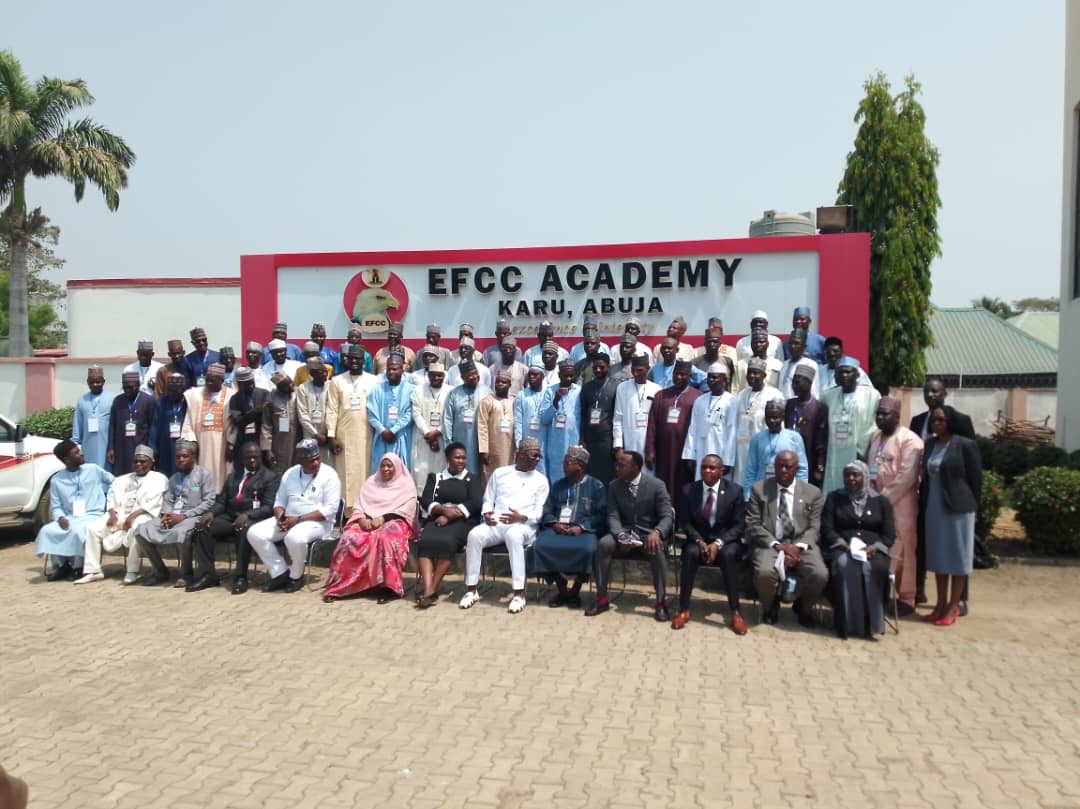
The Chairman of the House of Representatives Committee on Financial Crimes, Hon. Ginger Onwusibe and the Executive Chairman of the Economic and Financial Crimes Commission (EFCC), Ola Olukoyede, have warned public officers in the country to shun corruption.
Hon Onwusibe and Olukoyede made the call in their separate speeches during the opening session of a three-day workshop on: “Fiscal Responsibility and Transparency” organised by the House of Representatives’ Committee on Financial Crimes in collaboration with the EFCC in Abuja.
The workshop which was facilitated by Barclays Global Consult Nigeria Limited, was attended by over 100 state and local government officials from Jigawa State.
Hon. Onwusibe who was represented at the event by the Acting Clerk to the House of Representatives Committee on Financial Crimes, Austen Tolu Adesoro, noted that the country has been battling public sector corruption, money laundering, illicit financial flows, and various types of fraud for some decades, despite the current legal and institutional measures in place.
He encouraged state governments to domesticate and implement statutory laws against financial crimes as well as sensitise staff, citizens and stakeholders at all levels to promote ethical reorientation and change societal tolerance for corrupt practices.
He added that the promotion of ethical whistleblowing and respect for public funds and property must be intensified, while personal responsibility and professionalism should be encouraged and rewarded to stimulate staff commitment to work.
In an interview with reporters on the sidelines of the session, Onwusibe, through the Clerk of the Committee, Adesoro, said: “The objective of this training is to equip state and local government officials with the do’s and don’ts that will help save us all from the hydra-headed monster of corruption in the country.
“The 10th House of Representatives under the Speaker, Rt. Honourable Tajudeen Abbas, through the House Committee on Financial Crimes, apart from the oversight function of overseeing agencies, we believe in going an extra mile in the fight against corruption, which one institution cannot effectively do. We believe that fighting corruption should be a joint task.
“It is on this note that we are also working in line with the Chairman of EFCC, Ola Olukoyede, in applying more preventive measures. We don’t want to limit ourselves to exposing and prosecuting offenders alone, we want to apply preventive measures.
“It is part of this preventive measure that has geared the committee to this approach of organising seminars for government officials at the state level.
“We are not also stopping there, permit me to use this opportunity to mention that we are also looking forward to amending the EFCC Act in order to give more powers, to ensure that the EFCC Act is completely embedded in the Nigerian constitution in order to make it more effective.”
The Chairman of the EFCC, Olukoyede, who was represented at the workshop by the Acting Commandant of the EFCC Academy, Karu, Abuja, Chinwe Ndubueze, noted that fiscal responsibility is at the heart of accountable governance and efficient public service delivery.
He said: “You will all agree with me that 70 per cent of the problem that Nigeria faces in the public sector is down to poor fiscal transparency. In every budget cycle trillions of Naira are appropriated to cater to the nation’s pressing infrastructural, social and economic needs.
“Were these resources applied in accordance with laid down rules, Nigeria’s fortune would be different today. Instead, we have had the terrible fortune of rules being circumvented and funds diverted or out rightly stolen through various sharp practices in the procurement value chain, while the rest of us suffer the consequence of the indiscretion of a few corrupt public officers.
“We cannot continue to play the game of ostrich, pretending to be interested in accountable governance while perpetuating practices that undermine accountability.
“Let me remind you all that as public officers, you occupy a vantage position to determine the fortune of this nation. Nigeria with all its human and natural resources has no business being poor.
“Corruption is the albatross that has held this nation captive. The current generation of public servants have a duty to shake off the decadent past and help Nigeria achieve her dream as a great and prosperous nation. We can only achieve this if we shun corruption in all forms.”
In her remarks, the Chief Executive Officer of the Nigerian Financial Intelligence Unit (NFIU), Hajiya Hafsat Abubakar Bakari, represented by the Director of legal Services of the agency, Barr Kingsley Amaku, described the training as timely and necessary intervention, “particularly at a time when financial integrity and accountability must be at the forefront of governance at both federal and state and local government levels.
“The fight against corruption requires not just enforcement but also a well-informed public sector that understands the legal and institutional frameworks designed to promote transparency.
“Bridging the knowledge gap in the provisions of our laws is essential to curbing corrupt practices, and this workshop serves as a crucial step in equipping you our government officials with the tools needed to uphold accountability in the public service at all levels.”
The Chief Executive Officer of Barclays Global Consult, Nigeria Limited who is the immediate past Speaker of the Kogi State House of Assembly, Rt. Honourable Matthew Kolawole, said the programme was meant to educate government officials at all levels on how to manage finances and funds that are coming to their state.
“You understand that a lot of money is going to the state and local governments, but most local governments’ officials are just newly elected. They are not acquainted with the laws that guide the utilisation of their finances,” Kolawole said.
The Chairman of the Association of Local Governments of Nigeria (ALGON), in Jigawa State, Hon. Abdulraman Lawal, and the Director of Local Governments in Jigawa State, Ismail Yusuf, in their separate remarks, said they expect to be better equipped with the necessary knowledge on how to apply and manage local and state government finances in line with extant laws and financial regulations after the training.
“Our expectation for this training is that we will go home better than the way we arrived because we are before the experts to lighten us and show us the nitty-gritty on how we can be more careful in way and manner we manage our finances in our individual local governments,’ Lawal said.
On his part, the Jigawa State Director of Local Governments, Ismail Yusuf, said: “Our expectation is that, we have newly elected local government chairmen and there is need for us to give them a capacity building on how to carry out their jobs so as to avoid any kind of financial mismanagement and be excellent leaders that will carry and manage the public funds in a proper manner.”
Other heads of anti-corruption agencies who were present at the opening session of the workshop, included the Chairman of the Code of Conduct Bureau, Dr Usman Bello Abdullahi, who was represented by a member of the board of the agency, Juwariya Badamasi, Chairman of the Independent Corrupt Practices and Other related offences Commission, Dr. Musa Adamu Aliyu, represented by Hassan Salihu.



….Former Foreign Affairs Minister calls for stronger continental integration, warns against discrimination among Africans
By Adeko Ukpa
Former Minister of Foreign Affairs, Yusuf Maitama Tuggar, has condemned the growing hostility against fellow Africans in parts of the continent, particularly South Africa.
He warned that xenophobia undermines the ideals of Pan-Africanism and threatens Africa’s collective future.
Tuggar said Africa could not genuinely pursue continental unity, economic integration and shared prosperity while citizens of one African country were subjected to discrimination, intimidation and violence in another.
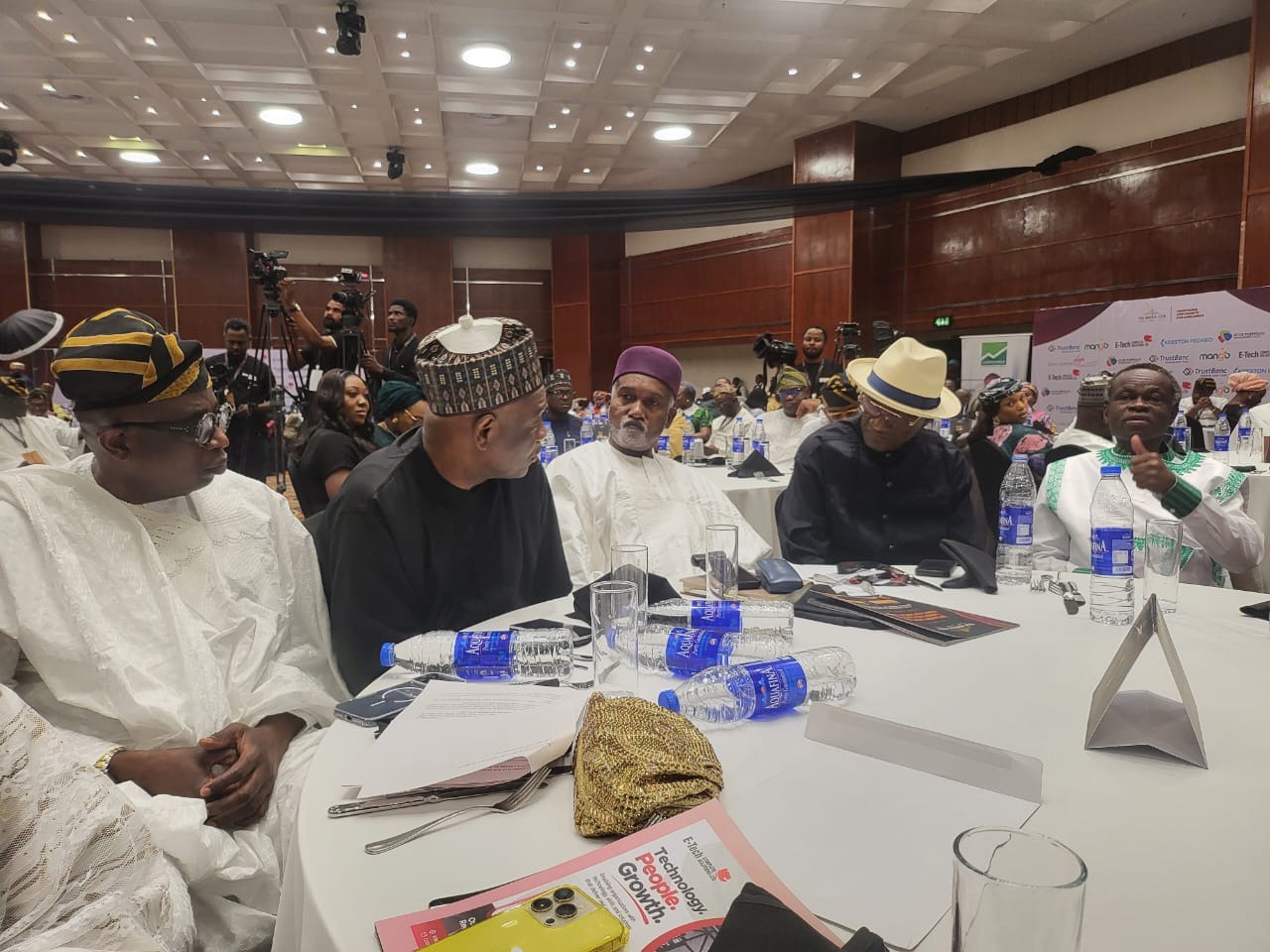
He spoke at the 2026 end-of-year event of The Bridge Club, where he served as chairman of the occasion.
The event featured renowned Kenyan scholar and Pan-African advocate, Professor P.L.O. Lumumba, as keynote speaker.
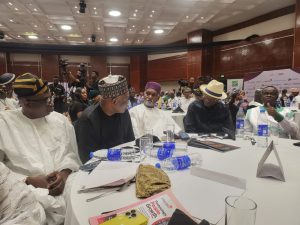
L-R: The President of The Bridge Club Lagos, Mr. Abdulhakeem Mustapha (SAN); the Executive Secretary, TETFUND, Arc. Sonny Echono; the Chairman of the occasion and a former Minister of Foreign Affairs, Amb. Yusuf Maitama Tuggar; a special guest, Mr Brodericks Arigbodi; and the Keynote Speaker, Prof. P.L.O. Lumumba at the end-of-the-year symposium of the club on Xenophobia and Pan-Africanism on Thursday at the Continental Hotel, Lagos.
The former minister, who reflected on Nigeria’s historical involvement in the struggle against apartheid in Southern Africa, said the country had made enormous sacrifices to secure the liberation of African countries from racist minority rule.
He recalled how Nigeria provided scholarships and other assistance to victims of apartheid, including South African students who survived the 1976 Soweto massacre.
According to him, Nigeria’s solidarity extended to Namibia, Angola and other African countries struggling against colonialism and racial oppression.
He said Nigerians of his generation grew up believing in African liberation and unity, making the current hostility against Nigerians and other black Africans in South Africa particularly difficult to understand.
Tuggar said: “These are but a very few of the reasons why Nigerians cannot fathom why they and other black Africans are being targeted in South Africa.
“Call it Afrophobia, which may be a better description than xenophobia, as non-black Africans appear to be exempted, or the more euphemistic framing of anti-migration protests, it is wrong and must be condemned.”
He described the development as particularly unfortunate at a time when African countries should be strengthening cooperation to improve their economic and political standing in the international community.
Tuggar, however, argued that understanding the historical and structural factors behind the hostility was necessary to addressing the problem, stressing that historical context should not be mistaken for justification.
He traced some of the roots of institutionalised segregation in Africa to colonial policies and the apartheid system, arguing that their psychological and social consequences continued to influence relationships within African societies.
The former minister said the continent needed intellectual rigour, historical understanding and stronger institutions to confront prejudice and other attitudes that undermine African solidarity.
He also identified economic integration and industrial development as critical elements of genuine Pan-Africanism.
According to him, Africa cannot achieve meaningful development by remaining a supplier of raw materials to the rest of the world while importing finished products.
He cited the vision of Nigerian development economist Adebayo Adedeji and other African intellectuals who advocated manufacturing, regional integration and the development of an African Economic Community.
Tuggar said the African Continental Free Trade Area (AfCFTA) offered an important opportunity to advance that vision by strengthening trade, industrialisation and the movement of goods and services across national borders.
He identified three important connections between economic integration and Pan-Africanism, including the need for free movement of labour as a foundation of an effective continental free trade system.
He said: “The path to Pan-Africanism is through the continental free trade area.
“As the father of capitalism, Adam Smith, once opined, the free circulation of labour is the foundation of any free trade system.”
Tuggar also expressed concern about the possible influence of external interests in fuelling anti-migrant sentiments, calling for greater scrutiny of organised anti-immigration campaigns and their sources of funding.
He warned that the relationship between Nigeria and South Africa remained too important to the continent’s future to be undermined by hostility and mutual suspicion.
He recalled South Africa’s support for Nigeria’s international engagements, including its efforts towards joining the Group of 20 (G20).
Earlier, President of The Bridge Club, Abdulhakeem Mustapha (SAN), said the theme of the event, Xenophobia Contradicts Pan-Africanism, reflected the urgent need for Africans to reconcile their commitment to continental unity with their treatment of fellow Africans.
Mustapha said Pan-Africanism must go beyond political declarations, diplomatic conferences and economic agreements to become evident in people’s attitudes and conduct.
He asked: “How can we genuinely aspire to a united Africa when an African is made to feel unwelcome, unsafe or unwanted in another African country simply because of nationality, ethnicity or origin?”
He added that Africa’s prosperity, security and dignity were interconnected and could not be achieved sustainably at the expense of another African country.
Mustapha urged members of the club and other stakeholders to promote tolerance, mutual respect and understanding across national and cultural boundaries.
The event brought together professionals, business leaders, diplomats and other distinguished guests to discuss the future of African unity and the responsibilities of citizens in building a more inclusive continent.
Crime
Maiduguri Bombingd: Frank Urges Tinubu To Cancel UK Trip, Berates Britain, Lauds Trump’s Stand on Nigeria’s Security
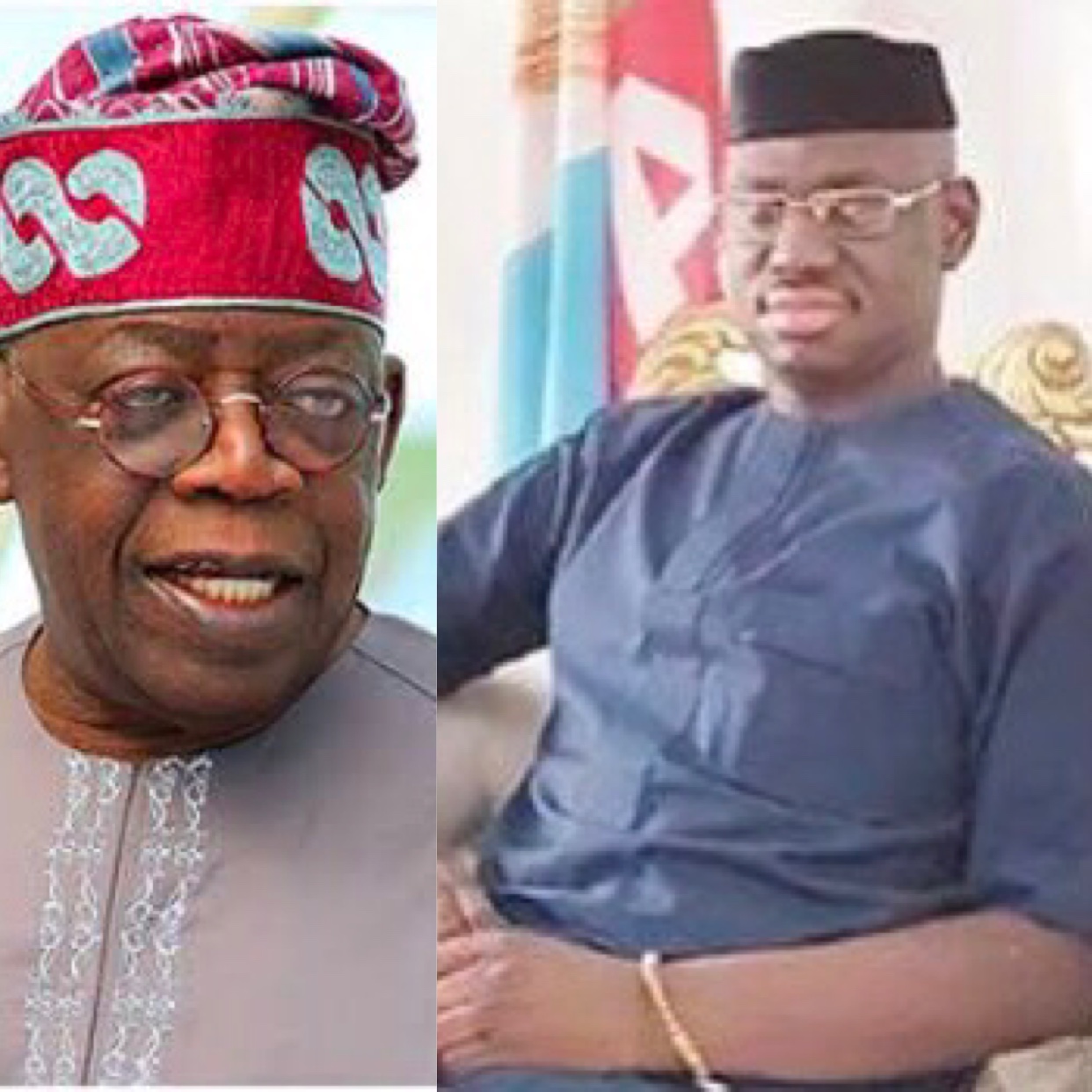
By Adeko Ukpa, Abuja
Former Deputy National Publicity Secretary of the All Progressives Congress (APC), Comrade Timi Frank, on Tuesday, took a swipe at President Bola Ahmed Tinubu, describing the President’s planned state visit to the United Kingdom on the heels of renewed bombings in Maiduguri, as “callous, indefensible and morally bankrupt.”
In a detailed statement on Tuesday, Frank said the coordinated explosions that ripped through Maiduguri on Monday evening – including near the University of Maiduguri Teaching Hospital, the main market and the post office – exposing civilians to mass casualties – are “a tragic, blood-soaked verdict on a failing security architecture.”
Quoting official figures, he said no fewer than 23 Nigerians were killed and over 100 injured in the attacks blamed on suspected suicide bombers, warning that the country is “bleeding while its leadership is distracted.”
“This is not just another attack – it is a national emergency,” Frank declared. “Our people are being slaughtered, our soldiers are under relentless assault, yet the President is preparing for a ceremonial outing in UK. That is not leadership; that is abdication of responsibility.”
He demanded the immediate cancellation of the UK trip, insisting that any departure from Nigeria at such a moment would amount to “a cruel abandonment of grieving citizens.”
“No responsible leader boards a plane to wine, dine and dance when his country is burying its dead,” he said. “A President with empathy goes to Maiduguri, not London. He stands with victims, not with banquet hosts.”
Frank widened his attack to the British government, accusing it of “staggering hypocrisy and moral blindness” for extending the invitation in the first place.
“The UK is not ignorant of Nigeria’s reality,” he said. “It knows about the escalating insecurity, the mass unemployment strangling millions, and the catastrophic electricity crisis that has crippled industries. It is also aware of deepening concerns over democratic backsliding – a National Assembly and judiciary many believe have been weakened and silenced, and a political system tilting dangerously towards a one-party state.”
“Yet, in the face of all this, Britain rolls out the red carpet. That is not diplomacy – it is complicity. It is a celebration in the face of tragedy.
“It is also aware of growing concerns about the state of democracy, including allegations that Nigeria is drifting towards a one-party system under Tinubu, with both the National Assembly and judiciary weakened and silenced.”
Frank said the timing of the visit sends “a dangerous and insulting signal” that Nigerian lives are expendable and governance failures can be overlooked for the sake of ceremonial photo opportunity.
He added: “We challenge the UK to provide ten reasons that justify this honour at a time like this. To many Nigerians, this invitation appears to be a subtle endorsement of a second term, despite widespread concerns about governance and the credibility of the last election.”
Drawing comparisons, he noted that if a similar level of violence occurred in the UK, its leaders would very much suspend ceremonial engagements and focus on national security.
He also condemned what he described as an “obscene and indefensible convoy of power” accompanying the President, calling it proof of a government “detached from pain and addicted to excess.”
According to him, the delegation includes Senate President Godswill Akpabio; Attorney General of the Federation and Minister of Justice, Lateef Fagbemi (SAN); Minister of Solid Minerals Development, Dele Alake; Minister of Information and National Orientation, Mohammed Idris; and Minister of State for Foreign Affairs, Bianca Ojukwu.
Also listed are Minister of Finance and Coordinating Minister of the Economy, Wale Edun; Minister of Industry, Trade and Investment, Jumoke Oduwole; Minister of Culture and Creative Economy, Hannatu Musawa; Minister of Communications and Digital Economy, Bosun Tijani; and Minister of Defence, General Christopher Musa (rtd).
He added that National Security Adviser Nuhu Ribadu and Director-General of the National Intelligence Agency, Mohammed Mohammed, are equally part of the entourage.
“At a time of mass burials and national grief, what possible justification exists for ferrying such a large retinue of officials abroad?” Frank queried. “This is not governance — it is extravagance in the face of suffering.”
Frank further alleged that Nigeria’s anti-terror war has been fatally weakened by corruption and internal sabotage, claiming that resources and military hardware meant to defeat insurgents are being diverted.
“It is an open secret that mismanagement and corruption have crippled our security response. There are disturbing reports of weapons meant for our troops finding their way into the hands of terrorists. Yet, the government continues to act as though all is well,” he said.
He urged the international community to fundamentally rethink its engagement with Nigeria, warning that uncritical support risks emboldening failure rather than solving the crisis.
In sharp contrast, Frank reserved rare praise for U.S. President Donald Trump, commending what he described as a “clear-eyed and decisive posture” toward Nigeria’s security challenges.
“While some global actors prefer ceremonies and silence, Trump has demonstrated a willingness to stand firmly with Nigeria in confronting terrorism. That is the kind of principled support Nigerians respect,” he said.
Frank told the Presidency: “that Nigeria is in mourning. This is a moment for leadership, compassion and decisive action – not foreign trips, not pageantry, not political theatre. Any President who chooses celebration over solidarity at a time like this has lost the moral right to lead.”

From Adeko Ukpa, Abuja
A political activist and former Deputy National Publicity Secretary of the All Progressives Congress (APC), Comrade Timi Frank, on Wednesday, urged the United States government and President Donald Trump to halt intelligence sharing and security cooperation with the Nigerian government, citing recent comments attributed to Islamic cleric Sheikh Ahmad Gumi on banditry and terrorism.
Frank who made the call in a statement issued in Abuja, said the remarks credited to Gumi suggesting that Nigerian authorities may know the identities and locations of bandits raise serious questions about the handling of insecurity in the country.
“If it is true that the government knows the names of these bandits, knows where they are located and even knows their camps, then Nigerians deserve to know why decisive action has not been taken,” he said.
He argued that the continued rise in kidnappings and killings across the country suggests that insecurity has escalated despite claims that security agencies possess intelligence about those responsible.
According to him, the continued deterioration of security despite international support raises suspicion that insecurity may be benefiting some individuals, alleging that insecurity in the country has become a “profitable business” for some actors within the system.
“Kidnappings have increased. Killings have escalated. Insecurity has worsened across the country. If a government truly knows the identities and locations of terrorists and bandits yet fails to act decisively, then that raises serious concerns,” he said.
He added: “They want the insecurity to persist because as long as insecurity continues in the country, it’s an opportunity for them to rig the 2027 general elections in Nigeria.
“They don’t care about Nigerians that are dying. They don’t care about Nigerians that are being kidnapped. They don’t care about the well-being of the people. They don’t care about the suffering of the people. They don’t care about good governance. All they care about is how they will rig themselves back to power using insecurity as cover.”
He urged the United States to exercise caution in its dealings with the administration of President Bola Ahmed Tinubu, particularly in the area of intelligence while asserting that “the government of today appears to be friends with terrorists.”
“I am calling on the United States government to be very careful in its dealings with the current Nigerian administration. The U.S. should suspend intelligence sharing and security cooperation with the Nigerian government and its security chiefs,” he said.
The activist alleged that despite the security assistance Nigeria has received from international partners, the situation on the ground has continued to deteriorate.
“There appears to be a pattern where the government continues to receive security assistance and aid from the United States and other international partners, yet insecurity keeps worsening,” he said.
He said Nigerian soldiers were still losing their lives in the fight against insurgency and banditry despite military equipment and support provided by foreign partners.
“Today, Nigerian soldiers are dying in large numbers despite the equipment and support provided by the United States and other countries. With the level of support Nigeria has received, the war against insecurity should have made significant progress,” he said.
The activist called on President Trump to take decisive steps against terrorist groups operating in Nigeria and act independently if necessary.
“We are appealing directly to President Donald Trump to take a strong and decisive stand. If the United States truly wants to help Nigeria defeat terrorism and make the country great again, it should be prepared to act firmly against the terrorists responsible for the violence,” he said.
He added that such actions should not depend solely on cooperation with Nigerian authorities.
“The United States should be ready to take bold steps in confronting terrorist networks threatening Nigeria, even if it means acting independently like it did on Christmas eve against those responsible for the violence,” he said.
Frank who currently serves as the United Liberation Movement for West Papua (ULMWP) Ambassador to East Africa and the Middle East as well as Senior Advisor to the Global Friendship City Association (GFCA), USA, also called on the United States Congress to pay closer attention to developments in Nigeria and support measures that would address insecurity and strengthen democratic processes.
He further urged the United States to support credible democratic processes in Nigeria, noting that free and fair elections would help strengthen governance and stability.
According to him, decisive international engagement could help address the security challenges facing the country and support efforts to restore stability.
“If the United States truly wants to assist Nigeria, it should help ensure peace, security and credible democratic processes. That is how Nigeria can move forward and become stable and prosperous again,” he said.
He added that strong international support could help Nigeria overcome insecurity and rebuild confidence in governance.
“With the right actions and international support, Nigeria can defeat terrorism, restore stability and move toward a future where the country can truly become great again,” he said.
-
 Opinion2 years ago
Anioma State: A Necessary Proposal Rooted in Strategic Advantage
-
 Opinion6 months ago
Ibileye’s Quiet Revolution at Federal University Lokoja
-
 Business & Economy2 years ago
NASENI, Qietur partner to build 3000 Housing Units for Staff
-
 Law2 years ago
Human Right and Law Enforcement in Nigeria: A Critical Analysis
-
 Business1 year ago
Lithium boom has reshaped Nasarawa’s economy, says Prof Haruna
-
 Education1 year ago
TVET will change Nigeria for good, says NABTEB Registrar
-
Education1 year ago
NABTEB Registrar advises automotive, locomotive Engineers to do more to diversify Nigerian economy
-
 Opinion1 year ago
Engr. Kawu: A Heroic Homecoming for a Man of the People