
News
National Assembly blasts Minister over alleged ‘Ghost Projects’ in Ministry of Steel Development

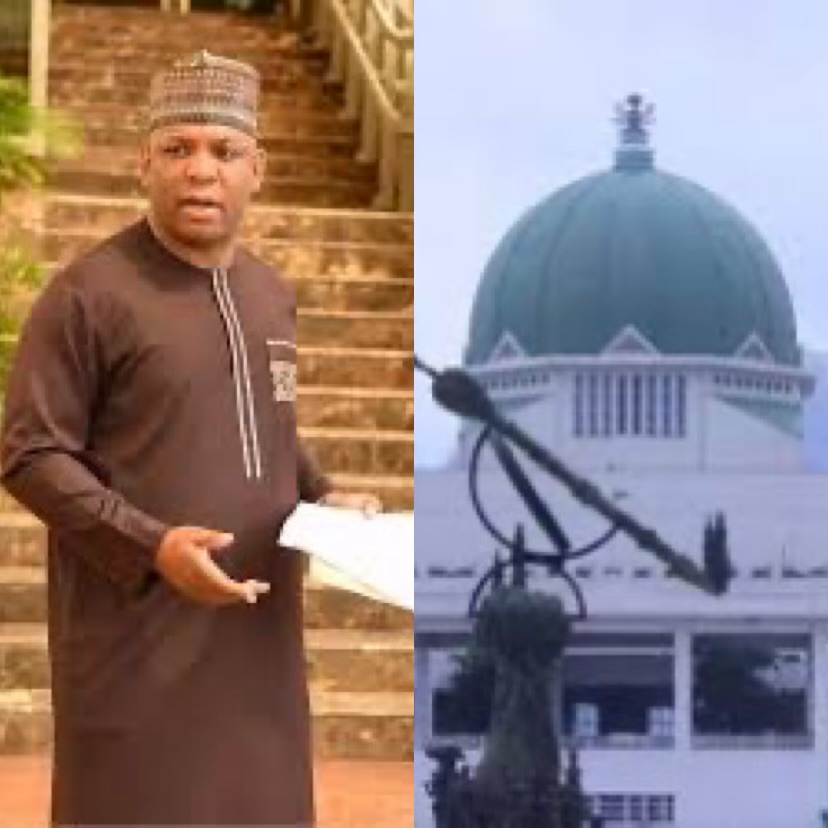
By Adeko Ukpa
The joint National Assembly Committee on Steel Development has decried what it described as “ghost projects” allegedly meant to divert public funds in the 2024 budget appraisal submitted to it by the Ministry of Steel Development.
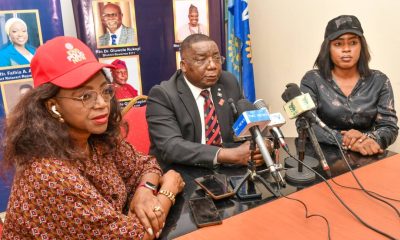
The Co-Chairman of the Committee, Hon. Zainab Gimba, gave this indication when the Minister of Steel Development, Prince Shuaibu Audu, appeared before the Committee to defend the ministry’s 2025 budget proposal on Friday.
Gimba said: “A first-hand appraisal of the 2024 submissions shows some Budget Infractions as funds allocated for unspecified “capacity-building programmes” and “skills training initiatives” in the steel sector show no evidence of execution or impact.
“These projects risk being classified as ghost projects designed to divert public funds.
“Administrative and recurrent costs significantly increased in 2024 without proportional increases in ministry’s activities or outputs, a possible indicator of mismanagement or misallocation of funds.
“Also, we identified some legal Infractions such as violations of the Fiscal Responsibility Act.
“The act mandates efficient use of public resources and accountability for project outcomes.
“Several projects, especially related to Ajaokuta Steel, failed to meet these criteria.”
She identified non-adherence to the Public Procurement Act, saying there were alleged instances of non-competitive bidding and inflated contract costs which suggested violations of procurement guidelines.
She also identified breach of financial regulations by stressing that there were unaccounted funds.
Gimba said, “There are ghost projects which are a direct violations of Nigeria’s Financial Regulations, which require all expenditures to be backed by documentation and outcomes.
“We advise you to make all necessary submissions on these to the committee secretariat.
“On this note, we recommend conducting a Forensic Audit. There should be engagement of independent auditors to scrutinize expenditures and contracts for 2024.
“We will strengthen oversight in 2025 because, looking at the Ministry of Steel Development’s 2025 Executive Budget, we see a high proportion of personnel costs put at 57.2 per cent.
“This suggests that most of the funding is spent on salaries rather than developmental projects, which raises concerns about operational efficiency.
“Capital expenditure, which is 34.6 per cent, is inadequate for a sector like steel development, which requires heavy infrastructure, technology, and modernisation investments to drive industrial growth.
“There is no detailed breakdown to show the strategic focus of these expenditures (e.g., feasibility studies, stakeholder engagement, and modernization.
“In summary, the Ministry of Steel Development’s 2025 Budget, reflects a commitment to maintaining operations but falls short of delivering the necessary capital investments to transform the steel industry into a viable driver of Nigeria’s industrialization.
“Significant reforms in funding priorities, operational efficiency, and revenue generation are required to align with the ministry’s strategic objectives.
“l will not fail to express the displeasure of our Committee in the way the Ministry has continued to ensure a complete breakdown of communication between us within the period under review.
“It is equally disappointing and unfortunate to recollect how the agencies under the Ministry failed to provide enough information to the Committee during their budget defence.
‘We will not leave any stone unturned in the discharge of our legislative duties.
“It is a fact that if the legislature does not rigorously examine and debate the law, its powers will be seen as not being effectively exercised, and the government’s accountability to the electorate for its fiscal strategy and strategic budget allocation will be undermined.
“We want to state unequivocally that we will never allow such affronts or practices to happen again because we would not hesitate to apply the hammer according to the powers statutorily vested on our Committee,” Gimba said.
In his contribution, the Chairman of the joint panel, Senator Patrick Ndubueze, said his members were out to do their legislative duties.
He said, “Our concern is to take Nigeria where it rightfully should be in steel development.
“Nigeria can’t make much progress without a solid steel industry. We have to place emphasis on capital projects, not payment of salaries.
“For us to do well, we can’t be repeating the same mistakes every time. We expected that the ministry would have improved by now.”
Members of the panel raised concerns over the move by the Federal Government to conduct a fresh technical audit on the Ajaokuta Steel Company when the government had yet to act on three previous audit reports on the plant.
In his response, Audu defended the ministry, saying the government is still trying to source over $2billion to revamp the firm.
According to him, the Federal Government had in October last year, signed a Memorandum of Understanding (MoU) with Russia for the completion of the plant and the National Iron Ore Mining Company (NIOMCO), both located in Kogi State.
He said the tripartite MoU was signed in Moscow with Messrs, Tyazhpromexport (TPE), the Russian firm that originally built the Ajaokuta steel plant and partners of the consortium, Novostal M and Proforce Manufacturing Limited.
Audu said the consortium, in collaboration with Nigerian engineers, will conduct the fresh technical audit and the report would be submitted to the Federal Executive Council (FEC) for approval before work on the plant will begin fully.
Audu said, “$2bn, about N3.7trillion, is required to revamp Ajaokuta steel. The ministry does not have the money. Our budget for 2024 was just N24billion, a far cry from that amount. So, we are sourcing for partners.
“We are in the process of conducting an (technical) audit of the entire firm for submission to FEC for approval.”
However, his submission elicited questions from lawmakers, who particularly doubted the relevance of a fresh technical audit when the government could simply dust up any of the three previous audit reports and act on it.
A member of the Committee, Senator Natasha Akpoti-Uduaghan asked, “You haven’t conducted the technical audit, yet you have already arrived at a cost of $2billion. How did you get the figure before completing the audit?
“We have three existing reports on previous audits carried out on Ajaokuta Steel. Why can’t we implement the existing reports? Why do we always sign new ones?”
In his reply, the minister said the existing audits date back 10 years ago and were done by other companies, not the Russians.
“The reports will have to be bankable; we are involved with new partners, separate from those who worked on the existing reports.
“The previous audits are about 10 years old. But, we will build on them to come up with what is tenable with present realities”, Audu said.
He reassured the members of the joint committee that the government had faith in the Russians to be equipped enough to play a pivotal role in the efforts to complete the plant.
He also promised that the ministry would address all the concerns raised by the joint committee on the performance of its 2024 budget and the projections for 2025.







From Adeko Ukpa
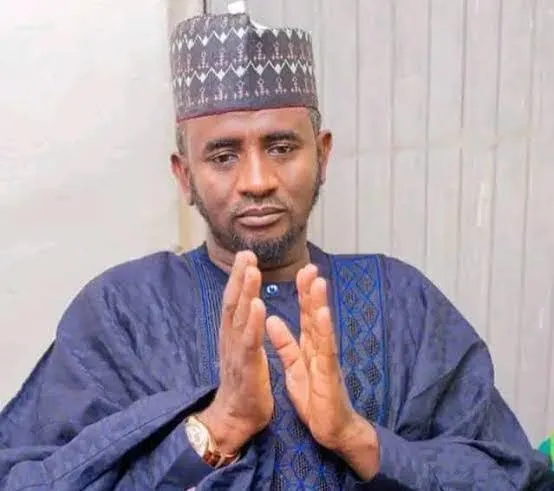
Senator representing Bauchi South, Shehu Buba, has dismissed as fabricated allegations and viral videos linking him to alleged bandit kingpins.
He said the materials being circulated online were deliberately manipulated to damage his reputation.
Buba, who is the Chairman of the Senate Committee on Livestock and Animal Husbandry and the Peoples Redemption Party (PRP) governorship candidate in Bauchi State, said a fact-check had established that the viral videos combined two unrelated clips.
He said the individuals in the first video spoke Fulfulde, while those in the second spoke English, insisting that the claim that the footage showed bandits visiting his residence was false.
In a statement titled “Setting the Record Straight: My response to fabricated videos, false allegations and a sustained campaign of disinformation,” Buba said the first clip showed Kaduna-based Hajj returnees who visited his residence in 2023, while the second showed different individuals displaying passports.
Senator Buba rejected the allegations, describing them as false, malicious and part of a coordinated campaign driven by financial motives and partisan interests rather than any genuine concern for truth or accountability.
He challenged individuals and organisations with credible evidence of wrongdoing to submit it to the appropriate authorities.
He insisted that he has nothing to hide and nothing to fear from any legitimate investigation.
He also urged his supporters not to be provoked, stressing that their focus must remain on winning the 2027 elections and offering Bauchi State a credible alternative built on service, development and security.
“Let us remain calm, disciplined and committed to the democratic process,” he said.
The senator said he initially refrained from responding to the allegations because of the sensitive nature of his previous responsibilities as Chairman of the Senate Committee on National Security and Intelligence.
According to him, national security requires discretion because publicising certain operational successes could expose sources, endanger individuals and communities, or compromise ongoing interventions.
He said: “For much of my public life, I have resisted the temptation to respond to every allegation, criticism or provocation directed at me.
“Citizens have a legitimate right to scrutinise those entrusted with public responsibility, and public officials must be prepared to account for their conduct.
“My election as Senator representing Bauchi South Senatorial District – and particularly my
responsibility as Chairman of the Senate Committee on National Security and Intelligence – reinforced the need for restraint. National security demands discretion.
“Operational successes cannot always be publicised without jeopardising ongoing efforts, exposing
sources or endangering individuals and communities involved in sensitive interventions.
“It was in that spirit that I initially declined to respond to the recent circulation of videos purporting to show “high-profile bandit kingpins” visiting my residence.
“However, the persistent recycling of these materials, accompanied by increasingly serious allegations, makes it necessary to place the facts before Nigerians.”
According to him, “This campaign dates back to September 15, 2024, when Umar Shayi led a militia group purported to be hunters working for the Bauchi State Agency for Vigilante and Youth Empowerment.
“The group reportedly killed two charcoal sellers who were conducting their
lawful business. As the elected Senator representing the district, I visited the families of the
deceased to condole with them and called on the relevant authorities to ensure justice is served.
“I also vowed to pursue lawful action on behalf of both the deceased and the injured
victims.
“I condemned the killings and urged the government to institute safeguards against
abuses by those entrusted with protecting citizens.
“Following my intervention, the Bauchi State Commissioner for Internal Security and Home Affairs, Barrister Abubakar Abdulhamid Bununu, publicly linked my name to banditry —an allegation I rejected as false and unsupported by evidence.
“Subsequently, Governor Bala Mohammed petitioned President Bola Ahmed Tinubu that I sponsored a ‘bandit kingpin’ to perform the 2024 Hajj through an aide named Yahaya Ibrahim.
“I categorically denied these allegations. I stated that I had no aide by the name cited and invited security agencies to investigate.
“My sponsorship of pilgrims – like my scholarships,
medical interventions and other empowerment programmes – has always been based on
recommendations from community and religious leaders.
“These philanthropic initiatives predate current political disagreements and have benefited people from diverse backgrounds. Community and religious leaders make the recommendations, and I do not personally screen or select beneficiaries.
“These efforts are also anchored in my principled
commitment to constructive engagement, conflict resolution and non-kinetic approaches to
addressing Nigeria’s numerous challenges – principles that have shaped my current doctoral
research at the University of Jos, where I am a PhD candidate.
“Rather than engage in a war of words, I sought legal redress by filing a defamation suit, CV/413/2024, before the High Court of the FCT.”
The senator also addressed the case of Hassan Husseini, whom he said was introduced to him in 2024 as an orphan requiring educational assistance.
He said: “ It is important to explain the origin of some of the photographs and videos now being circulated.
“In 2024, a young man named Hassan Husseini was introduced to me as an orphan needing
educational assistance. Supporting vulnerable young people has long been part of my community interventions.
“I enrolled him in a private college in Kaduna and an Islamic school, and provided him with a bicycle for transportation.
“After some time, Hassan abandoned his education and approached me for a substantial sum
to start a car dealership.
“I declined and advised him to return to school. I later discovered that, while under my care, he had recorded photographs and videos of
visitors to my residence. These materials later formed the basis of allegations circulated on social media.
“After the videos circulated and those sharing the videos and photos demanded money as extortion, I petitioned the Nigeria Police Force on September 9, 2025. Several individuals were arrested and investigated.
“On October 30, 2025, five suspects were arraigned before Justice Rita Ofili-Ajumogobia of the Federal High Court, Abuja, in Charge No. FHC/ABJ/CR/526/2025, on charges including
criminal conspiracy, cyberstalking, criminal defamation, advance-fee fraud and extortion.
“The matter is before a competent court, and I will refrain from comments that could prejudice the proceedings. The next hearing is scheduled for September 29, 2026.”
Buba said he had also taken legal action following remarks by former Bauchi State Governor and APC governorship candidate Mohammed Abdullahi Abubakar, SAN, in July 2026 concerning the source of his wealth.
He said political disagreements should be settled through debates on policies, competence and vision rather than character assassination, adding that his decision to leave the APC for the PRP should not be used as a basis for fabricated allegations.
He said: “In July 2026, former Bauchi State Governor and APC gubernatorial candidate Mohammed Abdullahi Abubakar, SAN, publicly questioned the source of my wealth and made remarks I
considered defamatory.
“Again, I chose lawful action over political confrontation and instructed my lawyers, Jay Adl Attorneys, to petition the appropriate authorities.
Political disagreement should never justify character assassination.
“My decision to leave the
APC for the Peoples Redemption Party (PRP), under whose platform I am pursuing my gubernatorial aspiration, should be debated on policies, competence and vision – not on fabricated allegations.”
On his record in national security, Buba said he had advocated a comprehensive approach combining military operations with community engagement, dialogue, intelligence gathering, deradicalisation and confidence-building.
He said Nigeria could not defeat insecurity through military force alone, stressing the need to win the trust of vulnerable communities and strengthen local intelligence networks.
He said: “For two years, I served as Chairman of the Senate Committee on National Security and
Intelligence, a role that placed me at the intersection of legislative oversight, intelligence,
security policy and engagement with communities affected by insecurity.
“Throughout that period, I supported a comprehensive approach to security. While kinetic operations are necessary, I consistently advocated complementary non-kinetic strategies
involving community engagement, dialogue, intelligence gathering, deradicalisation and
confidence-building.
“Nigeria cannot defeat insecurity by military force alone. Sustainable security requires winning the trust of vulnerable communities, strengthening local intelligence networks and
creating pathways for cooperation with legitimate authorities.
“Some of these interventions cannot responsibly be discussed in detail. Revealing identities of intermediaries or operational information could endanger patriotic citizens and undermine ongoing efforts. My silence on such matters should never be interpreted as an absence of service.”
He said his public service also included scholarships, educational sponsorship, medical assistance, youth empowerment and support for vulnerable families across Bauchi South and beyond.
He said: “My commitment to public service predates my political career. I have invested in scholarships, educational sponsorships, medical assistance, youth empowerment and
support for vulnerable families across Bauchi South and beyond.
“Philanthropy is not a political slogan for me – it is an obligation. Not every intervention attracts publicity, nor should it. Public service should be measured by lives touched, opportunities created and communities strengthened.
“It is deeply unfortunate when acts of compassion or legitimate security-related contacts are stripped of context and repackaged as evidence of wrongdoing.
“I welcome scrutiny, but scrutiny must be fair.
I do not claim immunity from scrutiny. As a Senator, a former Chairman of the Senate Committee on National Security and Intelligence, currently chairing the Senate Committee on Livestock and Animal Husbandry, and now a gubernatorial candidate, I recognise that my
actions and associations will be examined.
“That is democracy. But scrutiny must be based on
facts. There is a difference between investigation and fabrication, between criticism and blackmail, and between political opposition and deliberate character assassination.
“Modern disinformation thrives on recycling old allegations, editing them, attaching new
captions and redistributing them until repetition masquerades as evidence.
Responsible citizens and journalists must resist this.”
Buba appealed to journalists, editors, fact-checkers, civil society organisations and opinion leaders to subject the allegations to professional scrutiny by verifying the videos, establishing the identities of those involved, reviewing court records and consulting relevant security institutions.
“I appeal to editors, journalists, fact-checkers, civil society organisations and opinion leaders to approach these allegations with professionalism and fairness.
“Verify the videos. Examine their origins. Establish the identities of the individuals involved. Review court records. Consult relevant security institutions. Subject my explanations to
scrutiny as well.
“I will continue to defend my name through lawful means. More importantly, I will continue the work that has defined my public life: serving my constituents, supporting those in need and contributing to the peace and security of our nation.
The facts should speak louder than propaganda,” he said.
By Adeko Ukpa
The Rotary Club of Abuja Legacy has declared its intention to make purposeful and measurable impact in community development, launching its activities with a maternal and child health outreach in Abuja.
Although yet to make its formal public debut, the club said it had already defined its mission and priorities, choosing to begin with an intervention aimed at improving maternal healthcare.
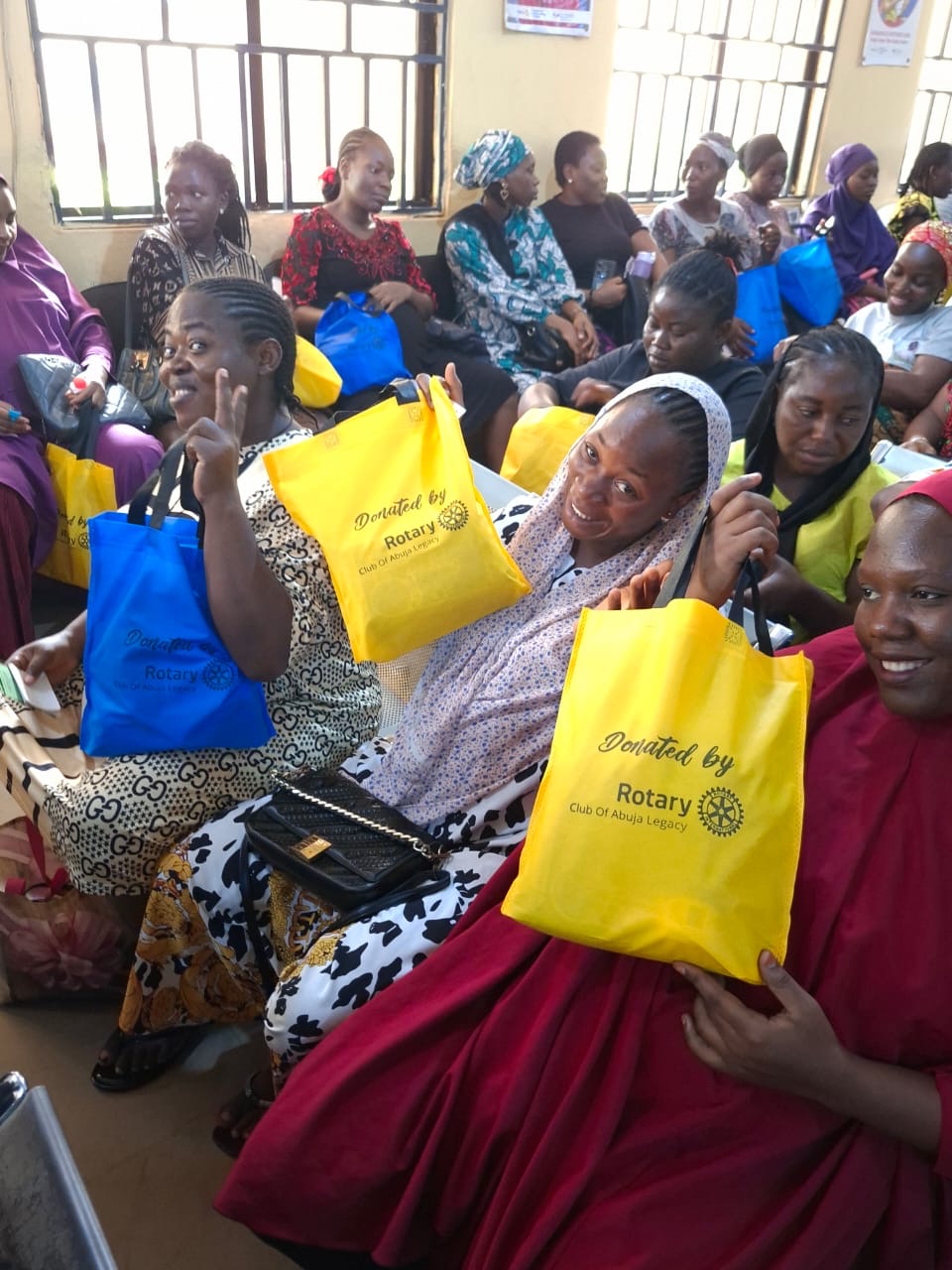
The initiative, conducted at Gwarimpa General Hospital, Lifecamp, reached over 100 expectant mothers with free birthing kits and health education sessions focused on postpartum depression and emotional wellbeing after childbirth.
According to the club, the programme underscores the need for maternal care to extend beyond delivery by addressing the mental health needs of new mothers.
Charter President, Winifred Mngu Mbashall, said the club was founded on the principle of intentional service rather than symbolic activities.
“We didn’t come to find our voice; we built it before we arrived. If we care about how babies are born, we must care about how mothers heal, and that is the legacy the Rotary Club of Abuja Legacy is here to leave behind,” she said.
Also speaking, Project Chair, Annmarie Ada Adamu, said the club intends to distinguish itself through impactful programmes that combine Rotary’s humanitarian tradition with innovative approaches to community service.
“We are not here to blend in with tradition; we are here to elevate it. This is Rotary, redefined through intentional impact,” she said.
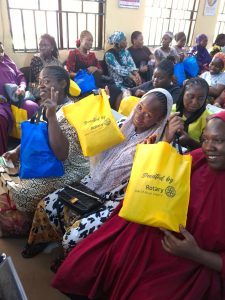
Beneficiaries during the outreach.
The Rotary Club of Abuja Legacy said the maternal and child health project is the first of several planned interventions as it seeks to establish itself as a leading platform for sustainable humanitarian service and community development.
By Adeko Ukpa
…Senatorial hopeful promises issue-based campaign, vows to protect every ballot
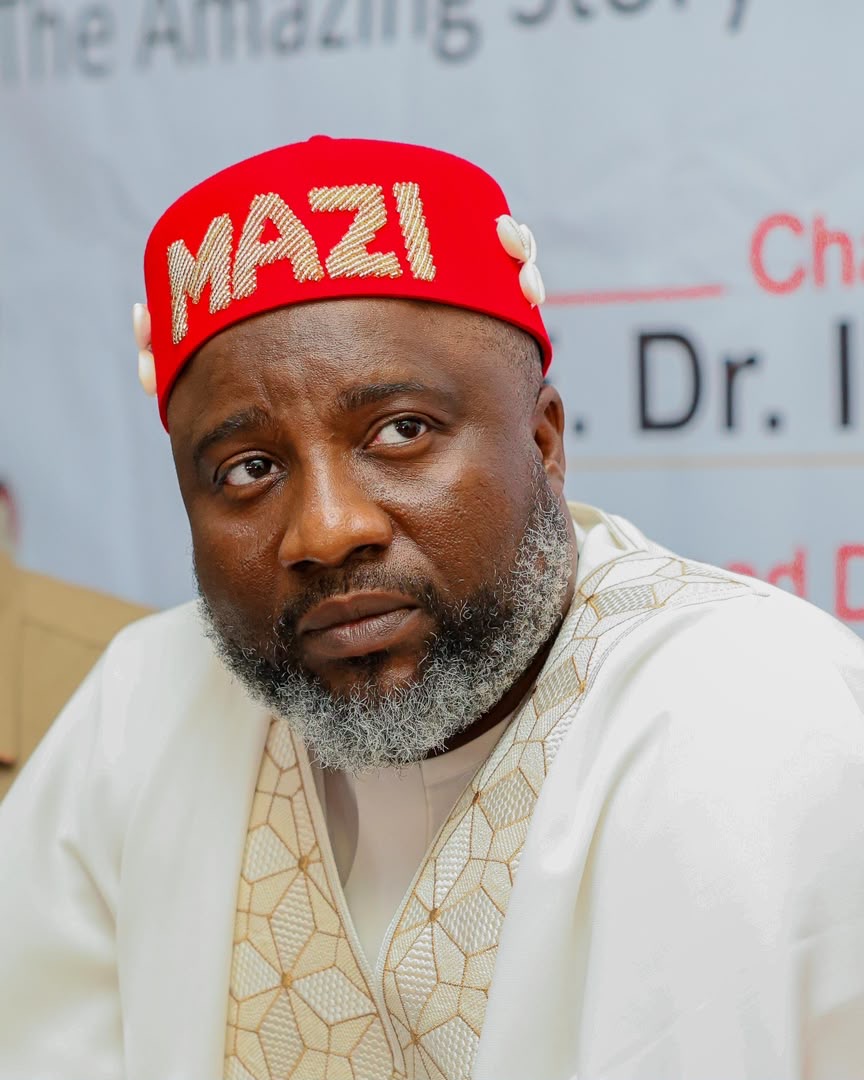
The Action Peoples Party (APP) senatorial candidate for Imo East, Mazi Chima Matthew Amadi, has challenged rival candidates to present their records and plans to voters, insisting that the 2027 election should be determined by competence, character and workable solutions rather than propaganda and political intimidation.
Amadi, according to a statement by his Chief Press Secretary, Cajetan Duke, made the call at a press conference held at St. Kevin’s Catholic Church, Ogbaku, Mbaitoli Local Government Area of Imo State, to mark the commencement of the party’s open campaign.
He said the APP was prepared to take its campaign to every ward and community in Owerri Zone, with a message centred on the problems confronting residents, including bad roads, insecurity, unemployment, poor healthcare and the decline in the quality of public education.
According to the University of Warwick research fellow, his engagements with residents, traders, farmers, artisans and young people had shaped the priorities of his campaign.
“We are ready — not with empty slogans, but with ideas. Not with bags of rice at election time, but with a plan for all time,” Amadi said.
He said residents were asking for basic improvements that would make a tangible difference in their daily lives, including good roads, security, employment opportunities, functional healthcare and schools.
Amadi said representation in the National Assembly should go beyond speeches in Abuja and translate into concrete benefits for the communities represented.
He therefore invited his opponents to a public debate, saying voters should be allowed to interrogate the records and proposals of all candidates before making their choice.
“Let us tell the people what we have done, what we stand for and what we intend to do. Let us debate our roads, jobs, security, healthcare, education and the opportunities available to our young people,” he said.
The APP candidate also warned against any attempt to intimidate his supporters or disrupt the electoral process.
He said the party would resist harassment of campaign agents, disruption of rallies and any effort to prevent citizens from freely exercising their democratic rights.
“We will not run, we will not bow and we will not be silenced. ‘G gburugburu’ means everywhere — and everywhere in Owerri Zone, our people have the right to hear us, support us and make their choice without fear,” he declared.
Amadi said the campaign would also prioritise election monitoring, with trained agents deployed to polling units and collation centres to ensure that votes were properly recorded and followed through every stage of the process.
“The era of writing results in hotel rooms is over. Every ballot lawfully cast by the people of Imo East must count — nothing more, nothing less,” he said.
He warned those planning to manipulate the election against such an attempt, saying the APP would use lawful means to protect the mandate of its supporters.
“We will watch, we will record and we will follow every vote from the polling unit to the final declaration. Anyone dreaming of subverting the will of Ndi Imo East should bury that dream today. We will defend the mandate of our people lawfully, firmly and to the very end,” Amadi said.
He urged APP members and campaign volunteers to remain disciplined and peaceful, urging them to persuade voters through facts rather than violence or provocation.
Amadi also appealed directly to the electorate to assess him on the basis of his ideas, character and record.
“Judge me by my ideas, my character and my record. We did not come this far to be frightened out of history. Imo East has buried too many dreams under bad leadership; we will not bury our courage too,” he said.
He added that the APP was ready for the campaign and expressed confidence that voters across Imo East would make their choice freely at the polls.
-
 Opinion2 years ago
Anioma State: A Necessary Proposal Rooted in Strategic Advantage
-
 Opinion4 months ago
Ibileye’s Quiet Revolution at Federal University Lokoja
-
 Business & Economy2 years ago
NASENI, Qietur partner to build 3000 Housing Units for Staff
-
 Law2 years ago
Human Right and Law Enforcement in Nigeria: A Critical Analysis
-
 Business11 months ago
Lithium boom has reshaped Nasarawa’s economy, says Prof Haruna
-
 Education1 year ago
TVET will change Nigeria for good, says NABTEB Registrar
-
Education12 months ago
NABTEB Registrar advises automotive, locomotive Engineers to do more to diversify Nigerian economy
-
 Opinion12 months ago
Engr. Kawu: A Heroic Homecoming for a Man of the People