
Health
Rotary Club supports indigent cancer patients, tasks Nigerians

From Adeko Ukpa
The President of the Rotary Club of Abuja, Maitama, Rtn. Rosemond Favour Uche, has asked Nigerians to support breast cancer patients in neglected communities.
She said the cost of diagnosis and care of the disease is burdensome on the affected indigent women, who could be family breadwinners.
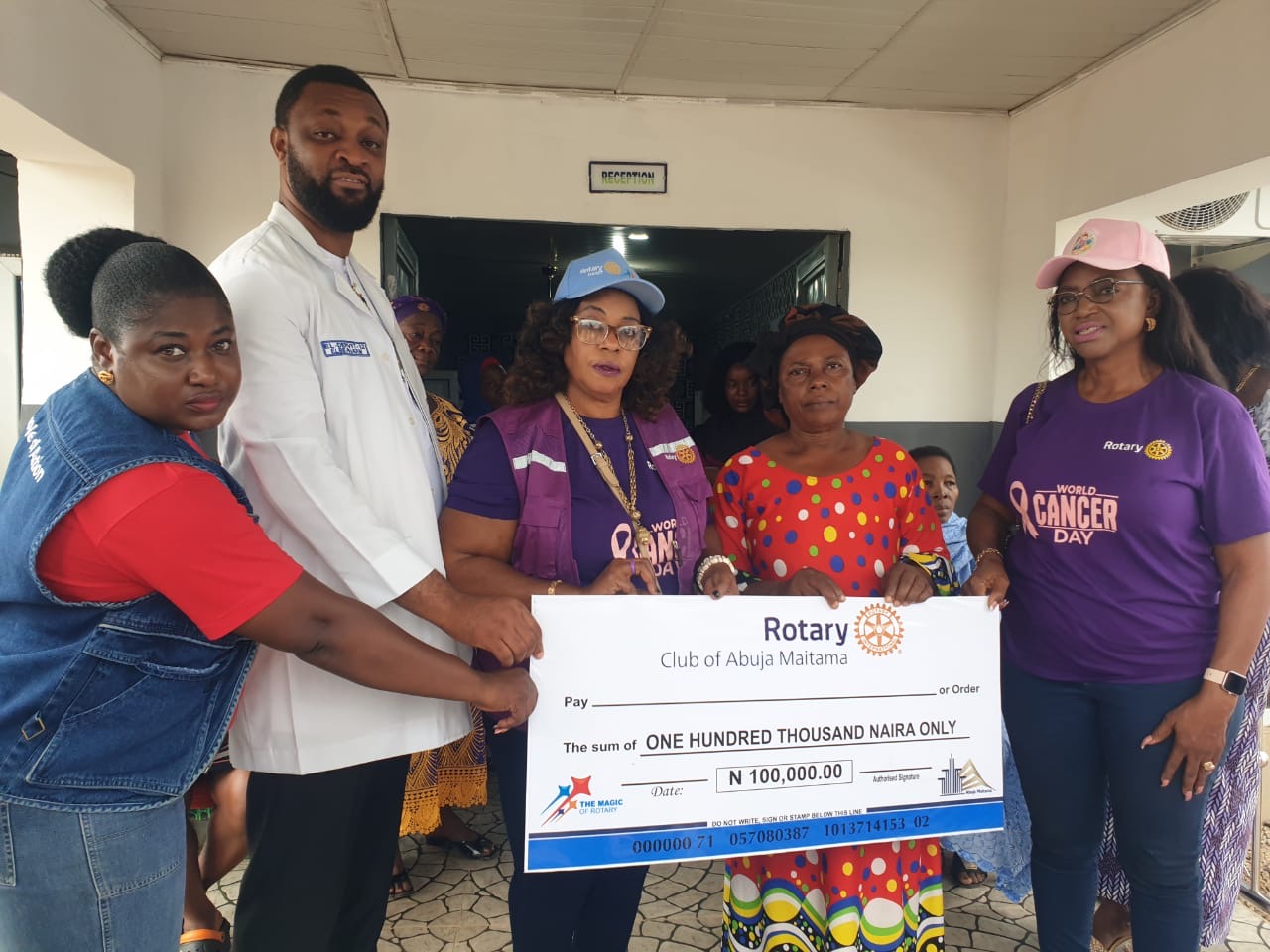
She said the club will support three female cancer survivors with N300, 000 for post-surgery rehabilitation.
Each of the three beneficiaries got N100, 000 to assist with their burden of care.
Uche made the plea at the closing ceremony of free surgery for 10 cancer patients in partnership with Silver Cross Hospital in Guidna Village, a suburb of Abuja.
He said the collaboration with the Medical Director of the hospital, Dr. Patrick Ezie was in fulfillment of the Rotary core values of humanitarian, especially for indigent and neglected communities
He said partnerships with individuals and organizations that are dedicated to the cause of breast cancer deserve the support of all Nigerians.
Uche said: “Over the past month, 50 patients were screened, and 10 surgeries were performed. Among these, three patients require chemotherapy, an expensive and crucial next step in their treatment.
“While surgery is costly, chemotherapy is equally challenging. We hope our contributions will help these women continue their fight against cancer.
“Today, we reiterate our commitment to humanitarian work by supporting these women as they face the next phase of their treatment.”
She however assured that the Rotary Club of Abuja Maitama’s involvement doesn’t end with financial support.
“Our aim is to raise awareness about the ongoing need for cancer care in underserved communities.
She explained why the club opted for a village for free cancer screening and surgery.
Uche added: “We are here because of a partnership with Silver Cross Hospital that has been performing free surgeries for breast cancer, a mission that aligns perfectly with Rotary’s ethos of helping the indigent.
“We realized that the Medical Director’s dedication to the provision of free surgery in underprivileged areas has made a significant impact.
“If he had chosen wealthy neighbourhoods like Asokoro or Maitama, he wouldn’t reach those who need free surgery. His humanitarian spirit brought him here, where he established Silver Cross Hospital to meet the needs of the grassroots
The District Governor-Elect for Rotary International, District 9127, Dame Princess Joy Okoro, praised the hospital’s Medical Director for the free surgery.
“He has honoured us by showing what Rotary stands for by reaching the underserved and providing solutions to their problems.
“Seeing him work in such a rural community is inspiring, and we are proud to support his mission.”
A past President of the club, Rtn. Yusuf Alli said: “Cancer is one of the most challenging diseases globally.
“Offering such services in this modest village is a true testament to serving humanity and God. We will spread the word about this hidden doctor who is performing miracles for cancer patients.”
The hospital’s MD, Patric Ezie who appreciated the club’s intervention called on the government and well-meaning Nigerians to emulate Rotary by assisting indigent cancer patients.
He said: “Rotarians are humanitarians. They are always known for helping those who have such issues. I reached out to them and said the hospital is already doing this project, whichever way we can support these women, it would be nice.
“It’s a huge financial issue for such illness. We are already doing our best to ensure that the women have the surgery. They need treatment and drugs to continue on chemotherapy and nutrition.
“This is also a call to the government and well-meaning Nigerians. It won’t take Federal hospitals much to do free breast cancer surgery for women. They can do free chemotherapy, even if it’s for 100 women.
“We have removed that burden from the society. We are also giving life back to those women. If a private hospital like ours in our location could do this for these women, then what of the big hospitals? They can do much more. They have more finances. They have more that they can give.
“Sometimes we forget that charity is actually part of medicine. Yes, you want to make money, but there are also people who you can help. It won’t cost your facility so much”.



From Ovayioza Onukaba, Abuja
The Rotary Club of Abuja Maitama has partnered with the Teen Ambassadors Foundation to provide free medical services to residents and workers across several districts of the Federal Capital Territory.
The programme, flagged off on Friday at the Cyprian Ekwensi Arts and Culture Centre in Area 10, Garki, will offer free consultations, screenings and treatment for various health conditions.
President of the Rotary Club of Abuja Maitama, Rt. Maha Altine Longe, said the outreach was part of Rotary’s efforts to support communities through healthcare intervention.
According to her, the initiative is designed to extend basic healthcare services to residents who may not have regular access to preventive medical care.
“Rotary is about action. It is about taking the resources, skills and time we have been blessed with and channeling them toward those who need it most,” Longe said.
“Today, that action takes the form of healthcare.”
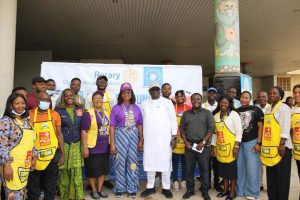
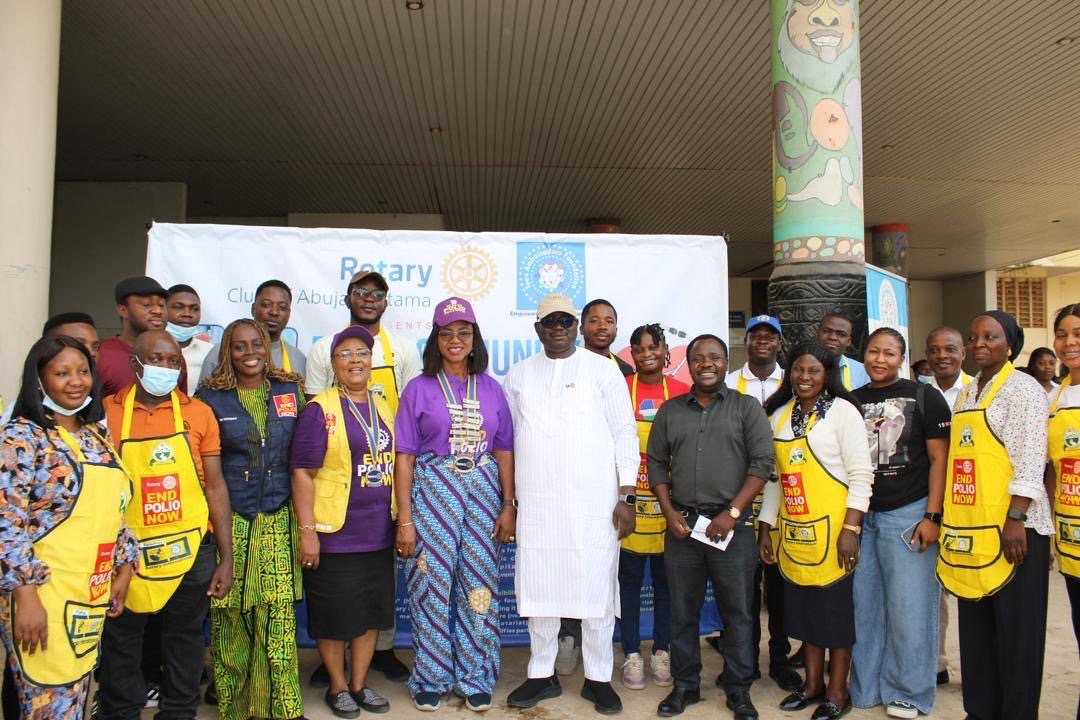
CAPTION: The District Governor, Rotary International District 9127, Dr. Joy Nky Okoro (fifth left) with the President of the club, Rtn. Maha Altine Longe, club members and health workers during the outreach in Abuja
She said the collaboration with the Teen Ambassadors Foundation demonstrates the importance of partnerships in addressing community challenges.
“This partnership is proof that when organisations come together with a shared purpose, we can achieve far more than we ever could alone,” she said.
Longe explained that the medical outreach would offer a range of services including eye examinations and the distribution of glasses, hepatitis screening and vaccination, malaria testing and treatment, blood pressure and diabetes checks as well as health education and counselling.
“Over the course of this outreach we will be offering free health consultations and screenings, eye checks and provision of glasses, hepatitis screening and vaccination, malaria testing and treatment, blood pressure and diabetes checks, health education and counselling, and the distribution of essential medications,” she said.
She stressed that preventive healthcare plays a critical role in improving community wellbeing.
“Your health is your wealth, and we are here to support you in safeguarding it,” she said.
Longe commended the medical professionals participating in the outreach, including optometrists and specialists handling hepatitis screening and vaccination.
She also acknowledged the contributions of sponsors, volunteers and members of the Rotary Club for supporting the initiative.
“I want to express my profound gratitude to everyone who has made this possible – our medical team, our partners at the Teen Ambassadors Foundation, our sponsors and every Rotarian and volunteer who has worked tirelessly behind the scenes,” she said.
Longe encouraged residents attending the outreach to cooperate with volunteers and follow instructions in order to ensure that all participants benefit from the programme.
“As we flag off this outreach, let us remember that even the smallest act of kindness can have a ripple effect,” she said.
“A consultation today, a medication given, a pair of glasses provided or a hepatitis vaccination administered are seeds from which healthier communities grow.”
The outreach is expected to serve residents from several districts across Abuja, including Area 1, Area 2, Area 3, Area 10 and Area 11, as well as nearby communities.

From Adeko Ukpa, Abuja
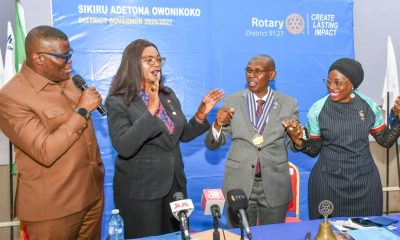
The District Governor, Rotary International District 9127, Dr. Joy Nky Okoro said the organization has helped the world to prevent and control outbreak of diseases in the world in 121 years.
She said Rotary has reduced Polio globally by 99 per cent.
Okoro said these during the grand finale of the Rotary Day Celebration (RODAC) and lighting of the Torch of Unitty to mark 121st anniversary of the organization.
She said: “Rotary International has impacted the world in many areas, especially disease prevention and control. We have invested heavily maternal and child health.
“Despite global challenges such as the Great Depression and World War II, Rotary continued to grow. The organisation played a role in the establishment of the United Nations children’s agency UNICEF in 1945.
“The organisation’s PolioPlus programme, launched in 1985, has helped to reduce polio cases worldwide by 99.9 per cent, with only a few countries still reporting infections.
” Rotary interventions on disease surveillance, prevention and control are expanding to malaria challenge and community health. We have had it good in 121 years.
“Rotary International now has more than 1.4 million members across over 200 countries, working on projects that include disease prevention, peacebuilding, education, healthcare and humanitarian relief.
“In Nigeria, Rotary operates six districts, with more than 500 clubs and over 9,000 Rotarians nationwide.”

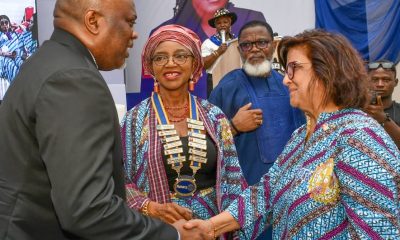
L-R: The Chairperson of Rotary Day Celebration (RODAC), Barr. Mohammed Adama, the President of Rotary International, Francesco Arezzo and the District Governor, Rotary International, Dr. Joy Nky Okoro with the Torch of Unity to mark 121st anniversary of Rotary International in Abuja.
The Chairperson of RODAC in the district, Barr. Mohammed Adama said: “The event was a convergence of legacies
And it is not just a Joint Fellowship, it is a spiritual, symbolic, and strategic alignment of everything Rotary has been, everything Rotary is, and everything Rotary is becoming.
“We are not simply Unveiling a Torch, we are revealing our collective destiny.
“When Rotary began 121 years ago, it did not begin with wealth, power, or global influence. It began with four people, who believed that friendship could become service, and service could become transformation.
“Those four voices have multiplied into thousands across our Rotary International District 9127. What began as a circle has become a movement. What began as an idea has become a global force for good. And that is what we are celebrating.”
From Adeko Ukpa, Anuja
The President of the Rotary International, Francesco Arezzo, yesterday said immunisation is vital to polio eradication in the world.
He also said the organization is looking forward to 90-97 per cent immunisation coverage of children to eliminate polio virus and prevent vaccine-derived cases in Nigeria.
He said “zero dose of oral polio vaccine is our dream, our goal.”
He said polio is still endemic in two countries in the world, namely Afghanistan and Pakistan.
He , however, rated Nigeria high in making Africa polio free.
Nigeria was declared polio-free in 2020 but strains of the vaccine-derived virus have persisted in recent years.
Arezzo spoke on polio eradication evaluation at a press briefing in Abuja on the final leg of his seven-day visit to Nigeria.
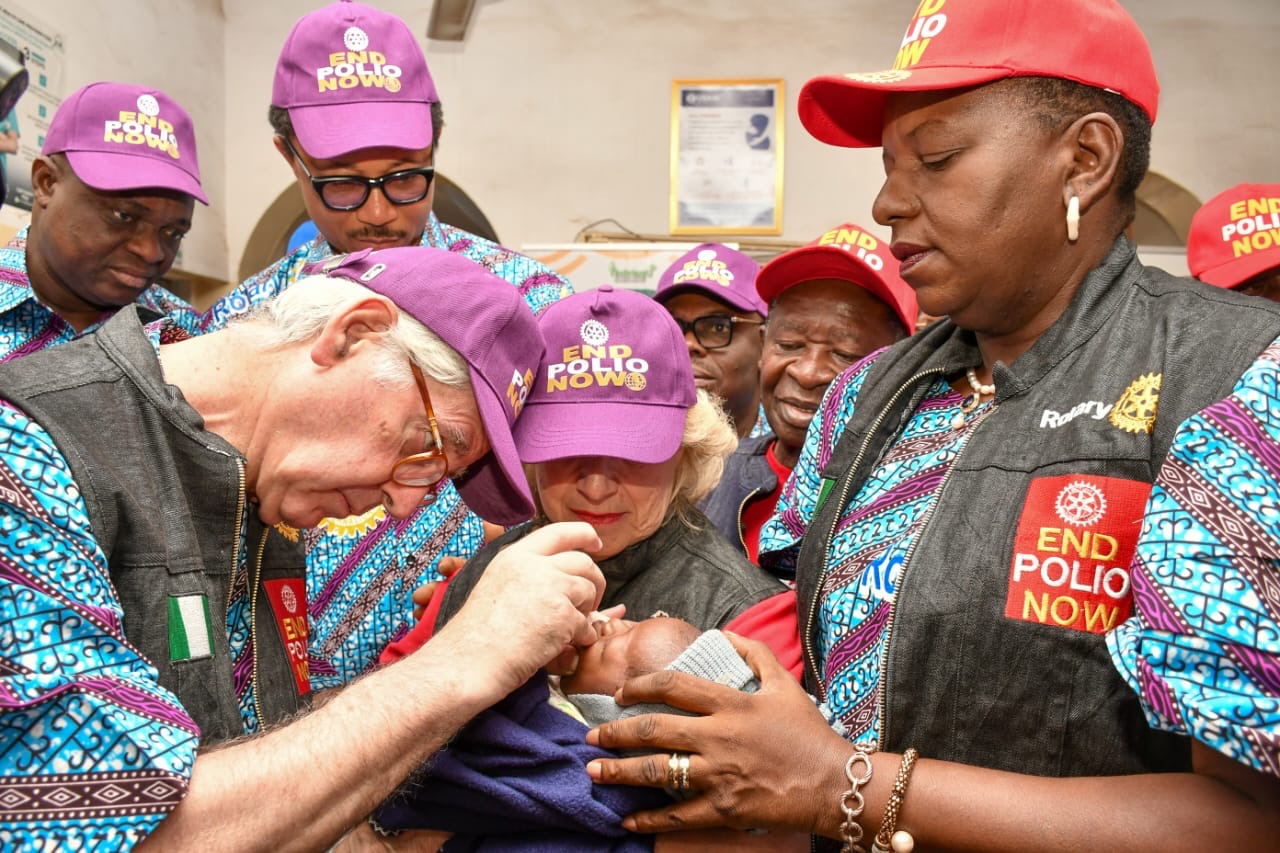
L-R: President Rotary International, Francesco Arezzo, his Wife Anna Maria Francesco Arezzo, Chairman, Nigeria National PolioPlus Committee (NNPPC), PDG Joshua Hassan and Trustee, The Rotary Foundation, Past District Governor (PDG), Ijeoma Pearl Okoro, during the Polio immunisation by the President Rotary International held at Primary Healthcare Care, Area 2 Garki Abuja, yesterday.
He urged the government, stakeholders, and citizens to view polio eradication as a collective public health responsibility.
He called on the Nigerian government and partners to maintain cooperation and ensure every child is immunised.
He said the failure to complete the campaign could put future generations at risk of renewed outbreaks.
He said: “Eradication of Polio is possible, though not easy. The response is straightforward. First, we must continue using the new, more stable vaccine, which significantly reduces vaccine-derived cases.
“Second, we must maintain a very high immunisation rate. Vaccine-derived cases occur only where population immunity is low. With high coverage, such cases cannot spread. These are the two key actions required”.
He assured that Rotary would continue to support Nigeria’s polio eradication efforts.
He described the campaign as a global responsibility rather than the undertaking of a single organisation.
“This is not the problem of Rotary alone; it is the problem of humanity,” he said.
Arezzo commended Nigeria’s efforts at making Africa polio free
He said: “You have remained committed to the Polio Plus campaign in Nigeria. Polio was one of the major global health challenges when the eradication effort began in 1975, and even more so when the Global Polio Eradication Initiative was founded in 1985. At the time, some regions of the world were considered extremely difficult to address,” he said.
“Africa was among those regions. India, however, was widely regarded as not just difficult but impossible. Yet cooperation and commitment proved otherwise.
“The work done in Africa was exceptional, and in 2020 the continent was certified polio-free. That achievement was the result of sustained efforts, including here in Nigeria. India, once considered impossible, also achieved polio-free status.
“Today, only two countries remain endemic: Afghanistan and Pakistan. There are still cases of vaccine-derived poliovirus in some parts of the world, including Nigeria, but the numbers are declining”.
Arezzo said the decline in the polio scourge was due to two main factors, including stable vaccine and a high-level of Immunization.
He added: “First, a more stable vaccine has been introduced. In the past, vaccine-derived cases occurred because the weakened virus could mutate in environments where immunisation coverage was low.
“The newer vaccine is more stable, significantly reducing such variations. This is a major step towards eradication.
“Second, maintaining a very high level of immunisation is critical. To eradicate polio completely, at least 90–97 percent of children under five must be immunised. This is essential”.
The Rotary International president also drew attention to the human cost of the campaign, disclosing that 76 people had died in Nigeria since 2012 during polio vaccination exercises, while 382 vaccinators had been killed in Pakistan.
“These are numbers that are very sad to hear. The best way to honour them is to finish this campaign.”
Later at Area 2, Garki, Abuja, where he and his spouse, Anna Maria, administered polio drops to children, Arezzo said Rotary’s focus remained on protecting children through vaccination.
“For us, it is always a great emotion to give the two drops in the mouth of our children, because each child that we vaccinate is one child that will be safe from polio. Every dose represents a step toward the eradication of polio,” he said.
He said sustained community engagement, particularly with mothers, remained central to the campaign’s success.
“The main job is to explain, to convince, to say how important it is. And I am convinced that they understood how important it is for their children,” he said.
Arezzo said the long-term goal was to achieve zero-dose coverage nationwide, noting that while no fixed timeline had been set, efforts were being intensified.
“We don’t want to leave any child without the two drops. Zero dose is our dream, our goal,” he said.
Earlier, the Chairman of the Nigerian National Polio Plus Committee (NNPPC), Joshua Hassan, expressed concern over the emergence of two vaccine-derived polio cases in Kebbi State, as well as the deaths of two volunteers linked to security challenges, which he said remained a major concern.
He also dismissed claims of declining interest among Rotarians, describing the situation as volunteer fatigue rather than unwillingness.
He said Rotarians were volunteers, many of whom were based in urban centres, while vaccination activities were concentrated in rural areas.
Hassan said Rotary was exploring ways to expand its presence in underserved regions, including parts of the North-East, while relying on volunteers and health workers to sustain immunisation drives.
He stressed that ending polio remained Rotary International’s top priority. “We are 99.9 per cent done, and we must finish the job,” he said.
Also speaking, 9127 District Governor, Princess Joy Okoro, said the visit was to assess Nigeria’s use of global grants and reaffirm Rotary’s commitment to eradication.
“We are still fighting polio to make sure that the poliovirus is totally eradicated in Nigeria, advocacy would be strengthened in states with emerging vaccine-derived cases,” she said.
-

 Opinion2 years ago
Anioma State: A Necessary Proposal Rooted in Strategic Advantage
-
 Opinion4 months ago
Ibileye’s Quiet Revolution at Federal University Lokoja
-
 Business & Economy2 years ago
NASENI, Qietur partner to build 3000 Housing Units for Staff
-
 Law2 years ago
Human Right and Law Enforcement in Nigeria: A Critical Analysis
-
 Business11 months ago
Lithium boom has reshaped Nasarawa’s economy, says Prof Haruna
-
 Education1 year ago
TVET will change Nigeria for good, says NABTEB Registrar
-
Education1 year ago
NABTEB Registrar advises automotive, locomotive Engineers to do more to diversify Nigerian economy
-
 Opinion1 year ago
Engr. Kawu: A Heroic Homecoming for a Man of the People