
News
Timi Frank Urges Tinubu To Quit 2027 Race Over Prayer Incident In Abuja


From Adeko Ukpa
Former Deputy National Publicity Secretary of the All Progressives Congress (APC), Comrade Timi Frank, on Sunday, advised President Bola Ahmed Tinubu to jettison his re-election ambition and ensure a free, fair and credible election in 2027.
He warned that attempts to force his way back into office could plunge the country into crisis.
Frank, who described the public protest against Tinubu after Juma’at prayers at the Shehu Shagari Mosque in Area 1, Garki, Abuja on Friday, as evidence of growing dissatisfaction with his administration, urged the President to listen to Nigerians and shelve his ambition rather than rely on assurances from political associates.
Tinubu reportedly faced boos from some protesters who chanted “Ba ma yi” (we don’t want you) after prayers at the mosque.
During the incident, some protesters were seen in a viral video, removing and destroying his campaign posters and billboards in parts of Area 1, Abuja.
Reacting to the incident, Frank condemned the action and the perpetrators for choosing a religious occasion to vent their displeasure and commended the President’s security detail for ensuring his safety and deescalation of the uprising.
He however urged the President to recognise the significance of the public reaction.
“The rejection was total and unmistakable. No Nigerian president has been embarrassed like this publicly. The way Nigerians rejected him speaks volumes but should he decide to go ahead and he loses, he should be prepared to accept defeat just like former President Goodluck Jonathan did,” he said.
On the disconnect between political assurances and public sentiment, Frank expressed concern over what he described as a growing disconnect between assurances being given to President Bola Ahmed Tinubu by political associates about winning the FCT and the actual mood of Nigerians.
He said: “I have seen the confidence with which some people are assuring President Tinubu that he will win the Federal Capital Territory (FCT) and that he is firmly in control. But the reported embarrassment he suffered during a prayer session in Abuja tells a different story.
“What happened in the FCT last Friday showed that political assurances and promises are not necessarily a reflection of the reality on the ground. The public reaction reflects the anger and dissatisfaction of Nigerians, which those around the President may not be telling him about.”
He added: “I am giving him this advice because I genuinely want him to listen to the truth. Those around him may not be telling him that he has become very unpopular and that continuing in the presidential race may be a difficult undertaking.
“My advice is that he should take a bow and leave the race. He should take this advice seriously.”
He maintained that the dissatisfaction with Tinubu extended beyond Abuja, warning that those assuring the President of victory in 2027 might be shielding him from the reality of the political situation.
He said: “What happened in FCT and Jos after the APC rally has shown that people like the FCT Minister, Nyesom Wike promising him of 80 per cent votes in Abuja and the Governor of Edo State, Monday Okpebholo vowing to give him 2.5million votes in Edo state, would disappoint him due to the reality of ground.
“Those telling him to continue and assuring him that he will win the next election are merely deceiving him. Even some people within his political circle, including those involved in his campaign, know that selling his candidacy to Nigerians will be difficult,” Frank said.
He alleged that financial considerations were influencing the positions of some political associates, arguing that the President needed honest assessments of his administration’s performance and popularity.
Frank urged Tinubu to take a cue from opposition figures, including former Vice-President Atiku Abubakar and former Anambra State governor, Peter Obi, whom he said attracted large crowds without offering financial inducements.
“Wherever these opposition leaders go, Nigerians come out in large numbers to receive them without being induced with rice or money. Their reception should tell the President something about the mood of the country,” he said.
He added: “I am telling him the truth: his time is up. He should not waste time but take a bow and leave the 2027 presidential race.”
On the forthcoming general election, Frank urged Tinubu to guarantee a transparent electoral process, insisting that the outcome must reflect the will of the electorate.
“The President should quit the race and allow other candidates to contest in a free, fair and credible election. Whoever wins should be allowed to emerge as the choice of the people,” he said.
He expressed concern over alleged attempts by some political actors to manipulate the electoral process, warning that any effort to impose an unpopular candidate could trigger widespread resistance and threaten national stability.
“Nigerians will not accept a situation in which someone is declared the winner when the people know they did not vote for him. They should not push the country into a crisis by attempting to impose him on the people,” Frank warned.
The former APC spokesman, who is also the United Liberation Movement for West Papua (ULMWP) Ambassador to East Africa and the Middle East, attributed the growing public discontent to economic hardship and insecurity.
He listed hunger, unemployment, rising living costs and insecurity among the challenges fuelling public anger, arguing that the administration’s policies had worsened the difficulties facing ordinary Nigerians.
“If the President had performed well, there would be no need for the desperation we are witnessing today,” he said.
Frank also questioned the credibility of political endorsements and expressions of support for Tinubu, alleging that some individuals and groups were motivated by anticipated financial benefits rather than genuine public sentiment.
He urged the President to distinguish between genuine public support and endorsements driven by personal or political interests.
Despite his criticism, Frank said Tinubu still had an opportunity to secure a positive place in history by voluntarily stepping aside and ensuring a credible election.
“President Tinubu still has an opportunity to make history and have his name written in gold. He can achieve this by ensuring that the country conducts a free, fair and credible election,” he said.
Frank stressed that Nigerians were simply demanding an electoral process in which their votes would count and the people’s choice would prevail.







From Adeko Ukpa
Professor Patrick Loch Otieno (PLO) Lumumba has called on African leaders to remove unnecessary barriers restricting the movement of people across the continent.
He warned that the African Continental Free Trade Area (AfCFTA) cannot achieve its objectives if Africans are unable to move freely to participate in the emerging single market.
Lumumba argued that Africa’s ambition to establish an integrated continental economy would remain incomplete if governments continued to facilitate the movement of goods and capital while treating the movement of African citizens with suspicion.
He spoke at the Bridge Club’s grand end-of-year event in Lagos on Thursday, where he delivered a keynote address titled Africa Must Not Become Foreign to Itself: Xenophobia, Pan-Africanism and the Future of African Belonging.
According to him, the success of continental economic integration depends not only on trade agreements and tariff reductions but also on the ability of entrepreneurs, professionals, workers and investors to move across national borders.
He said: “We cannot celebrate when Nigerian products enter another African market but become anxious when the Nigerian entrepreneur follows them.”
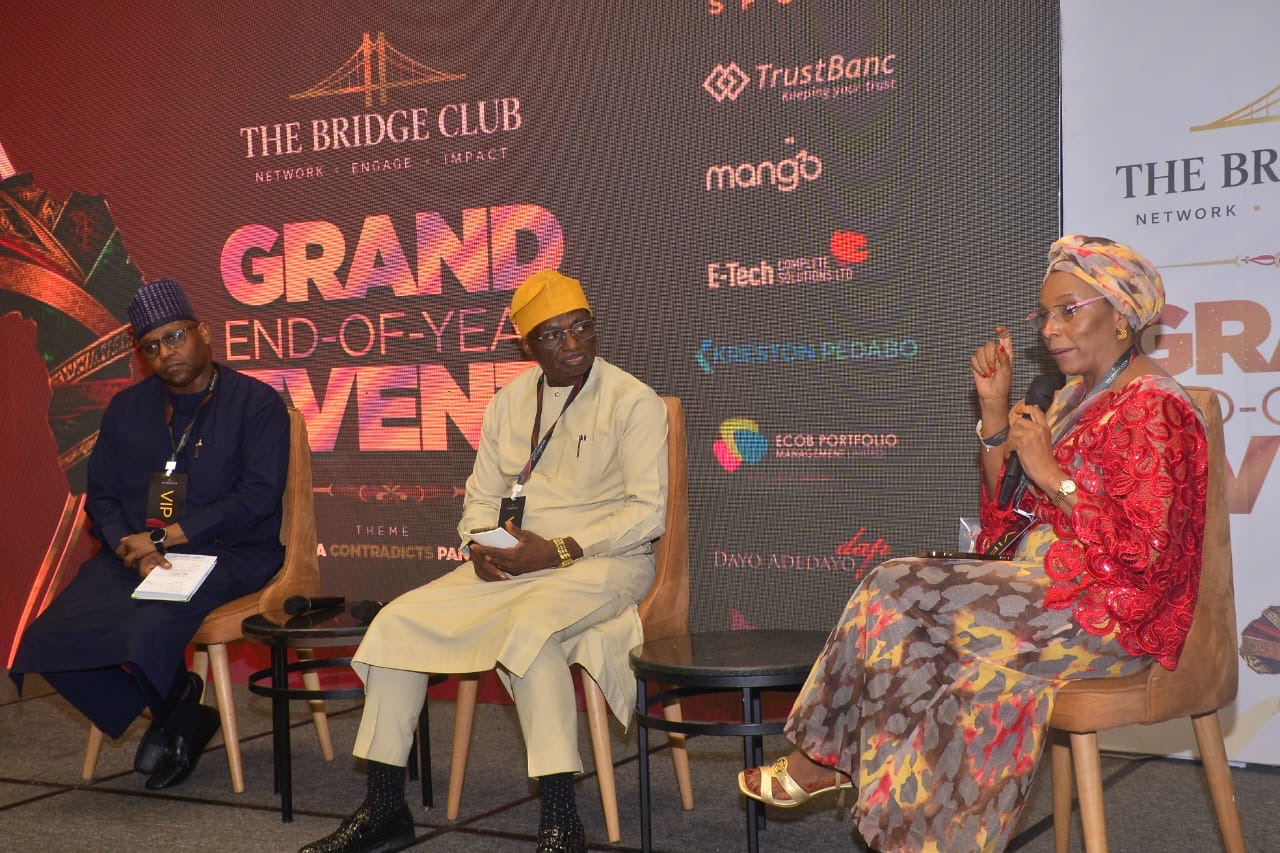
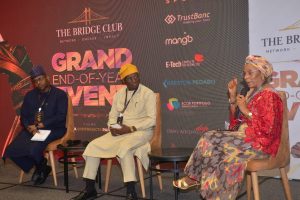 CAPTION: L-R: The panelists, Hon. Abdulrahman Abba Terab and Amb.Godwin Adakole Adama with the moderator, ace broadcaster, Kadaria Ahmed at the end-of-the-year symposium of The Bridge Club Lagos on Xenophobia and Pan-Africanism on Thursday at the Continental Hotel, Lagos.
Lumumba maintained that goods and services could not independently drive economic integration without the people whose skills, knowledge and enterprise made commercial activities possible.
“Goods do not manufacture themselves. Services do not provide themselves. Capital does not negotiate contracts, establish companies or cross borders without human agency,” he said.
He noted that behind every commercial transaction were entrepreneurs, transporters, engineers, lawyers, bankers, technicians, traders and workers whose contributions were essential to the success of an integrated African market.
The legal scholar questioned the logic of promoting free trade while maintaining restrictive immigration policies that made it difficult for Africans to establish businesses, seek employment or pursue professional opportunities in other African countries.
He said the contradiction was particularly evident in the continent’s efforts to implement the AfCFTA while the African Union’s Protocol on Free Movement of Persons, Right of Residence and Right of Establishment remained unimplemented.
Lumumba observed that although the AfCFTA Agreement had entered into force, the free movement protocol adopted in 2018 had yet to enter into force.
He described the situation as evidence that African governments had made greater progress in agreeing to move commodities across borders than in facilitating the movement of their own citizens.
He, however, acknowledged that governments retained legitimate responsibilities to regulate immigration, protect national security, enforce labour standards and ensure compliance with professional requirements.
According to him, regulation should not be confused with exclusion, adding that orderly migration was compatible with national sovereignty and effective governance.
Lumumba cited the Economic Community of West African States (ECOWAS) as an example of regional efforts to promote the movement of people, recalling that the organisation adopted its Protocol on Free Movement of Persons, Residence and Establishment in 1979.
He said the experience demonstrated that regional integration must be felt by ordinary citizens rather than remain an aspiration confined to presidents, government officials and trade institutions.
The scholar also argued that the African Union’s Agenda 2063 and its aspiration for an African passport should be treated as essential components of continental integration rather than ceremonial ambitions.
He said the success of the AfCFTA should be measured not only by the volume of goods traded or revenue generated but also by the opportunities available to ordinary Africans.
“The success of AfCFTA will ultimately be measured not only by tariff schedules, customs revenues or the volume of goods crossing our borders,” he said.
“It will also be measured by whether an African entrepreneur can see the continent as a market, whether an African professional can see it as a field of opportunity and whether an ordinary African can cross a border without immediately being transformed, in the minds of fellow Africans, from neighbour into threat.”
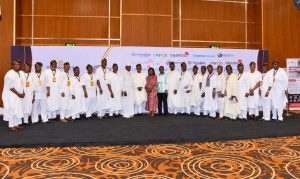
CAPTION: Members of The Bridge Club with guests at the end-of-the-year symposium of The Bridge Club Lagos on Xenophobia and Pan-Africanism on Thursday at the Continental Hotel, Lagos.
Lumumba called for improved documentation systems, mutual recognition of professional qualifications and clearer residence and work arrangements to facilitate lawful movement across the continent.
He urged African leaders to move beyond the rhetoric of continental unity and demonstrate greater political commitment to building an integrated economic space.
“We cannot build a single African market while maintaining 54 fortified mental markets,” he declared.
He said Africa must embrace a system in which goods, services, ideas, capital and people could move within an orderly legal framework if the continent hoped to compete effectively in the global economy.
Earlier, the President of The Bridge Club, Abdulhakeem Mustapha (SAN), said the continued discrimination against Africans in other African countries represented a fundamental contradiction of the ideals of continental unity.
He said Pan-Africanism must be reflected in everyday conduct, institutional practices and the way African countries treat citizens of other African nations.
“How can we preach Pan-Africanism while tolerating attitudes and practices that diminish the humanity and dignity of fellow Africans?” he asked.
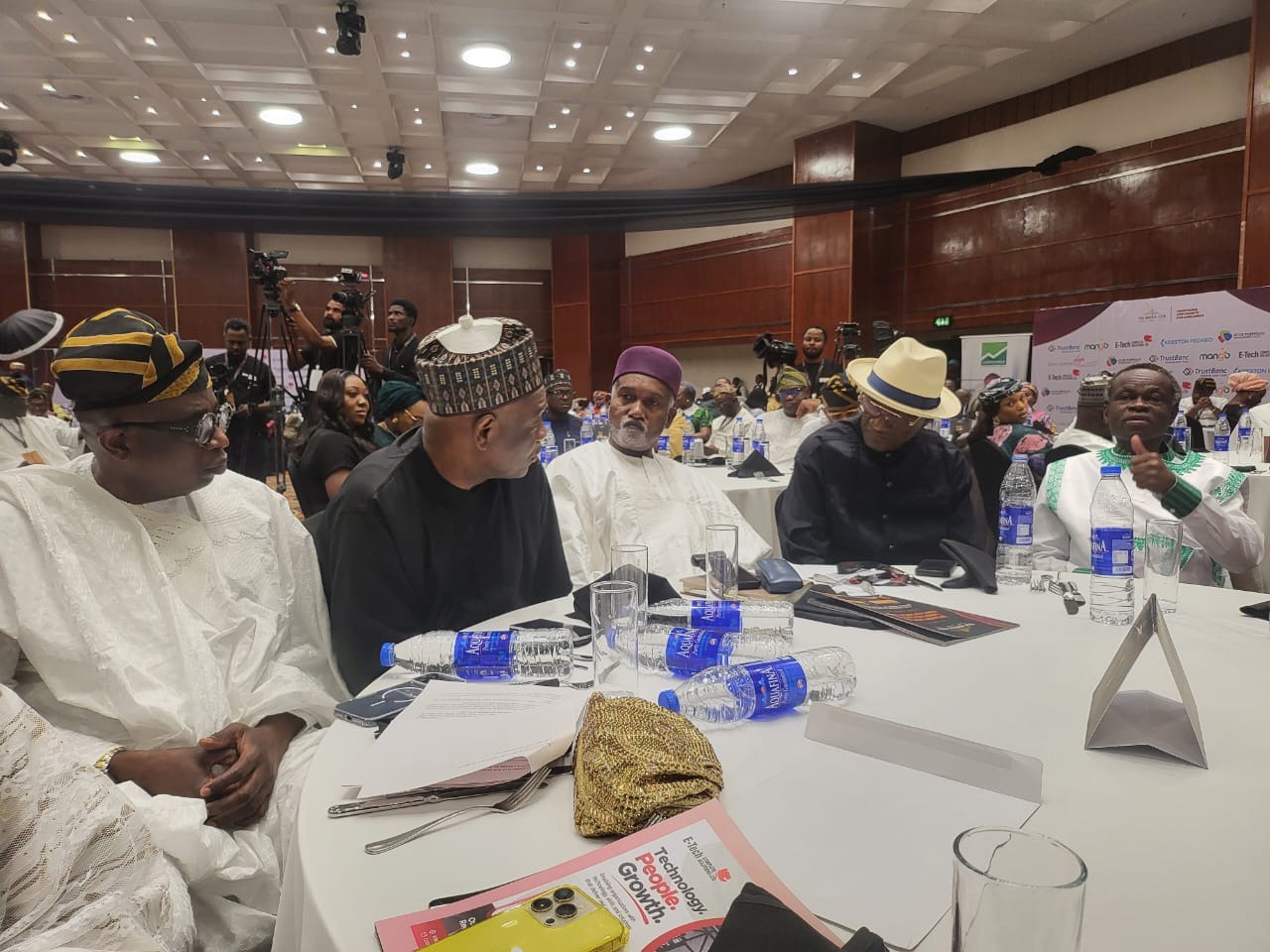
….Former Foreign Affairs Minister calls for stronger continental integration, warns against discrimination among Africans
By Adeko Ukpa
Former Minister of Foreign Affairs, Yusuf Maitama Tuggar, has condemned the growing hostility against fellow Africans in parts of the continent, particularly South Africa.
He warned that xenophobia undermines the ideals of Pan-Africanism and threatens Africa’s collective future.
Tuggar said Africa could not genuinely pursue continental unity, economic integration and shared prosperity while citizens of one African country were subjected to discrimination, intimidation and violence in another.
He spoke at the 2026 end-of-year event of The Bridge Club, where he served as chairman of the occasion.
The event featured renowned Kenyan scholar and Pan-African advocate, Professor P.L.O. Lumumba, as keynote speaker.
L-R: The President of The Bridge Club Lagos, Mr. Abdulhakeem Mustapha (SAN); the Executive Secretary, TETFUND, Arc. Sonny Echono; the Chairman of the occasion and a former Minister of Foreign Affairs, Amb. Yusuf Maitama Tuggar; a special guest, Mr Brodericks Arigbodi; and the Keynote Speaker, Prof. P.L.O. Lumumba at the end-of-the-year symposium of the club on Xenophobia and Pan-Africanism on Thursday at the Continental Hotel, Lagos.
The former minister, who reflected on Nigeria’s historical involvement in the struggle against apartheid in Southern Africa, said the country had made enormous sacrifices to secure the liberation of African countries from racist minority rule.
He recalled how Nigeria provided scholarships and other assistance to victims of apartheid, including South African students who survived the 1976 Soweto massacre.
According to him, Nigeria’s solidarity extended to Namibia, Angola and other African countries struggling against colonialism and racial oppression.
He said Nigerians of his generation grew up believing in African liberation and unity, making the current hostility against Nigerians and other black Africans in South Africa particularly difficult to understand.
Tuggar said: “These are but a very few of the reasons why Nigerians cannot fathom why they and other black Africans are being targeted in South Africa.
“Call it Afrophobia, which may be a better description than xenophobia, as non-black Africans appear to be exempted, or the more euphemistic framing of anti-migration protests, it is wrong and must be condemned.”
He described the development as particularly unfortunate at a time when African countries should be strengthening cooperation to improve their economic and political standing in the international community.
Tuggar, however, argued that understanding the historical and structural factors behind the hostility was necessary to addressing the problem, stressing that historical context should not be mistaken for justification.
He traced some of the roots of institutionalised segregation in Africa to colonial policies and the apartheid system, arguing that their psychological and social consequences continued to influence relationships within African societies.
The former minister said the continent needed intellectual rigour, historical understanding and stronger institutions to confront prejudice and other attitudes that undermine African solidarity.
He also identified economic integration and industrial development as critical elements of genuine Pan-Africanism.
According to him, Africa cannot achieve meaningful development by remaining a supplier of raw materials to the rest of the world while importing finished products.
He cited the vision of Nigerian development economist Adebayo Adedeji and other African intellectuals who advocated manufacturing, regional integration and the development of an African Economic Community.
Tuggar said the African Continental Free Trade Area (AfCFTA) offered an important opportunity to advance that vision by strengthening trade, industrialisation and the movement of goods and services across national borders.
He identified three important connections between economic integration and Pan-Africanism, including the need for free movement of labour as a foundation of an effective continental free trade system.
He said: “The path to Pan-Africanism is through the continental free trade area.
“As the father of capitalism, Adam Smith, once opined, the free circulation of labour is the foundation of any free trade system.”
Tuggar also expressed concern about the possible influence of external interests in fuelling anti-migrant sentiments, calling for greater scrutiny of organised anti-immigration campaigns and their sources of funding.
He warned that the relationship between Nigeria and South Africa remained too important to the continent’s future to be undermined by hostility and mutual suspicion.
He recalled South Africa’s support for Nigeria’s international engagements, including its efforts towards joining the Group of 20 (G20).
Earlier, President of The Bridge Club, Abdulhakeem Mustapha (SAN), said the theme of the event, Xenophobia Contradicts Pan-Africanism, reflected the urgent need for Africans to reconcile their commitment to continental unity with their treatment of fellow Africans.
Mustapha said Pan-Africanism must go beyond political declarations, diplomatic conferences and economic agreements to become evident in people’s attitudes and conduct.
He asked: “How can we genuinely aspire to a united Africa when an African is made to feel unwelcome, unsafe or unwanted in another African country simply because of nationality, ethnicity or origin?”
He added that Africa’s prosperity, security and dignity were interconnected and could not be achieved sustainably at the expense of another African country.
Mustapha urged members of the club and other stakeholders to promote tolerance, mutual respect and understanding across national and cultural boundaries.
The event brought together professionals, business leaders, diplomats and other distinguished guests to discuss the future of African unity and the responsibilities of citizens in building a more inclusive continent.
News
Lumumba, Tuggar, Dabiri-Erewa to Discuss Xenophobia and Pan-Africanism at The Bridge Club of Lagos Event
By Adeko Ukpa
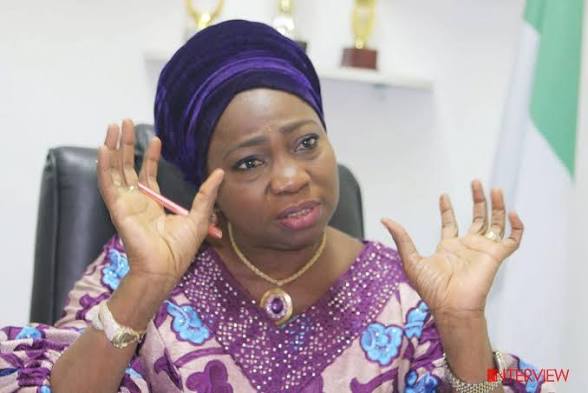
Renowned anti-corruption advocate Prof. P. L. O. Lumumba; former Minister of Foreign Affairs, Amb. Yusuf Maitama Tuggar; and Chairman of the Nigerians in Diaspora Commission (NiDCOM), Hon. Abike Dabiri-Erewa, will headline discussions on “Xenophobia Contradicts Pan-Africanism” at the Grand End-of-Year Event of The Bridge Club of Lagos.
The event will take place on 12 November 2026 at the Lagos Continental Hotel, Lagos.
Other participants include Prof. David Aworawo, Head of the Department of History and International Studies at the University of Lagos; Amb. Godwin Adakole Adama, former Consul-General of Nigeria in South Africa; and Prof. Bobby J. Moroe, Consul-General of South Africa in Nigeria. Respected columnist and broadcaster Dr. Reuben Abati will moderate the discussion.
Founded in Lagos in 2017 by a group of friends from diverse professional backgrounds, The Bridge Club of Lagos provides a platform for thoughtful dialogue on issues of national and international significance.
Through its annual gathering, the Club examines the implications of domestic and foreign policies for Nigeria and contributes to discussions on national development, international relations and foreign direct investment.
Speaking on this year’s programme, the President of The Bridge Club of Lagos, Mr. A. U. Mustapha, SAN, said the growing incidence of xenophobia demands urgent attention.
“It is time to bring xenophobia to the forefront of public discourse before it further erodes African unity,” he said.
“Our Club seeks to bring together diverse perspectives and identify practical solutions to the growing hostility among Africans. We stood together in the struggle against colonialism. Having secured our hard-earned independence, we must confront the divisions that now threaten our shared progress.
“We have invited distinguished experts to examine the causes of xenophobia and recommend measures to make Africa a continent where all Africans can live, work and contribute without fear of hostility or discrimination.
“Our discussions will explore the economic, social and political factors driving these tensions. The resulting recommendations will be communicated to relevant governments and institutions to encourage meaningful action.
“Africa must rise together. We must reject bloodshed, maiming, looting, discrimination and hatred, and renew our commitment to the ideals of Pan-Africanism.”
-
 Opinion2 years ago
Anioma State: A Necessary Proposal Rooted in Strategic Advantage
-
 Opinion6 months ago
Ibileye’s Quiet Revolution at Federal University Lokoja
-

 Business & Economy2 years ago
NASENI, Qietur partner to build 3000 Housing Units for Staff
-

 Law2 years ago
Human Right and Law Enforcement in Nigeria: A Critical Analysis
-
 Business1 year ago
Lithium boom has reshaped Nasarawa’s economy, says Prof Haruna
-

 Education1 year ago
TVET will change Nigeria for good, says NABTEB Registrar
-
Education1 year ago
NABTEB Registrar advises automotive, locomotive Engineers to do more to diversify Nigerian economy
-
 Opinion1 year ago
Engr. Kawu: A Heroic Homecoming for a Man of the People