
Business
Why NDIC revoked house sale contract with Senator Bunza – Says MD


From Sanni Onogu, Abuja
The Nigeria Deposit Insurance Corporation (NDIC) has explained why it revoked the house sale contract involving Senator Bunza, insisting that the decision was based strictly on his non-compliance with the terms and conditions of the offer, not politics, discrimination or absence of a title document.
Speaking during a media interaction in Abuja, the Managing Director of NDIC, Mr. Thompson Oludare Sunday, said the property was sold on an “as is” basis, a condition clearly communicated to the buyer at the point of offer.
“When you buy a property as is, you take it with all its defects,” Sunday said. “It is similar to buying at an auction. You cannot complain afterwards about defects that were disclosed from the beginning.”
He explained that the property in question was a mortgaged property belonging to a debtor of a failed bank under an equitable mortgage arrangement, meaning the title document was never perfected or handed over to the bank before NDIC assumed control.
“In this case, the title document was not among the assets taken over by the NDIC. Our examiners only record what they physically meet when we assume control of a failed bank. We cannot release a title document we do not have,” he said.
According to the NDIC boss, the fundamental reason the contract was revoked was Senator Farouk Bello Bunza’s failure to fulfil the terms and conditions of the offer within the stipulated timeline, which automatically terminated the contract.
“The issue is not title. We have sold properties without title before. The real issue is the outstanding sum. Nobody prevented him from paying. If the conditions stipulated had been fulfilled and payment completed, this matter would not have arisen,” Sunday stated.
He disclosed that the senator requested a 36-month repayment period, which NDIC rejected in favour of six months, citing the Corporation’s obligation to depositors of failed banks.
“We cannot tell depositors to wait three years for their money. Our duty is to recover assets quickly and pay depositors. That is why the 36-month proposal was unacceptable,” he said.
Sunday also addressed claims that NDIC was attempting to resell the property to a politically connected individual from the South-West, describing the allegation as baseless.
“NDIC advertises its properties openly. Anyone from any part of the country can buy. If we intended to sell to a preferred buyer, we would not have offered it to him in the first place,” he said.
He further revealed that an earlier letter suggesting the release of the title document upon payment was written by junior staff without authorisation and was promptly nullified.
“That letter was outside the powers of those officers and contrary to the NDIC Act. Internal disciplinary processes were immediately initiated,” he added.
The managing Director noted that Senator Bunza had successfully completed transactions on one other property sold by NDIC, underscoring the absence of bias or discrimination.
“He bought two properties. One was concluded and he has taken possession. This clearly shows there was no victimisation,” Sunday said.
While affirming Senator Bunza’s right to seek legal redress, Sunday emphasized that the NDIC remains committed to the realization of assets in the best interests of depositors and other creditors. Accordingly, the property will be advertised for open bidding, providing Senator Bunza with the opportunity to participate alongside other prospective bidders.
He reaffirmed NDIC’s commitment to transparency, integrity and the protection of depositors’ funds, stressing that the Corporation would not compromise due process under any circumstances.
“Our responsibility is to the law and to depositors. We cannot bend the rules or create documents that do not exist,” Sunday concluded.
Earlier in his brief address, Sunday explained the circumstances surrounding the aborted sale of a prime Banana Island property belonging to the defunct Heritage Bank, saying that the Corporation’s actions were guided by law, transparency and the need to protect depositors and creditors.
He said the media briefing was convened to clarify public misconceptions and set the record straight on the transaction involving Senator Farouk Bello Bunza.
According to the NDIC, Senator Bunza entered into a purchase agreement with Heritage Bank in January 2024, five months before the bank’s licence was revoked by the Central Bank of Nigeria.
He said the property, located at Plot 55, Federal Government Layout, Banana Island, Ikoyi, was priced at ₦4.5 billion, payable over 36 months, of which about ₦833.3 million had been paid before the bank was taken over by the NDIC in June 2024 following its liquidation.
He said following a statutory review of all contracts of the failed bank, the Corporation discovered that the terms of the sale were unfair and prejudicial to stakeholders, particularly as the property was a mortgaged asset tied to a debtor with outstanding liabilities of about ₦35.79 billion.
He said a fresh valuation carried out as at January 2024 when the contract was executed with the failed bank put the property’s worth at ₦7.005 billion, prompting the NDIC to re-offer it to Senator Bunza at that price in consideration of his prior payments, rather than immediately rescind the contract.
He said that the offer was, however, rejected by the senator, who insisted on the original terms.
He further explained that a subsequent downward revaluation to ₦4.76 billion was influenced by land reclamation activities that diminished the property’s beachfront value, although the offer came with strict conditions, including formal acceptance, execution of a deed of undertaking and a clearly defined payment schedule.
He said: “Despite making a substantial instalment payment, Senator Bunza failed to formally accept the offer or comply with other mandatory conditions, leading to the automatic termination of the contract under its terms.”
He insisted that the transaction remains cancelled due to the senator’s non-compliance with stipulated terms of the offer and refusal to accept official correspondence, adding that all monies paid, amounting to over ₦2.6 billion, would be refunded.
He said that the NDIC acted within the provisions of the NDIC Act and other enabling laws, insisting that its asset disposal process is open, professionally driven and aimed at maximising value for depositors and creditors of failed banks.
From Adeko Ukpa, Abuja
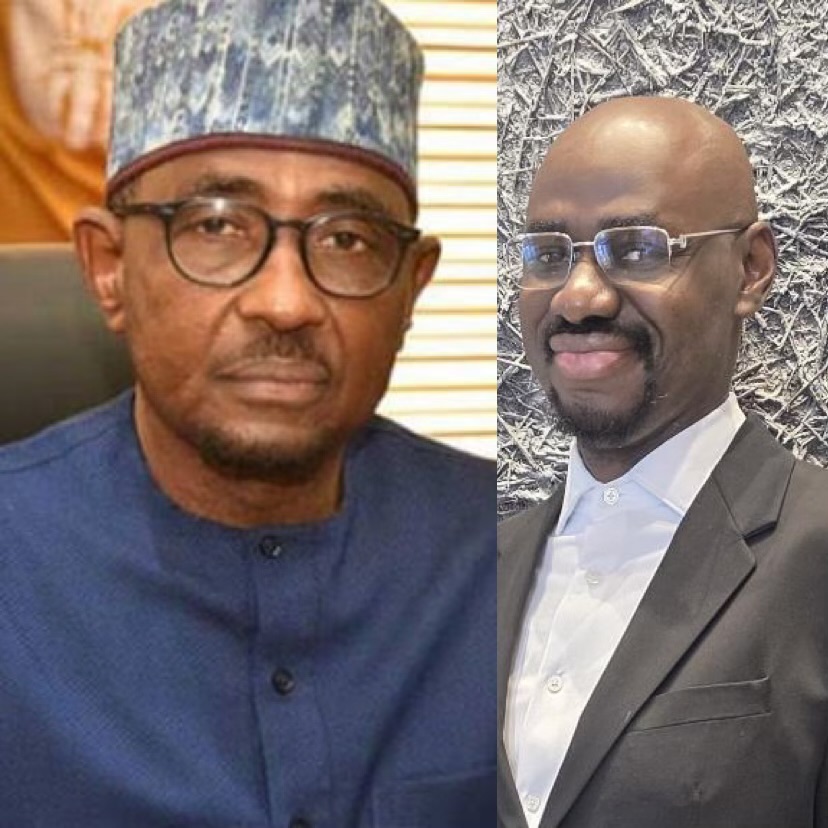
Political activist and international affairs leader, Comrade Timi Frank, has welcomed the resignation of Engr. Farouk Ahmed, former Chief Executive Officer of the Nigerian Midstream and Downstream Petroleum Regulatory Authority (NMDPRA) but insisted that stepping aside should not bring closure to the matter.
“Resignation is not an admission of guilt, but it is only the first step. What must follow is a full investigation and, where necessary, arrest and prosecution,” Frank, a former Deputy National Publicity Secretary of the All Progressives Congress (APC) and currently ULMWP Ambassador to East Africa and the Middle East as well as Senior Advisor to the Global Friendship City Association (GFCA), USA,
said in a statement in Abuja.
He called on the Economic and Financial Crimes Commission and the Independent Corrupt Practices and Other Related Offences Commission (ICPC)
to immediately investigate and prosecute Engr. Ahmed over allegations raised by Africa’s foremost industrialist, Alhaji Aliko Dangote( the newest comrade in town).
Frank expressed concern that more than 72 hours after the allegations were made public, the relevant agencies had remained largely silent, apart from the ICPC which only acknowledged receipt of a petition.
“More than 72 hours after these weighty allegations were made public, the silence of our anti-corruption agencies is deeply troubling and unacceptable in a country that claims to operate under the rule of law,” Frank said.
He argued that allegations of such magnitude, especially when raised by a figure of Dangote’s standing, deserved swift and transparent action, warning that the continued silence could further erode public confidence in public institutions.
“If Aliko Dangote cannot get justice in a matter of this nature, then one must ask what hope is left for ordinary Nigerians,” he said.
He drew attention to the gravity of the allegations, noting that the amount reportedly involved, about $7 million, estimated at roughly N10 billion, was significant in a country facing widespread economic hardship.
“This amount is more than enough to fund entire communities, yet Nigeria is constantly on strike over the inability of government to meet relatively small financial demands in the education sector,” Frank said.
He questioned how a public servant, allegedly earning about N50 million annually, could spend such a huge sum on the secondary school education of four children.
“What example is a public servant setting in a country where millions of parents cannot afford N100,000 in school fees?” he asked. “If public funds are indeed being used to fund personal excesses, then this must concern every Nigerian.”
Frank also warned that the unresolved allegations could affect Nigeria’s image and investor confidence.
“No serious investor will put money in a country where allegations of corruption involving a key regulator are left hanging without resolution,” he said.
He noted Engr. Ahmed’s expressed willingness to submit himself to investigation, urging the anti-corruption agencies to act without delay.
“Now that he has stepped aside and indicated willingness to cooperate, there should be no delay. The agencies must act fully, independently and without fear or favour,” Frank said.
He further called on President Bola Tinubu to intervene if the agencies fail to act promptly.
“A government that is serious about fighting corruption must show it through action, not prolonged silence,” he said.
Frank added that Nigerians deserved clarity and accountability, stressing that the case should not be swept under the carpet.
“This is one case Nigerians will not allow to be buried. Only transparent investigation and prosecution can restore confidence in our institutions and in the fight against corruption,” he said.
From Adeko Ukpa, Lafia
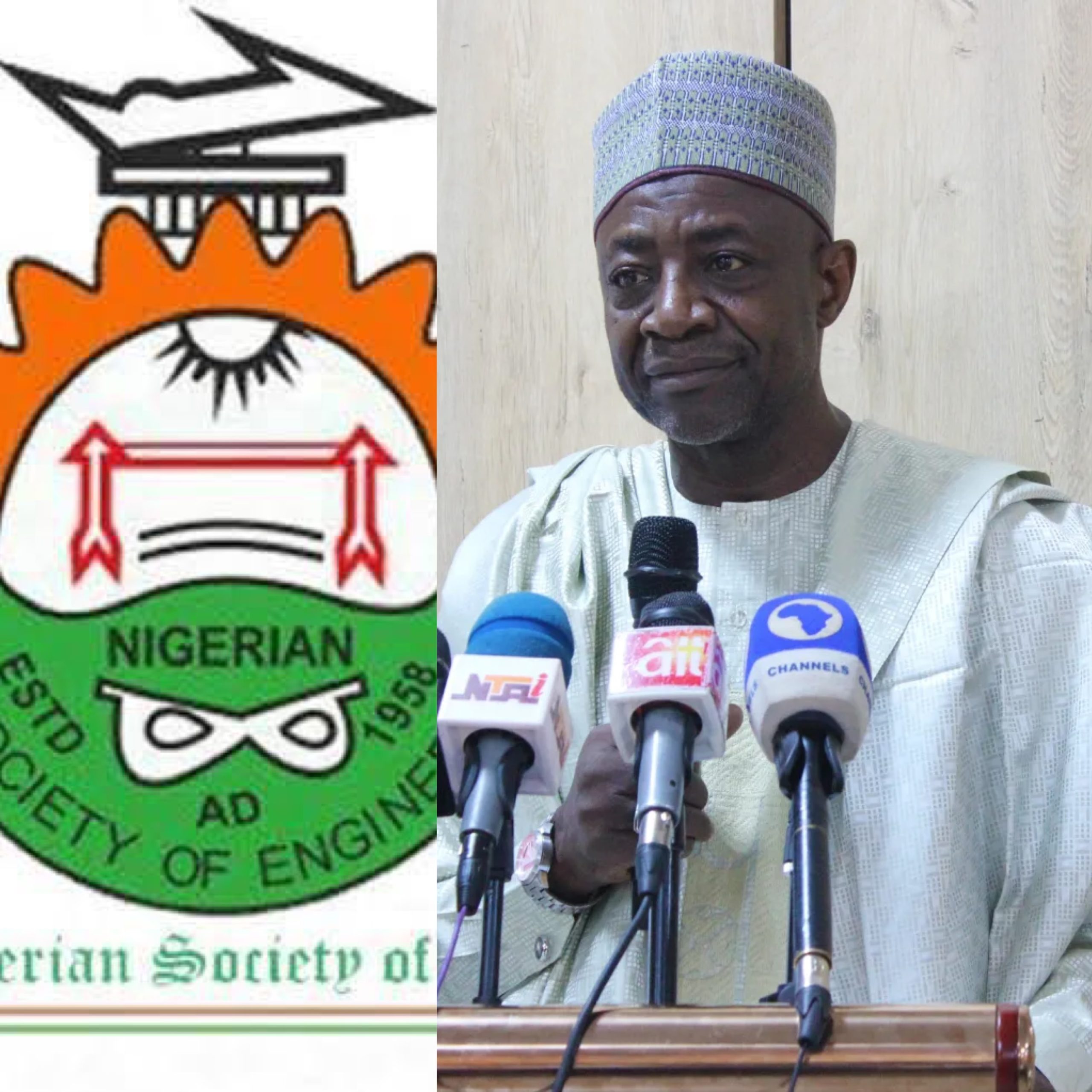
Former Executive Vice Chairman of the National Agency for Science and Engineering Infrastructure (NASENI), Engr. Prof. Mohammed Sani Haruna has disclosed that the rapid rise of lithium mining and processing in Nasarawa State has transformed the state into Nigeria’s epicentre of industrial development, with massive inflows of investment, jobs and infrastructure.
Prof. Haruna made this assertion while speaking at the 2025 Engineering Week and Award Night of the Nigerian Society of Engineers (NSE) in Lafia.
He lauded Governor Abdullahi Sule for championing the state’s industrialisation through technology and value addition.
He said Governor Sule’s “blueprint of progress” has turned Nasarawa into a reference point in the nation’s solid mineral revolution.
“He is an engineer who saw opportunity where others saw dust. His commitment has put Nasarawa on the global lithium supply chain,” Haruna said.
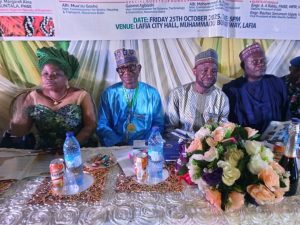
L-R: The Vice President, North-Central of the Nigerian Society of Engineers, Engr. Rachel Serumum Ugye; the Chairman Nigeria Society of Engineers(NSE), Lafia Branch, Engr. Simon Obagu; a former Executive Vice Chairman/CE of NASENI, Prof. M. S. Haruna; and Engr. Mustapha Usman, Project Manager AMEDI Lafia during the 2025 Engineering week/Dinner/Award Night of the Nigerian Society of Engineers, Lafia Branch yesterday.
The scholar and industrialist said that Nasarawa holds the highest deposit of lithium in Nigeria, with purity grades between 2.0% and 8.4%, ranking among the best in Africa.
“Lithium from Gunduma, Saka and Unguwan Gwandara is of world-class quality,” he said.
Haruna disclosed that over $850 million in private investments have been committed to the state’s lithium sector by global and local firms, including Ganfeng Lithium Company, Avatar New Energy Materials, Can Max Technologies, and Jiu Ling Lithium Mining Company.
Haruna said: “When you sum up the commitments from Ganfeng Lithium Company Limited with about $250 million, Avatar New Energy Materials’ multimillion-dollar project, Can Max Technologies’ planned $200 million plant, and Jiu Ling Lithium Mining’s over $200 million investment, you are looking at more than $850 million in private capital already flowing into Nasarawa’s lithium sector.
“That is unprecedented in the history of this state’s industrial development. These plants will produce up to 22,000 tonnes of lithium annually.
“The Ganfeng facility alone will yield 16,000 tonnes, while the earlier plant has a 3,000-tonne capacity. Together, they are creating jobs, revenue and industrial linkages never seen before.”
He noted that Nasarawa’s lithium activities have already attracted national attention, with President Bola Ahmed Tinubu expected to commission the Ganfeng plant soon.
“This is a milestone not just for Nasarawa but for Nigeria’s diversification agenda,” Haruna added.
The former Executive Vice Chairman of NASENI said the partnership between the state and NASENI has given rise to technology-driven initiatives like the Solid Mineral Machinery and Equipment Development Institute (SOMMEDI) in Nasarawa town.
He revealed that under the agreement with Ganfeng, the state will earn $15 million over ten years, while the host community in Endo will receive $500,000 for development projects.
“The governor insisted on transparency, community inclusion and environmental sustainability,” Haruna said.
He lauded Governor Sule’s refusal to rely on loans, opting instead for prudent management and innovation-driven growth.
“His discipline is a lesson in leadership by example,” Haruna said.
However, Haruna added a political twist, urging continuity of “engineering leadership” in the state.
“If an engineer took Nasarawa to this height, only another engineer can sustain it.
“It would be disastrous to hand this aircraft to a pilot who cannot read the dashboard of development,” he said.
The professor charged members of the NSE and all progressives in Nasarawa to “speak loudly and campaign boldly” for the preservation of Governor Sule’s industrial legacy.
“We must not allow politics to derail progress,” he said.
Haruna concluded that the lithium revolution was not merely an economic story but “a model for leadership driven by knowledge, discipline and innovation.”
“With engineering thinking at the helm,” he said, “Nasarawa will remain the pride of Nigeria’s solid mineral future.”
By Adeko Ukpa
The Rotary International has budgetted $30million to prevent malaria, pneumonia and diarrhea in Nigeria and three other African countries.
The others are the Democratic Republic of Congo, Mozambique and Zambia.
The project, which is aimed at checking Under-5 mortality, is tagged the Rotary Healthy Communities Challenge.
The Country Lead, Past District Governor Dele Balogun made the disclosures at a High-Level Advocacy Training for Rotary Leaders, coordinated by Sydani Group in Abuja.
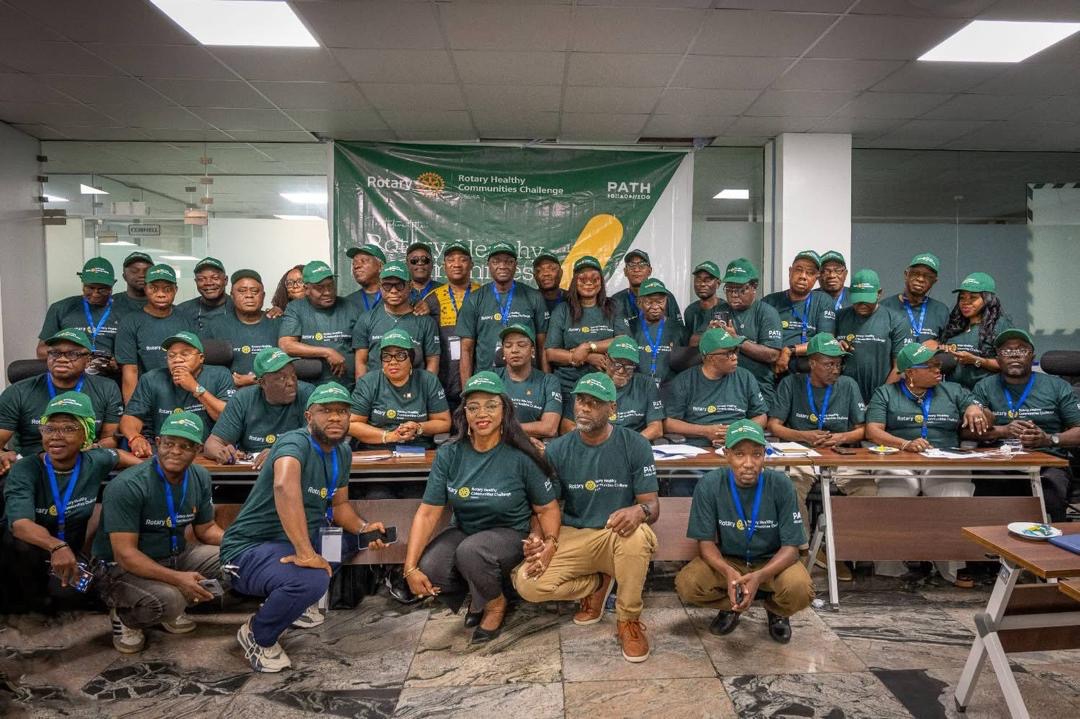
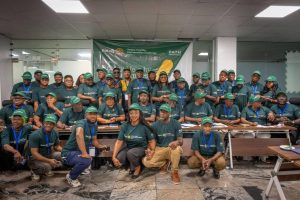 CAPTION: Rotary leaders at the training session in Abuja.
Balogun said: “This programme is about strengthening systems for and increase access to the management of malaria, pneumonia and diarrhea.
“The focus is on vulnerable populations and improving the quality of sustainable community health systems.
“It is a three-year project with a budget of $30million designed for Nigeria, Democratic Republic of Congo, Mozambique and Zambia.”
He said there will be a strong, sustained Rotary advocacy for continuing project locations support.
Balogun said the training was a convergence of the top echelon of Rotary leadership in Nigeria, comprising current and future leaders, Rotary Regional and International officers.
Dr. Morenike Oni, facilitated hands-on exercises for equipping attendees with tools to create SMART solutions for public health challenges.
-
 Opinion11 months ago
Anioma State: A Necessary Proposal Rooted in Strategic Advantage
-
 Business & Economy1 year ago
NASENI, Qietur partner to build 3000 Housing Units for Staff
-
 Business3 months ago
Lithium boom has reshaped Nasarawa’s economy, says Prof Haruna
-
 Law2 years ago
Human Right and Law Enforcement in Nigeria: A Critical Analysis
-
 Education5 months ago
NABTEB Registrar advises automotive, locomotive Engineers to do more to diversify Nigerian economy
-
Education8 months ago
TVET will change Nigeria for good, says NABTEB Registrar
-
 Opinion5 months ago
Engr. Kawu: A Heroic Homecoming for a Man of the People
-
 Education8 months ago
TVET: FG conducts entrance exam into FTCs for 30,000 students