
News
Why President Tinubu Must Reject Media Trial of His Ambassadorial Nominees

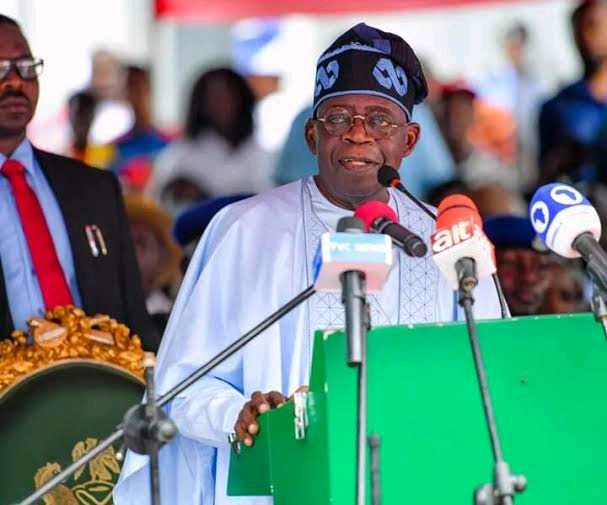
By Amb. Gbara Awanen
On 26th November, 2025, President Bola Tinubu, GCFR,forwarded a list of three ambassadorial nominees to the Senate for confirmation, obviously the first instalment of a much anticipated and longer list to follow. Among the nominees is Ambassador Ayodele Oke, CFR, former Director General of the National Intelligence Agency (NIA) who headed the Agency between 2013 and 2017. During this period, he faced allegations of corrupt enrichment, which turned out to be unproven.
Predictably, political buccaneers and some misinformed elements in the civil society are beginning to push back against Ambassador Oke’s nomination, referencing the unproven allegations. While understandable, those seeking to deny this celebrated national intelligence chief and outstanding international public servant are ignorant of the basic facts of this unfortunate saga. Here are the facts. Ambassador Oke was accused, duly investigated, and ultimately cleared of any wrongdoing. On 9th June, 2023, Justice C. J. Aneke of the Federal High Court in Lagos, struct out all charges against him on grounds of national security imperatives and mutual agreement between the prosecution and defence teams to discontinue a case that should never have happened in the first place. The termination of the charges against Ambassador Oke received political validation following President Muhammadu Buhari’s concurrence with the legal and national security dimensions of the case.
The cornerstone of any just and democratic society is the principle of the presumption of innocence until proven guilty. A formal, final exoneration, whether an acquittal, dismissal, or quashing of charges, is the ultimate declaration of legal innocence. To continue treating an accused “guilty,” despite a final legal verdict affirming innocence is to subvert the constitutional process and the authority of the judiciary. In our democracy, innocence, once established by law, must be upheld. Ambassador Oke’s exoneration means there is no current legal or constitutional barrier to his holding public office again because his past indictment was based on allegations that have now been legally disproven. In this moment, Ambassador Oke’s legal standing is the same as any other citizen of Nigeria with a clean record.
Society and the government have a moral obligation to treat citizens fairly, especially those who have been subjected to the most severe allegations of public misconduct. Allowing a vile and orchestrated media campaign to succeed would establish a dangerous precedent where accusation alone turns to permanent punishment, regardless of the facts or legal outcome. This would be profoundly unfair. A government should be free to appoint the most qualified individuals to high office and few come close to this eminently qualified nominee in national security and diplomatic governance.
To withdraw the nomination or disqualify the nominee due to recycled, disproven allegations would politicize the outcome of judicial proceedings. Worse, this would send a dangerous message that one can always weaponize unproven allegations against an accused, effectively overriding the judiciary’s fact-finding role. It goes without saying such an outcome will encourage detractors to mount similar campaigns against any perceived political enemy, regardless of evidence.
By standing firm, the government will be demonstrating its confidence in the justice system and its own nominating authority. It holds detractors, the ignorant and the misinformed accountable to the facts of the legal outcome, not just emotional rhetoric. Standing firm demonstrates strength and stability in governance. After a verdict of complete innocence, the conversation ought to focus on a public official’s current suitability, vision, and future contributions to his country, not on past allegations that have been disproven.
The decision to stand by the ambassadorial nomination of this fine public officer is a powerful affirmation that in a state governed by law, the legal verdict must prevail over public opinion and political pressure. After all, Ambassador Oke’sexoneration fully restores his legal and moral right to public service. To surrender to a media campaign based on disprovenallegations is to undermine the rule of law, perpetuate a grave injustice, and erode the integrity of the public service nominating process.
The nomination of Ambassador should stand because anaccusation is neither guilt nor conviction. After a final and decisive verdict of innocence, the nominee is legally innocentand morally vindicated. His fitness for office must be judged on his current merit and the final judicial outcome, not on the weaponization of past, failed accusations. His current legal standing is the same as any other citizen with unblemished record. It would therefore be grave injustice to subject Ambassador Oke to a misguided media trial on the same disproven charges. This outstanding public servant has paid his due to the system by enduring a lengthy and traumatic legal process. He should not be forced to relive the punishment after being declared innocent.
President Bola Ahmed Tinubu made the right call to recognize Ambassador Oke’s sterling qualities by nominating him with two other distinguished personalities as his principal personalrepresentatives in key partner countries in a time of grave national security emergency. What our country needs in this moment are steady, mentally acute, and strategic thinkers, as Ambassador Oke is, to help the government navigate the uncertainties, risks and opportunities in a rapidly shifting and dangerous geopolitical landscape.
The government must be resolute and reject a media trial that could rob our country of the services of one of its finest diplomats. By standing firm and guiding Ambassador Oke’snomination through the confirmation process, the government will be making a powerful statement that it favours meritocracy, respects the rule of law, values public service, and is willing to stand by an individual who has been unjustly accused. In times like this, our government must showpolitical and moral courage in the face of an emotional, but factually bankrupt, media frenzy.
Amb Gbara Awanen, PhD, mni is a retired Career Ambassador and Mene Eedee 1 Bera in Gokana Local Government, Rivers State.

From Adeko Ukpa
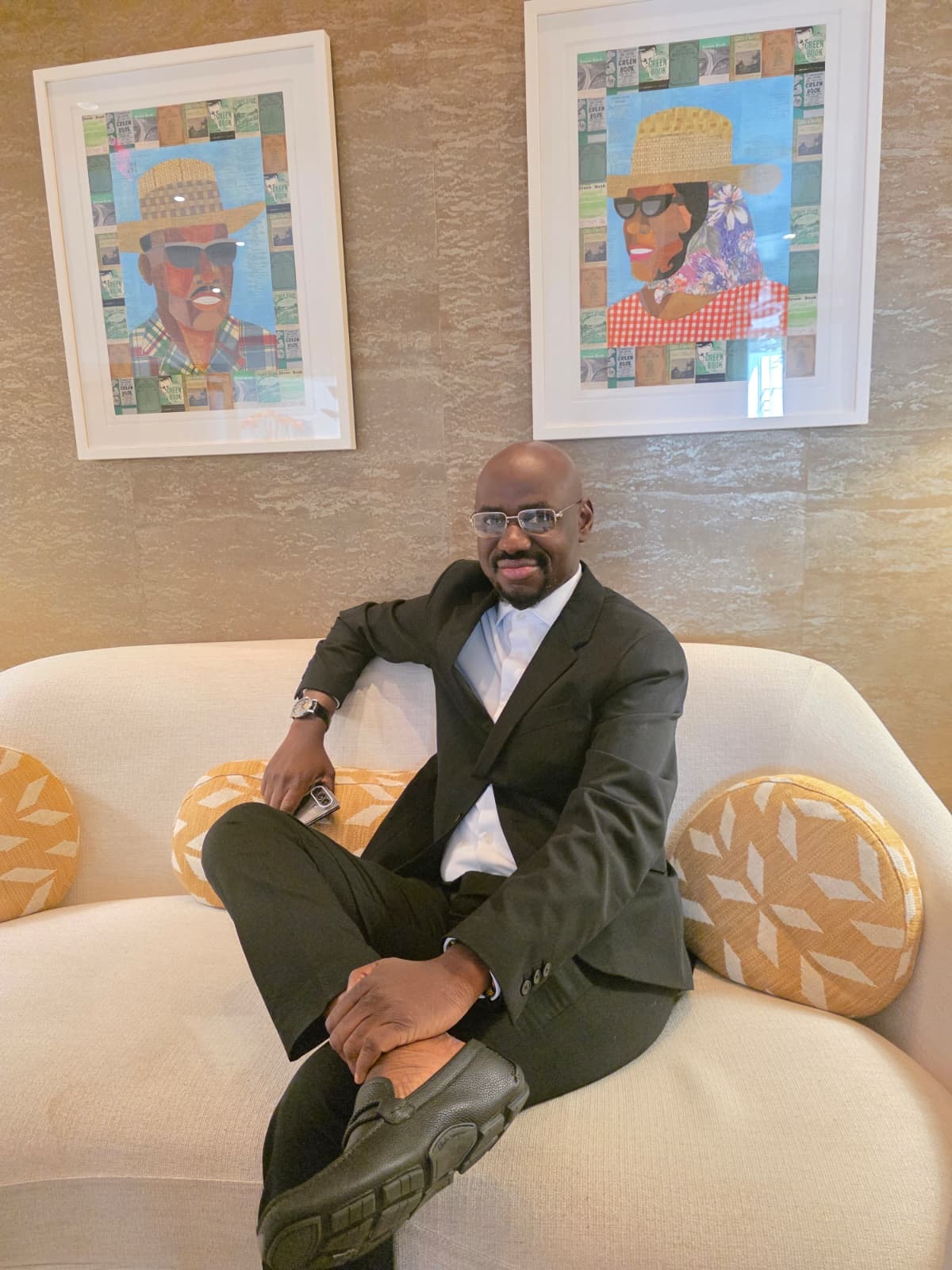
Former Deputy National Publicity Secretary of the All Progressives Congress (APC), Comrade Timi Frank, has condemned in strong terms the recent killing of nine protesting women in Adamawa state by military operatives.
Soldiers had allegedly opened fire on protesting women in the Lamurde Local Government Area of Adamawa State on Monday.
Also, 51 others were said to have been hospitalised where most of them are still receiving treatment for varying degrees of gunshot wounds, many of them life-threatening.
Frank in a statement in Abuja described the killing of the nine women as “senseless, unforgivable, inhuman and avoidable.”
He noted that the victims – ordinary women, mothers and breadwinners who had stepped out only to protest the insecurity consuming their communities – were met with lethal force when all they sought was protection for their children. “Their only offence was demanding safety,” he lamented.
The incident, which has triggered widespread outrage, adds to what Frank called a mounting record of state violence and military impunity in Nigeria and across Africa.
He cited troubling statistics indicating that over 10,000 Nigerian youths have been killed or disappeared in recent years through military operations and extrajudicial actions.
“This culture of violence and unaccountability must end,” he declared, his voice breaking with emotion.
Frank rejected what he described as the government’s habit of announcing panels of inquiry that ultimately serve as “political theatre” designed to bury justice.
From the #EndSARS killings at Lekki Toll Gate to crackdowns in Cameroon, Tanzania, Kenya, Uganda and Zimbabwe, he said, those who issue shoot-to-kill orders have repeatedly escaped responsibility. “This time, we will not accept delays, excuses or another meaningless probe,” he vowed.
The ULMWP Ambassador to East Africa and the Middle East issued a set of demands he said must be met urgently.
He called for the arrest and prosecution of military officers – both those on the ground and their commanders – who played any role in what he described as the “barbaric” slaughter of the Yola Nine.
He insisted that the federal and state governments owe full compensation to the bereaved families, including scholarships for the victims’ children and long-term welfare plans to prevent the tragedy from plunging entire households into destitution. “These women must not die in vain,” he said.
Given what he termed the consistent failure of Nigeria’s justice system to punish human rights violations, Frank urged the International Criminal Court (ICC) to open investigations into military abuses in Nigeria and across Africa.
Frank who also serves as the Senior Advisor to the Global Friendship City Association (GFCA), USA, further demanded sanctions, travel bans and international prosecutions for military leaders who authorise or enable the killing of unarmed civilians.
Frank also called on the global community—human rights organisations, civil society groups, women’s coalitions and all citizens—to amplify their voices for the Yola Nine. In a direct appeal, he urged President Donald Trump and the U.S. government to speak out, demand accountability, and support international action.
“The U.S. has shown willingness to stand with oppressed African citizens. We appeal for that moral leadership now,” he stated.
He said the tragedy is more than a national wound; it is “a stain on Africa’s conscience” and a test of whether governments will continue to allow soldiers, whose duty is to protect, to open fire on peaceful citizens without consequence.
“The killing of the Yola Nine is a tragedy Nigeria must not brush aside,” he said. “Justice must be non-negotiable. Accountability must be immediate. And this barbarism must never happen again.”
From Adeko Ukpa
Political activist and former Deputy National Publicity Secretary of the All Progressives Congress (APC), Comrade Timi Frank, on Friday criticised the Nigerian government for allegedly shielding terrorism financiers while insecurity continues to ravage the country.
Frank said recent steps taken by U.S. President Donald J. Trump and members of the U.S. Congress have “embarrassed and compelled” Nigerian authorities into taking actions they should have initiated long ago.
In a statement, Frank, who also serves as the United Liberation Movement for West Papua (ULMWP) Ambassador to East Africa and the Middle East, expressed appreciation to the U.S. government for what he described as its “genuine concern” for the security of Nigerians.
“I wish to thank President Trump and the good people of the United States who have shown sympathy and support for Nigerians at a time when terrorists and bandits threaten to overrun our nation,” he said.
He also commended U.S. Secretary Marco Rubio for imposing visa restrictions on individuals suspected of sponsoring terrorism, describing it as evidence that America is “more committed to ending insecurity in Nigeria than our own leaders.”
According to Frank, the visa ban announced by Rubio represents “the first serious international move that has forced Nigeria’s government to even pretend to act.”
“Let it be clearly stated: if President Trump had not stepped in, Nigeria’s leaders would still be looking the other way,” he added.
“The U.S. has shown more will, more commitment, and more empathy toward Nigerians than the very government elected to serve and protect them.”
Frank accused the Nigerian government of refusing to release the full list of terror financiers earlier exposed by the United Arab Emirates (UAE), insisting that two successive administrations had withheld the names for political reasons.
“The UAE provided the list during the Buhari administration,” he claimed. “Till today the names have not been released because many of those sponsoring terrorism are politically connected. Some are members of the ruling party. That is the truth they do not want Nigerians to know.”
He argued that corruption and political protection have weakened the fight against terrorism, despite the capacity of the Nigerian state to curb the violence.
“The Nigerian government is not helpless. It is simply compromised. And that is why terrorists and bandits have become emboldened enough to threaten the very soul of our country,” he said.
Frank further stated that the U.S. government’s intervention reflects a level of concern and urgency that Nigeria’s leadership has failed to demonstrate.
“The U.S. has no obligation to spend its taxpayers’ money to protect Nigerians, yet President Trump and members of Congress have shown more outrage over the kidnappings, genocide and mass killings than our own government, which continues to act with disturbing indifference,” he said.
He urged Washington not to share any intelligence with Nigerian officials until Abuja releases the full, unedited list of terror financiers as received from the UAE.
“There are terrorist sympathizers within the system. Sharing intelligence with people who may be compromised is dangerous,” he warned. “Until the names are publicly released and prosecuted, no sensitive information should be handed over.”
Frank also criticised the Nigerian government over what he described as misplaced priorities, alleging that while citizens continue to suffer violent attacks, public officials are focused on political spending.
“At a time when Nigerians are being slaughtered daily, the government is busy buying jeeps and cars to prepare for the 2027 elections,” he said. “This shameful display shows exactly where their priorities lie, and it is not with the people.”
Frank, who is also Senior Advisor to the Global Friendship City Association (GFCA), USA, thanked the U.S. Congress—particularly Senator Ted Cruz and Representative Riley Moore—for supporting efforts to address Nigeria’s worsening insecurity.
“On behalf of millions of Nigerians who have lost loved ones, homes and livelihoods, we express profound gratitude to President Trump and the U.S. government,” he said.
“Their intervention has exposed what our own leaders have refused to confront and has given Nigerians renewed hope that this nightmare can end.”

By Samuel Shay
When Samuel Shay speaks about Africa’s industrial future within the India Middle East Europe Corridor, he describes a transformation that is already beginning to take shape. Shay, known for his work across the Middle East and Africa as an economic strategist and a senior advisor to the Abraham Accords framework, argues that IMEC is more than a trade route. It is a structural engine capable of turning Africa into one of the most dynamic manufacturing regions of the coming decades.
In recent months, Shay has travelled through East Africa, the Gulf, and Europe, presenting a unified message. Africa, he insists, can no longer be positioned at the margins of global production. The continent has the people, the geography, and the resources to become a central manufacturing pillar that connects directly into IMEC supply chains. According to him, the opportunity is historic. For the first time, Africa has access to a stable, predictable, and world class logistical network that links its industrial zones to India, Saudi Arabia, the United Arab Emirates, Israel, and Europe.
During a briefing he held with regional partners, Shay outlined the logic behind this shift. Industrial development follows infrastructure, he said. When transport becomes reliable and costs fall, production follows. IMEC shortens routes, reduces risk, and creates new commercial confidence. This opens the door for multinational companies to relocate manufacturing processes to Africa, where the workforce is young, the markets are expanding, and governments are increasingly committed to reform.
Shay points to East African ports such as Mombasa, Lamu, Dar es Salaam, and Djibouti as natural gateways for Africa’s industrial integration. These ports already serve as the continent’s maritime link to the Gulf. Under IMEC, they can evolve into hubs for processed goods and finished products. Africa should not export raw materials anymore, Shay told partners in one of his discussions. It should export value.
In his analysis, three forces converge to support Africa’s rise as a manufacturing center. First is India. With its growing industrial and technological power, India is seeking new production bases that can serve global markets. Africa’s proximity and labor capacity give it a clear advantage. Shay has held several meetings with Indian business leaders who see Africa as a natural partner for joint ventures in automotive components, electronics, textiles, food processing, and pharmaceuticals. They told him that the predictability of IMEC is the missing link. Once this predictability is secured, investment becomes far easier.
Second is the Gulf. Shay maintains long standing working relationships with senior officials in Riyadh and Abu Dhabi. The Gulf states are repositioning themselves as global logistics powers and are investing heavily in renewable energy and industrial diversification. Their capital, combined with Africa’s labor and land, can create a chain of industrial zones linked by IMEC’s transport, digital, and energy routes. Shay often emphasizes that the Gulf is ready to finance large scale industrial clusters in Africa, particularly those connected to green hydrogen, solar components, fertilizers, and agro processing.
Third is North Africa. Countries like Morocco, Egypt, and Tunisia already possess industrial capabilities. Shay believes that connecting these northern hubs with East and West Africa through IMEC linked industrial corridors can create a continental network of production. Egypt, in particular, has the potential to become a dual anchor, serving both African and Mediterranean markets. Shay has been working with Egyptian partners on the concept of Red Sea and Sinai based industrial zones designed specifically for IMEC trade routes.
Training and human development are core to Shay’s vision. Africa’s young population is its greatest asset, he said in a recent conversation. Industrial zones must include professional academies, technological training centers, and partnerships with Indian and Israeli companies capable of delivering advanced skills. Shay argues that without investing in people, infrastructure alone cannot produce growth. But with the right training, Africa can build a generation of industrial workers capable of competing globally.
Digital connectivity is another pillar of Shay’s plan. IMEC will rely on advanced fiber optic networks, and African industrial zones connected to these systems will benefit from real time logistics data, smart manufacturing tools, and transparent digital supply chains. According to Shay, this connectivity is essential. It allows African manufacturers to meet the strict standards of European and Asian markets and to integrate seamlessly into multinational procurement systems.
Shay also stresses the social impact of industrial development. Manufacturing creates stable employment and generates an ecosystem of local service providers. In his discussions with African leaders, he repeatedly highlighted that IMEC oriented industrial zones can strengthen communities by providing long term income, advancing education, and supporting socially inclusive economic growth.
Environmental sustainability is part of the strategy. Africa’s potential in solar and wind energy gives it an advantage in producing low carbon goods. Shay believes that IMEC will amplify this potential by creating pathways for green energy exports and clean manufacturing. He argues that Europe’s environmental regulations will become an opportunity instead of a barrier if African industrial zones adopt renewable energy at scale.
In his overarching vision, Shay sees Africa emerging as a fourth pillar in the global economic network that IMEC is creating. India brings technology and scale. The Gulf brings capital and energy. Europe brings markets and standards. Africa brings population, land, and future growth potential. Together, these regions form a new economic architecture that he believes will define the next era of trade and development.
Samuel Shay’s message is consistent and clear. Africa is not a peripheral market. It is a central participant in the future that IMEC is building. Through industrial zones, education, and strategic partnerships, the continent can claim its place as a manufacturing power connected to India, the Middle East, and Europe. IMEC is not just a corridor for goods. It is a corridor for Africa’s rise.
-
 Opinion9 months ago
Anioma State: A Necessary Proposal Rooted in Strategic Advantage
-
 Business & Economy1 year ago
NASENI, Qietur partner to build 3000 Housing Units for Staff
-
 Business2 months ago
Lithium boom has reshaped Nasarawa’s economy, says Prof Haruna
-

 Law1 year ago
Human Right and Law Enforcement in Nigeria: A Critical Analysis
-

 Education3 months ago
NABTEB Registrar advises automotive, locomotive Engineers to do more to diversify Nigerian economy
-
Education6 months ago
TVET will change Nigeria for good, says NABTEB Registrar
-
 Opinion3 months ago
Engr. Kawu: A Heroic Homecoming for a Man of the People
-
 Education6 months ago
TVET: FG conducts entrance exam into FTCs for 30,000 students