
Opinion
Anioma State: A Necessary Proposal Rooted in Strategic Advantage

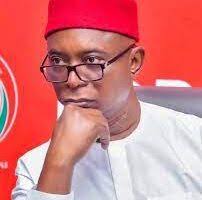
Hon. Gloria Okolugbo
The recent critique by Charles Chukwuedo Snr, Esq., on the advocacy for Anioma State, while expressed with conviction, reflects a limited perspective that fails to engage with the broader strategic, economic, and historical imperatives behind this proposal. It is worrisome that, despite the extensive consultations, discussions, and dissemination of information by the office of distinguished Senator Ned Nwoko, who is championing this initiative, and has set up a Directorate of Communication to this effect, some still seek to undermine the advantages of state creation by reducing it to a debate about geopolitical zoning.
State Creation: More Than a Political Exercise
First, the notion that the creation of Anioma State is a political gimmick meant to alter geopolitical boundaries is a misrepresentation of facts. The advocacy for Anioma State is primarily driven by the need for equity, economic growth, and political relevance, not a mere reconfiguration of Nigeria’s geopolitical zones. It is important to recognize that the discussions on state creation are taking place within a broader context—one that includes revisiting Nigeria’s geopolitical structure in favour of economic zones. If Nigeria is to develop in a sustainable and inclusive manner, the conversation must transcend the rigidity of the current political arrangement and focus on fostering regions based on economic viability and shared development goals.
Development and Governance: A Question of Resources and Control
Chukwuedo argues that Delta State has received substantial allocations over the years and that the creation of another state is not a guaranteed solution to development. While it is true that resources have flowed into Delta State, it is equally true that Anioma, despite its contributions, has often been sidelined in the distribution of these resources. This is a recurring issue in many states with diverse ethnic groups, where certain regions bear the economic burden but do not enjoy commensurate development. The creation of Anioma State is, therefore, an opportunity to bring governance closer to the people and ensure that developmental priorities are aligned with the needs of Anioma communities.
Furthermore, the argument that the mere creation of a new state will not automatically resolve governance inefficiencies misses the point entirely. The demand for Anioma State is not premised on the illusion that it will be a magic wand for development. Rather, it is about correcting historical imbalances, ensuring fair representation, and giving Anioma people control over their economic and political future.
Security Concerns: A Convenient Misinterpretation
The writer attempts to invoke fear by pointing to security challenges in the southeast, suggesting that aligning Anioma State with the region would be a dangerous move. This argument is both misleading and alarmist. Security challenges in the South East, like in many parts of Nigeria, are not permanent conditions but problems that require strategic solutions. Moreover, Anioma communities already share cultural, historical, and economic ties with the South East. The real question is not about insecurity in the southeast but whether Anioma will be better positioned to chart its own developmental course as a state rather than remaining a marginalized part of Delta State.
It is also important to stress that the advocacy for Anioma State has taken all concerns, including security, into careful consideration. The discussions leading up to the public hearing have been thorough, involving various stakeholders who understand the complexities of the situation. The recent sacking of farmers and killing of vigilante in Obiaruku community; the bravado by fulani heardsmen in ika land and all over Oshimili and Aniocha has not been a priority concern to warrant attention from our Urhobo rulling class afterall it was left to fester during Anioma Governorship tenure. How has being in South South zone helped us tacle these challenges? Is it Anioma State creation quest that invited heardsmen? Raising security concerns as a reason to resist the state’s creation is disingenuous.
Anioma’s Historical and Political Identity
Chukwuedo argues that Anioma should remain within Delta State due to historical ties with the Urhobo, Itsekiri, Ijaw, and Isoko people. While historical relationships are important, they should not serve as a barrier to self-determination. The Anioma people have long sought a separate state, not because they wish to sever ties with their Delta neighbors, but because they recognize the need for a governance structure that prioritizes their interests.
More importantly, Anioma’s connection to the South East is not just about ethnicity but about shared economic and cultural aspirations. If geopolitical zones are being reconsidered in favour of economic zones, then Anioma’s alignment should be based on what best serves its long-term development rather than arbitrary political divisions imposed in the past.
Moving Forward: Seizing the Opportunity
Every concern raised against Anioma State has been carefully deliberated, discussed, and addressed in the buildup to the public hearing. The consultations have been inclusive, engaging political leaders, traditional rulers, and stakeholders across all sectors. If we are truly apolitical and committed to the progress of Anioma, now is the time to embrace the opportunity to actualize the dream of our fathers.
State creation is not merely about political reclassification; it is about empowerment, development, and self-determination. Anioma people must unite behind this cause, not be swayed by arguments that seek to diminish the significance of this long-overdue step. The opportunity is here, and history will judge us based on how we choose to act.
…Director Communications
Office of Senator Representing Delta North Senatorial Zone Distinguished Senator Prince Ned Munir Nwoko.


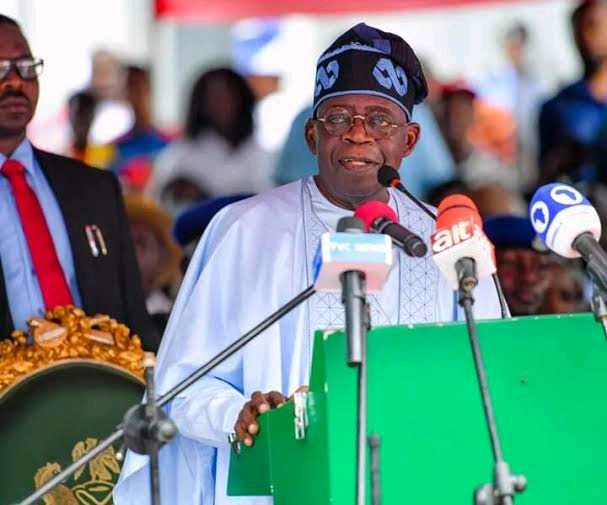
By Amb. Gbara Awanen
On 26th November, 2025, President Bola Tinubu, GCFR,forwarded a list of three ambassadorial nominees to the Senate for confirmation, obviously the first instalment of a much anticipated and longer list to follow. Among the nominees is Ambassador Ayodele Oke, CFR, former Director General of the National Intelligence Agency (NIA) who headed the Agency between 2013 and 2017. During this period, he faced allegations of corrupt enrichment, which turned out to be unproven.
Predictably, political buccaneers and some misinformed elements in the civil society are beginning to push back against Ambassador Oke’s nomination, referencing the unproven allegations. While understandable, those seeking to deny this celebrated national intelligence chief and outstanding international public servant are ignorant of the basic facts of this unfortunate saga. Here are the facts. Ambassador Oke was accused, duly investigated, and ultimately cleared of any wrongdoing. On 9th June, 2023, Justice C. J. Aneke of the Federal High Court in Lagos, struct out all charges against him on grounds of national security imperatives and mutual agreement between the prosecution and defence teams to discontinue a case that should never have happened in the first place. The termination of the charges against Ambassador Oke received political validation following President Muhammadu Buhari’s concurrence with the legal and national security dimensions of the case.
The cornerstone of any just and democratic society is the principle of the presumption of innocence until proven guilty. A formal, final exoneration, whether an acquittal, dismissal, or quashing of charges, is the ultimate declaration of legal innocence. To continue treating an accused “guilty,” despite a final legal verdict affirming innocence is to subvert the constitutional process and the authority of the judiciary. In our democracy, innocence, once established by law, must be upheld. Ambassador Oke’s exoneration means there is no current legal or constitutional barrier to his holding public office again because his past indictment was based on allegations that have now been legally disproven. In this moment, Ambassador Oke’s legal standing is the same as any other citizen of Nigeria with a clean record.
Society and the government have a moral obligation to treat citizens fairly, especially those who have been subjected to the most severe allegations of public misconduct. Allowing a vile and orchestrated media campaign to succeed would establish a dangerous precedent where accusation alone turns to permanent punishment, regardless of the facts or legal outcome. This would be profoundly unfair. A government should be free to appoint the most qualified individuals to high office and few come close to this eminently qualified nominee in national security and diplomatic governance.
To withdraw the nomination or disqualify the nominee due to recycled, disproven allegations would politicize the outcome of judicial proceedings. Worse, this would send a dangerous message that one can always weaponize unproven allegations against an accused, effectively overriding the judiciary’s fact-finding role. It goes without saying such an outcome will encourage detractors to mount similar campaigns against any perceived political enemy, regardless of evidence.
By standing firm, the government will be demonstrating its confidence in the justice system and its own nominating authority. It holds detractors, the ignorant and the misinformed accountable to the facts of the legal outcome, not just emotional rhetoric. Standing firm demonstrates strength and stability in governance. After a verdict of complete innocence, the conversation ought to focus on a public official’s current suitability, vision, and future contributions to his country, not on past allegations that have been disproven.
The decision to stand by the ambassadorial nomination of this fine public officer is a powerful affirmation that in a state governed by law, the legal verdict must prevail over public opinion and political pressure. After all, Ambassador Oke’sexoneration fully restores his legal and moral right to public service. To surrender to a media campaign based on disprovenallegations is to undermine the rule of law, perpetuate a grave injustice, and erode the integrity of the public service nominating process.
The nomination of Ambassador should stand because anaccusation is neither guilt nor conviction. After a final and decisive verdict of innocence, the nominee is legally innocentand morally vindicated. His fitness for office must be judged on his current merit and the final judicial outcome, not on the weaponization of past, failed accusations. His current legal standing is the same as any other citizen with unblemished record. It would therefore be grave injustice to subject Ambassador Oke to a misguided media trial on the same disproven charges. This outstanding public servant has paid his due to the system by enduring a lengthy and traumatic legal process. He should not be forced to relive the punishment after being declared innocent.
President Bola Ahmed Tinubu made the right call to recognize Ambassador Oke’s sterling qualities by nominating him with two other distinguished personalities as his principal personalrepresentatives in key partner countries in a time of grave national security emergency. What our country needs in this moment are steady, mentally acute, and strategic thinkers, as Ambassador Oke is, to help the government navigate the uncertainties, risks and opportunities in a rapidly shifting and dangerous geopolitical landscape.
The government must be resolute and reject a media trial that could rob our country of the services of one of its finest diplomats. By standing firm and guiding Ambassador Oke’snomination through the confirmation process, the government will be making a powerful statement that it favours meritocracy, respects the rule of law, values public service, and is willing to stand by an individual who has been unjustly accused. In times like this, our government must showpolitical and moral courage in the face of an emotional, but factually bankrupt, media frenzy.
Amb Gbara Awanen, PhD, mni is a retired Career Ambassador and Mene Eedee 1 Bera in Gokana Local Government, Rivers State.
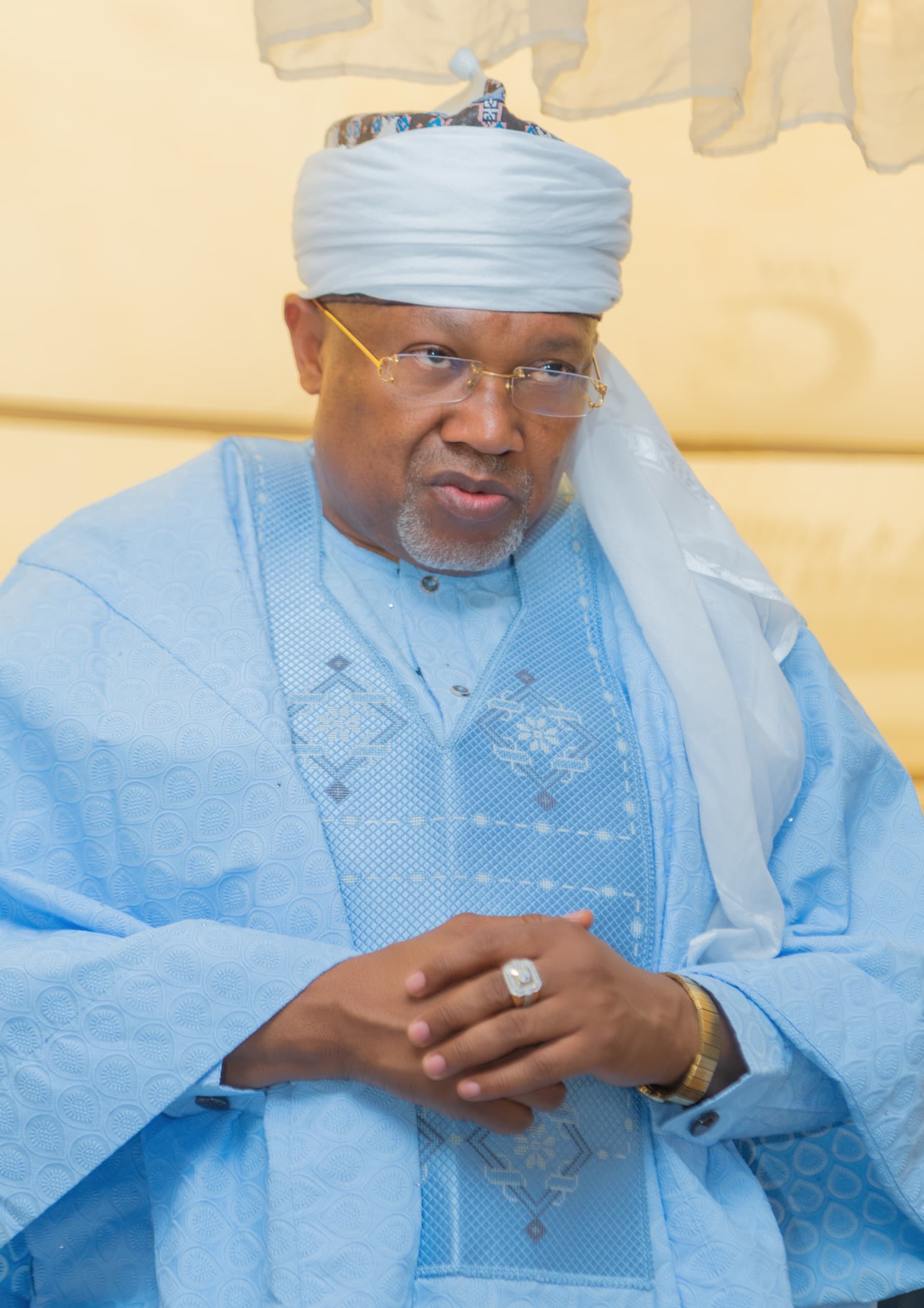
By Adegboyega Ajadi
Ilorin was thrown into rare jubilation last week. Not because of a political rally, nor because a sitting governor commissioned a project, but because a man of destiny returned home after a meritorious career in the public service. The outpouring of love for Engr. Suleiman Bolakale Kawu Agaka was spontaneous, overwhelming, and instructive. It was a message from the people to the political class: we know who has stood with us, and we know those who only remember us when elections draw near.
From Abuja to Ilorin, the narrative was the same. Stakeholders across party lines, community leaders, Islamic scholars, friends, associates, and ordinary people celebrated a man whose works have silently reshaped lives and whose character has earned him uncommon respect. In both cities, the events were not sponsored jamborees. They were not financed with state resources. They were genuine tributes by those who have seen, touched, and felt the impact of Engr. Kawu.
At the Abuja event organised by the Ilorin community, two voices stood out in their testimonies, his boss and his subordinate.
Abba Abubakar Aliyu, his former Managing Director at the Rural Electrification Agency, confessed he had yet to come to terms with the reality of Kawu’s retirement. With emotion in his voice, he declared: “No problem within the Agency that Engr. Kale was unable to resolve. He performed every assignment with utmost dedication and commitment, even spending his own resources to achieve targets. This is unprecedented in the history of the Agency.” That is not the usual flattery of a superior; it was the acknowledgment of a colleague who had seen him go above and beyond for the institution.
On her part, Ojua Omodara, who worked directly under him, gave a subordinate’s perspective: “Engr. Kawu is a goal-getter. He gives assignments and follows through until results are achieved.” Between these two voices, superior and subordinate, lies a portrait of leadership: diligent, selfless, and result-driven.
If Abuja offered professional testimony, Ilorin presented a moral verdict. From the airport to the heart of the city, unprecedented crowds lined the streets. People came in unimagined numbers, not lured by patronage, but drawn by affection. They came with their hearts, with their voices, and with their prayers.
The Chief Imam of Ilorin led other Islamic scholars in offering supplications for his continued success, affirming what the people already knew, that his record is not only professional but spiritual, not only official but human. The prayers were thanksgiving for a man who had already touched lives in ways politics rarely does.
Here lies the prosecution: one after another, communities testified in ways more compelling than any campaign manifesto could promise. Villages spoke of how they were lit up, not by political promises, but by transformers facilitated through Kawu’s intervention. Students recalled scholarships that kept them in school when hopelessness beckoned. Families gave witness to medical support received at critical times when their loved ones would otherwise have been abandoned to fate. Villages pointed to mosques standing tall in their midst, built through his generosity. Imams bore testimony that for the past 15 to 20 years, they had been receiving salaries from him, a quiet, consistent support that kept religious institutions alive.
This was not philanthropy performed with television cameras rolling. This was not the noise of politics. These were silent deeds of service, done without the inkling of seeking political office. And yet, those who benefited never forgot. The Ilorin outpouring was their verdict: this is the kind of leadership we trust, this is the kind of leadership we deserve.
Nigeria is in search of leaders who embody the values Engr. Kawu has lived: integrity, service without expectation, empathy, and selflessness. His story demonstrates that true leadership is not the pursuit of power for its own sake but the capacity to impact lives, often quietly and sacrificially.
Those who thronged Ilorin did not come to repay political favours. They came because they recognised a man whose entire life had been service. In a society drowning in political cynicism, where people believe politicians only remember them when elections approach, Engr. Kawu’s story is a refreshing contrast. He is the reminder that leadership is not about how loudly one campaigns but about how deeply one serves.
This is why his homecoming transcends a mere celebration of retirement. It was, in truth, a referendum on the kind of leadership Nigerians yearn for. In Kwara, it was a clarion call to the political class: the people are watching, the people are keeping records, and when the time comes, the people will speak again.
Without saying it outright, the people of Kwara made a declaration last week: Engr. Suleiman Bolakale Kawu Agaka represents the kind of leadership the state deserves. His track record at the Rural Electrification Agency shows competence, accountability, and sacrifice. His silent philanthropy across Kwara demonstrates empathy, compassion, and vision. His ability to attract people across party lines, as seen in Abuja, reflects the inclusiveness and bridge-building needed in today’s polarised polity.
The heroic welcome he received was not purchased. It was earned. It was not staged. It was organic. It was the people’s way of saying: we know you, we trust you, and we are ready to follow you if you choose to lead us further.
The lesson is simple but profound: in a country where trust in leadership has collapsed, there still exists a model of leadership that works. Kawu’s life proves that service begets loyalty, sacrifice earns trust, and consistency commands respect.
Ilorin’s historic outpouring was not just a welcome home; it was the unveiling of a man of destiny. The people did not just celebrate his past; they proclaimed their hope for the future. They see in him not only a technocrat who served diligently but a leader who can carry Kwara forward with empathy and vision.
In the end, the moral tribute becomes a political lesson: leaders are not made by titles or positions, but by the lives they touch. And in Engr. Kawu, the people have found both their hero and, perhaps, their future governor.
…Adegboyega, a public affairs analyst, writes from Gaa Akanbi in Ilorin

By Moradeke Kolawole
When a person is consistent in one thing, it becomes their identity. In the case of former Ambassador Lilian Onoh, consistency lies in bitterness, vendetta and endless feuds. Her latest attempt to drag Mrs Abike Dabiri-Erewa into her cycle of accusations follows a well-worn pattern. Onoh is known more for her fights than for any enduring legacy of diplomacy.
The court records from the libel case filed by former Minister of Foreign Affairs, Geoffrey Onyeama, expose the character behind the loud claims. Under cross-examination, Onyeama’s lawyer described her actions as nothing more than vendetta. Onoh herself admitted in open court that her hostility towards Onyeama was personal. She claimed he had pursued her career because her sister divorced him and went as far as describing the former minister’s supposed “hereditary insanity” and “unhinged psychiatric problem.” These are not the words of a seasoned diplomat. They are the words of someone consumed by malice and family feuds, now weaponised in professional spaces.
This is the same pattern she repeats with Abike Dabiri-Erewa. From a definitely fictional alleged encounter at Aso Villa in 2018, she has manufactured an entire story of Igbo hatred and ethnic vendetta, complete with insults, name-calling and cheap shots about appearance and education. Just like her fight with Onyeama, it is full of venom but empty of evidence. Abike Dabiri Erewa never met Onoh nor had any encounter with her anywhere at all. She is following her pattern of outright lies and venom.
It is ironic that someone accused of financial impropriety and known for dragging colleagues to court is now trying to lecture Nigerians on who is fit for public office. The truth is that Onoh’s record is one of bitterness and litigation, not of service and legacy.
By contrast, Abike Dabiri-Erewa’s record is open and verifiable. She gave voice to the voiceless as a journalist, served three terms in the House of Representatives with bills that cut across ethnic and religious lines, and as Chairman of NiDCOM has championed the cause of Nigerians stranded in Sudan, Ukraine, Libya, China and other troubled spots. She never asked whether they were Igbo, Yoruba or Hausa before intervening. That is the mark of service, not vendetta.
So when Lilian Onoh hurls unprintable words and tries to dress personal bitterness as national interest, Nigerians can see through it. Her own courtroom testimonies have already shown how far she is willing to go in twisting personal grievances into public battles.
Abike Dabiri-Erewa does not need to pay much attention to such manufactured stories because her work speaks for itself. Nigerians know her record and they know Onoh’s record too. One is a record of service, the other a record of quarrels.
So who is beyond redemption? Definitely Lilian Onoh.
-
 Business & Economy1 year ago
NASENI, Qietur partner to build 3000 Housing Units for Staff
-
 Business2 months ago
Lithium boom has reshaped Nasarawa’s economy, says Prof Haruna
-
 Law1 year ago
Human Right and Law Enforcement in Nigeria: A Critical Analysis
-
 Education3 months ago
NABTEB Registrar advises automotive, locomotive Engineers to do more to diversify Nigerian economy
-
Education6 months ago
TVET will change Nigeria for good, says NABTEB Registrar
-
 Opinion3 months ago
Engr. Kawu: A Heroic Homecoming for a Man of the People
-
 Education6 months ago
TVET: FG conducts entrance exam into FTCs for 30,000 students
-
 Opinion9 months ago
Defamation Is Not Democracy: Office Of Senator Ned Nwoko Will Not Stand For Character Assassination