
Business & Economy
Landmark: NPA generates N541bn, transfers N255bn to FG from January to June 2024, says Outgoing MD, Koko

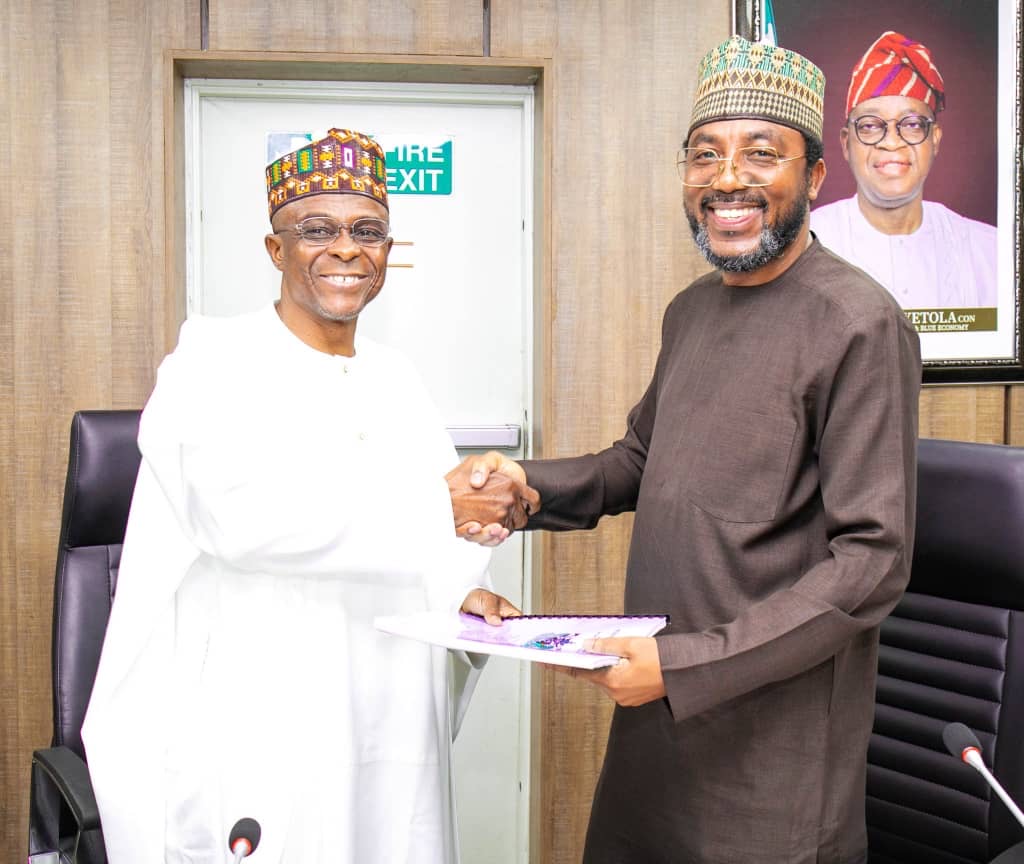
… Handover new staff clinic, five other completed projects to successor
By Adeko Ukpa
African Telescope reports that the immediate past Managing Director of the Nigerian Ports Authority (NPA), Mr. Mohammed Bello Koko, on Monday, said the agency generated ₦541billion in the first half of 2024.
He said the agency also remitted ₦255billion to the Consolidated Revenue Funds (CRF) of the federation between January and June this year.
He said the performance of the agency in the first half of 2024 surpassed its year-on-year total revenue generation and remittances in any year.
He said the cumulative revenue of the NPA between 2022 and the first half of 2024 was N1.423trillion.
He said his administration put in place sustainable reforms, especially a drastic improvement in the Turn-Around-Times of vessels and trucks in Apapa and TinCan ports.
He, however, said he is handing over a new staff clinic and five other completed projects to his successor for commissioning.
He confirmed that NPA increased staff salary during his tenure.
He pleaded with the staff to cooperate with and redouble their commitment to his successor.
Koko made the assertions in his valedictory remarks at the handover to the new Managing Director of NPA, Dr. Abubakar Dantsoho at the agency’s headquarters in Lagos.
He said he felt fulfilled for improving NPA better than he met it.
He said: “We recorded an unprecedented growth in revenue generation and remittances to the Consolidated Revenue Fund (CRF) from Revenue of ₦381 billion in 2022 and ₦501 billion in 2023 to ₦541 billion in the first half of 2024 and remittances to CRF increasing from ₦93.4 billion in 2022 to ₦206 billion in 2023 and to ₦255 billion in the first half of 2024 – surpassing our year-on-year total revenue generation and remittances in any year.
“Unprecedented tax remittances to the Federal Government ranging up to N60 billion in the period of my stewardship.
“We raised the bar higher. Our hope and prayers are for the new management to continue on this trajectory and surpass it. But we were also deliberate on dialogue and driving reforms.”
He listed some of his achievements in office, which included all-round port efficiency.
He said: “We hit the ground running with the necessary approvals to get the Lekki Deep Seaport fully operational to retake the lost transit and transshipment cargo.
“Promoted the non-oil export drive of the President by setting up ten (10) Export Processing Terminals (EPTs), mainstreaming it to the NXP and e-call up system to facilitate exports, and the result is evident in the attainment of a foreign trade surplus, as highlighted in the NBS report for Q1 2024.
“Upgraded Data Center, Servers, Storage, and Business Continuity.
“Established a data recovery and protection unit with an up-to-date data protection audit certification.
“Digitized staff attendance for accountability and improved productivity.
“Ensured the sustainability and free flow of cargo by clearing the decade-long traffic gridlock menacing the Apapa and Tincan Island port complexes, and its environs.
“Provided aids to navigation such as buoys, fenders, and bollards across all the ports, and also enhanced seaside operations by providing marine crafts, pilot cutters, tugboats, mooring boats, etc to improve port efficiency.
“These led to a reduction in both vessel and truck turn-around times. The vessel TAT went down from an average of 6.5 days to an average of 5 days, while truck TAT went from an average of 10 days to a few hours.”
The outgoing Managing Director also said he was happy to have attained 100% Ease-of-Doing-Business rating by the Presidential Enabling Business Environment Council (PEBEC).
He said: “We restored service boat management contract with its attendant boost in revenue.
“Concluded the consultancy for the deployment of a Vessel Tracking System in conjunction with NLNG Shipping.
“Secured FEC approval for the expansion of the Snake Island Port and a willing private investment to the tune of $300m on this project.
“Secured FEC approvals for the development of new ports such as ports of Ondo, Badagry, Burutu, and Snake Island expansion project, amongst other proposals that have reached advanced stages of review and approval.
“Consultancy for the development of the 25-Year National Ports Masterplan to guide investment and port expansion plans.
“Attained a 100% ease-of-doing-business rating by the Presidential Enabling Business Environment Council (PEBEC), despite having the most number of reforms.
“In addition to the aforementioned, we were also able to conclude with the FMMBE/BPP on the deployment of the Port Community System (awaiting a few processes before seeking FEC approval), and its corollary, the National Single Window, as well as propel the subject matter of port modernization to conclusive stages with the signing of the mandate letters for the reconstruction of TinCan Island and the comprehensive rehabilitation of Apapa, Rivers, Onne, Warri, and Calabar Port complexes, respectively.”
He said his administration was handing over six completed projects to his successor for commissioning.
He said: “We have also completed some key projects that are ready for commissioning. These projects are crucial to staff development and improved efficiency.
“Some of them include; the Staff Clinic at Lagos Port Complex; inter-agency building at TinCan Island Port to accommodate agencies in the port in one place to enhance operational efficiency; security mobile scanners at the Lagos Port Complex; administrative buildings of the Tincan, Warri, and Rivers Ports; Maritime Workers Union of Nigeria’s Headquarters; upgraded Revenue Invoicing Management System (RIMS 2.0); and employees e-medical records management.
Koko said he felt fulfilled for improving NPA better than he met it.
He added: “Let me begin by appreciating all of you for the life-applicable experience of the last eight years of my sojourn in the Nigerian Ports Authority.
“Looking back, I would like to summarize this tremendous phase of my life as a learning curve and an abiding history or experience.
“As I bow out today, I feel fulfilled for two reasons. Firstly, by working with all of you here, we have repositioned the Authority for greater operational efficiency and unprecedented revenue generation and remittance to the Consolidated Revenue Fund (CRF) of the Federal Republic of Nigeria.
“Secondly, my sense of fulfillment derives from the fact that we have achieved a lot and have made the Authority far better than we met it, and now handing over to a management team of distinguished professionals with the requisite character, competence, and capacity to sustain and indeed surpass the current performance trajectory.
“As most of us are aware, the Authority under the management team I was privileged to lead was able to position the Authority for improved efficiency, revenue generation, accountability, and adherence to international best practices in port management and operations.”
He thanked President Bola Ahmed Tinubu and former President Muhammadu Buhari for the “incredible opportunity to serve as the Managing Director of the Nigerian Ports Authority.”
In his inaugural address, the new Managing Director of NPA, Dantsoho unveiled plans for port rehabilitation and modernization.
He also said priority will be given to total automation of NPA processes.
He assured staff of adequate welfare.
He said: “We will continue the digital transformation of the Authority and reinforce the current efforts at deploying the Port Community System (PCS) which we believe is key to our dream of total automation of our processes, thereby eliminating leakages and corruption.
“The current efforts towards infrastructural renewal and development will be enhanced.
“In particular, we will drive: Port Rehabilitation and Modernization
“We will pay attention to the logistics that surround the arrival of cargoes along the port corridor, their receipt at the terminals and loading onboard ships in the most efficient way and also cargo evacuation from our ports.
He listed other targets as follows: “Deep sea Ports Development, in order to unlock the full potential of the Nigerian economy.
“Promotion of transparency, accountability and Ease of doing business in our ports.
“We shall enhance collaboration and communication between sister agencies and promote stakeholder engagement.”

By Samuel Shay
When Samuel Shay speaks about Africa’s industrial future within the India Middle East Europe Corridor, he describes a transformation that is already beginning to take shape. Shay, known for his work across the Middle East and Africa as an economic strategist and a senior advisor to the Abraham Accords framework, argues that IMEC is more than a trade route. It is a structural engine capable of turning Africa into one of the most dynamic manufacturing regions of the coming decades.
In recent months, Shay has travelled through East Africa, the Gulf, and Europe, presenting a unified message. Africa, he insists, can no longer be positioned at the margins of global production. The continent has the people, the geography, and the resources to become a central manufacturing pillar that connects directly into IMEC supply chains. According to him, the opportunity is historic. For the first time, Africa has access to a stable, predictable, and world class logistical network that links its industrial zones to India, Saudi Arabia, the United Arab Emirates, Israel, and Europe.
During a briefing he held with regional partners, Shay outlined the logic behind this shift. Industrial development follows infrastructure, he said. When transport becomes reliable and costs fall, production follows. IMEC shortens routes, reduces risk, and creates new commercial confidence. This opens the door for multinational companies to relocate manufacturing processes to Africa, where the workforce is young, the markets are expanding, and governments are increasingly committed to reform.
Shay points to East African ports such as Mombasa, Lamu, Dar es Salaam, and Djibouti as natural gateways for Africa’s industrial integration. These ports already serve as the continent’s maritime link to the Gulf. Under IMEC, they can evolve into hubs for processed goods and finished products. Africa should not export raw materials anymore, Shay told partners in one of his discussions. It should export value.
In his analysis, three forces converge to support Africa’s rise as a manufacturing center. First is India. With its growing industrial and technological power, India is seeking new production bases that can serve global markets. Africa’s proximity and labor capacity give it a clear advantage. Shay has held several meetings with Indian business leaders who see Africa as a natural partner for joint ventures in automotive components, electronics, textiles, food processing, and pharmaceuticals. They told him that the predictability of IMEC is the missing link. Once this predictability is secured, investment becomes far easier.
Second is the Gulf. Shay maintains long standing working relationships with senior officials in Riyadh and Abu Dhabi. The Gulf states are repositioning themselves as global logistics powers and are investing heavily in renewable energy and industrial diversification. Their capital, combined with Africa’s labor and land, can create a chain of industrial zones linked by IMEC’s transport, digital, and energy routes. Shay often emphasizes that the Gulf is ready to finance large scale industrial clusters in Africa, particularly those connected to green hydrogen, solar components, fertilizers, and agro processing.
Third is North Africa. Countries like Morocco, Egypt, and Tunisia already possess industrial capabilities. Shay believes that connecting these northern hubs with East and West Africa through IMEC linked industrial corridors can create a continental network of production. Egypt, in particular, has the potential to become a dual anchor, serving both African and Mediterranean markets. Shay has been working with Egyptian partners on the concept of Red Sea and Sinai based industrial zones designed specifically for IMEC trade routes.
Training and human development are core to Shay’s vision. Africa’s young population is its greatest asset, he said in a recent conversation. Industrial zones must include professional academies, technological training centers, and partnerships with Indian and Israeli companies capable of delivering advanced skills. Shay argues that without investing in people, infrastructure alone cannot produce growth. But with the right training, Africa can build a generation of industrial workers capable of competing globally.
Digital connectivity is another pillar of Shay’s plan. IMEC will rely on advanced fiber optic networks, and African industrial zones connected to these systems will benefit from real time logistics data, smart manufacturing tools, and transparent digital supply chains. According to Shay, this connectivity is essential. It allows African manufacturers to meet the strict standards of European and Asian markets and to integrate seamlessly into multinational procurement systems.
Shay also stresses the social impact of industrial development. Manufacturing creates stable employment and generates an ecosystem of local service providers. In his discussions with African leaders, he repeatedly highlighted that IMEC oriented industrial zones can strengthen communities by providing long term income, advancing education, and supporting socially inclusive economic growth.
Environmental sustainability is part of the strategy. Africa’s potential in solar and wind energy gives it an advantage in producing low carbon goods. Shay believes that IMEC will amplify this potential by creating pathways for green energy exports and clean manufacturing. He argues that Europe’s environmental regulations will become an opportunity instead of a barrier if African industrial zones adopt renewable energy at scale.
In his overarching vision, Shay sees Africa emerging as a fourth pillar in the global economic network that IMEC is creating. India brings technology and scale. The Gulf brings capital and energy. Europe brings markets and standards. Africa brings population, land, and future growth potential. Together, these regions form a new economic architecture that he believes will define the next era of trade and development.
Samuel Shay’s message is consistent and clear. Africa is not a peripheral market. It is a central participant in the future that IMEC is building. Through industrial zones, education, and strategic partnerships, the continent can claim its place as a manufacturing power connected to India, the Middle East, and Europe. IMEC is not just a corridor for goods. It is a corridor for Africa’s rise.
From Adeko Ukpa
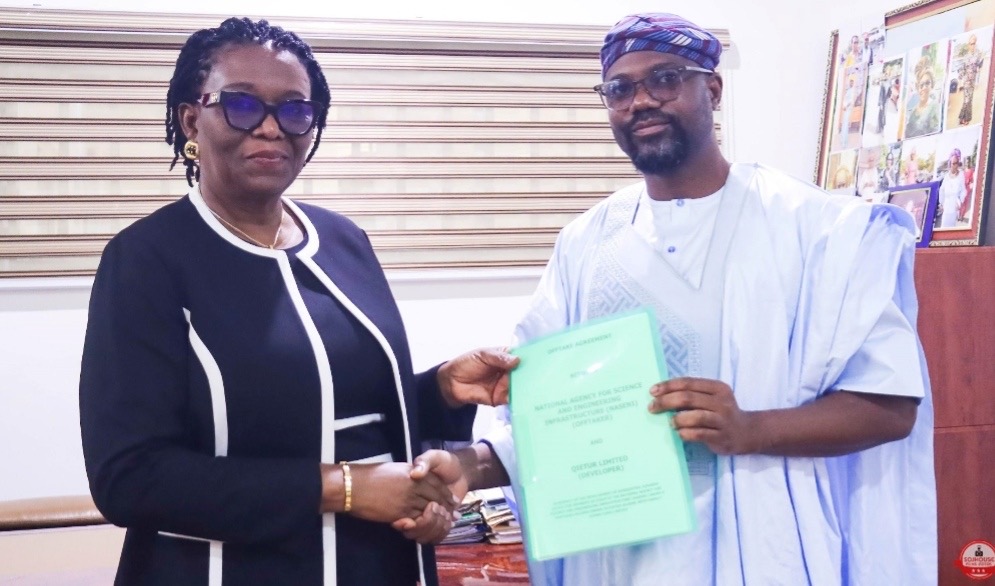
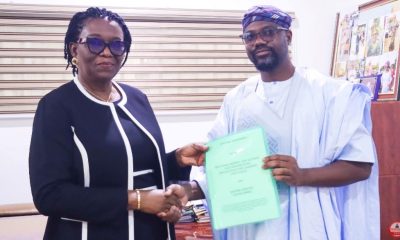
Qietur Limited, a financial-technology and data-driven company, located in Abuja on Tuesday, officially signed a significant offtake agreement with the National Agency for Science and Engineering Infrastructure (NASENI) to undertake the development of over 3000 residential housing estates for NASENI staff across Nigeria.
The landmark partnership, hinged under a mortgage-backed owner-occupier scheme in collaboration with Family Homes Fund Limited is aimed at addressing the housing deficit while improving access to affordable housing across locations in Abuja, Kano, Minna, Enugu and Nnewi.
The Chief Executive Officer, Qietur Limited, Dr. Abiola Oyedotun, during the official signing of agreement with NASENI in Abuja said this partnership reflects a critical milestone in Nigeria’s efforts to improve the living standards of its workforce while simultaneously contributing to economic growth through infrastructure development.
One of the new housing estates will be located on unencumbered land in Jibi, Behind Mopol Barracks, Dei-Dei, along Kubwa Expressway in Abuja, and will cater for staff interested in affordable homeownership.
Dr. Oyedotun, who expressed optimism about this partnership stated further that, “This agreement represents a bold step toward bridging the housing gap in Nigeria. With the support of NASENI and Family Homes Fund, we are going beyond developing homes, we want to create sustainable communities that will contribute to the socio-economic well-being of our people. This initiative will provide NASENI staff with the opportunity to own homes and improve their quality of life, while also boosting the construction sector and communities in the area.”
“The comprehensive housing plan will feature state-of-the-art designs and modern infrastructure, focusing on energy efficiency, environmental sustainability, and community-based services such as marketplaces, resorts and green areas”. Dr. Oyedotun assured.
In her response, NASENI’s Coordinating Director, Planning and Business Development, Dr. Mrs. Nonyem Onyechi stressed that this partnership with Qietur Limited attests NASENI’s commitment to the welfare of its staff and our belief in innovative, forward-thinking solutions to Nigeria’s housing challenges.
Mrs. Onyechi said, “these housing estates will offer our staff the stability they deserve, allowing them to contribute more effectively to the agency’s mission of driving technological development in Nigeria.
“The Offtake Agreement aligns with NASENI’s strategic vision of fostering industrial and technological growth by ensuring that its staff are well-supported and have access to essential living resources. The mortgage-backed scheme will ensure affordability and ease of access for staff across different income levels.
“This project is expected to boost local economies, create job opportunities in construction and related sectors, and provide a model for public-private partnerships in Nigeria’s housing sector”. Mrs. Onyechi said.
From Adeko Ukpa, Abuja
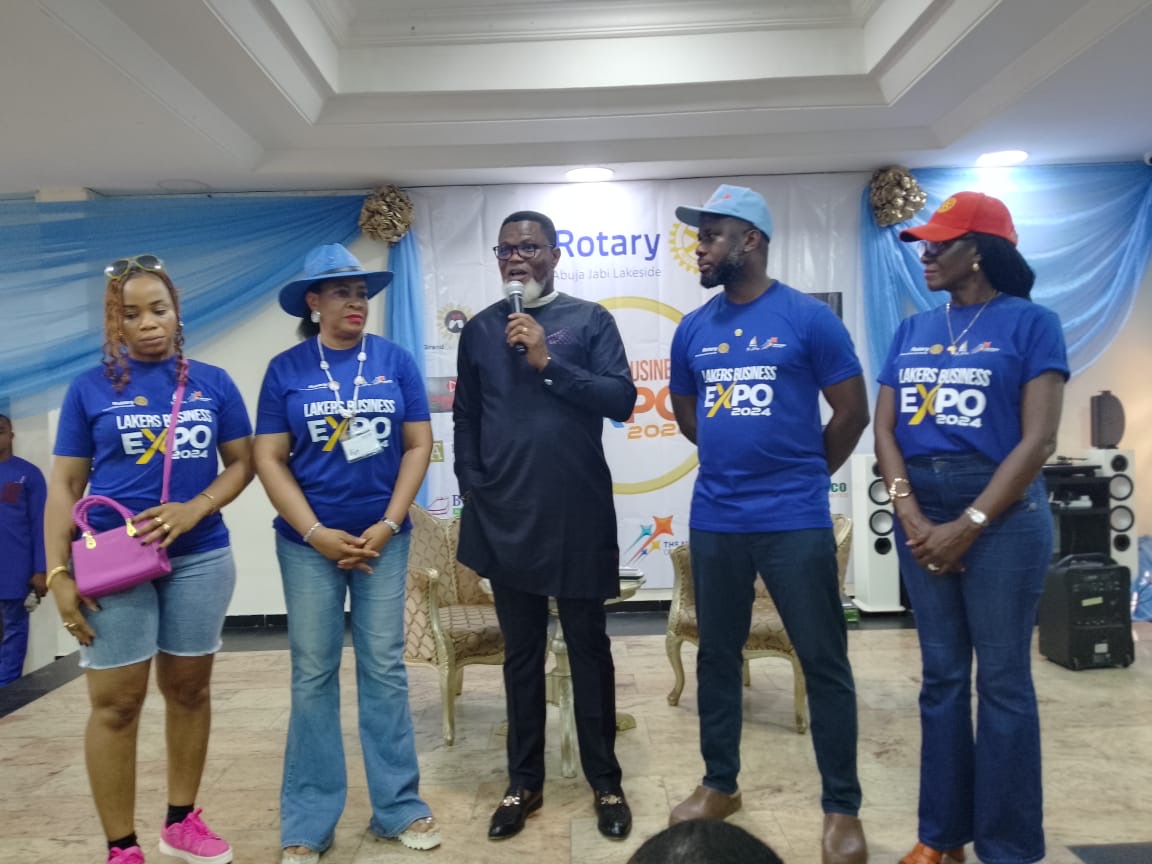
The Rotary Club of Abuja Jabi Lakeside, on Sunday, organised a one day Business Expo in Abuja to showcase the businesses and products of its members.
The event took place at the Grand Cubana Hotel Hall and was declared opened by the District Governor of Rotary International District 9127, Rotarian Mike Nwanoshiri, represented by Assistant District Governor, Rotarian Emeka Iroegbunam.
On display at the exhibition were clothing materials, confectioneries, power inverters, security gadgets, food and beverages, insurance, jewelries and fashion.
In his remarks before declaring the business expo opened, the Assistant Governor of Rotary District 9127, Rotarian Iroegbunam, commended the Club, popularly known as the Lakers, for their innovativeness and zeal to ensure progress for the business of their members while giving back to the society.
He said: “I can see that we have an array of things from beauty, fast moving goods, aesthetics, electronics, travel, logistics to home food, environmentally safe electricity and so on.
“I mean, such an array of merchandise and services here today and I think we are so proud of what we are doing.
“Let me express my personal pride to be associated with the Lakers. This is really so wonderful.
“All I want is for us to be able to do what is important. The exhibitors have come here today waiting for us to patronise them, and we need to do that.”
In his welcome remarks, the President of the Rotary Club of Abuja Jabi Lakeside, Rotarian Amobi Ogum, said the event was organised to showcase the businesses and services being rendered by its members as part of the club’s membership retention and new club development month.
Ogum said: “Part of what we want to achieve is to ensure that Rotary is not just about giving to the community, but we also want to showcase what our members do so people can patronise them. You can’t give what you don’t have.”
He said the success of the business expo, which is the club’s maiden edition, would determine how often such events would be held going forward.
He said: “Our hope is that by the time we are done with this, we will see whether it’s something we can be doing once every month or once every quarter. But we must find a way of making sure that people sell their businesses and that’s why we are here.”
He said the exhibitors were 80 per cent Rotarians and a few businesses “who want to identify with our causes who decided to come and also exhibit.”
He said Club has put in place mechanisms to ensure that the products on display which were worth over N100million were offered to members of the public at discounted rates as a way of giving back to the society.
He said: “We are looking to ensure that people get discounts for what they buy. If you get in, there are some properties that are going for sale and they’ve offered as much as 30 per cent discount. It’s our own way of giving back to the society, the buying public and the selling public.”
He called on Nigerians to always make sure that those around them are happy by doing whatever little they can to ameliorate their hardships.
“Always give back to the community. Whenever you think things are getting hard for you, there are lots of people you are better off than.
“So by sharing a meal, sharing a drink, sharing whatever you can, always make sure the community around you are happy,” Ogum said.
-
 Opinion9 months ago
Anioma State: A Necessary Proposal Rooted in Strategic Advantage
-
 Business & Economy1 year ago
NASENI, Qietur partner to build 3000 Housing Units for Staff
-
 Business2 months ago
Lithium boom has reshaped Nasarawa’s economy, says Prof Haruna
-

 Law1 year ago
Human Right and Law Enforcement in Nigeria: A Critical Analysis
-

 Education3 months ago
NABTEB Registrar advises automotive, locomotive Engineers to do more to diversify Nigerian economy
-
Education6 months ago
TVET will change Nigeria for good, says NABTEB Registrar
-
 Opinion3 months ago
Engr. Kawu: A Heroic Homecoming for a Man of the People
-
 Education6 months ago
TVET: FG conducts entrance exam into FTCs for 30,000 students